Blog

  • Honor X50 Unveiled with Power-Packed Features

    In an exciting development, Honor has officially launched the Honor X50 Pro in China, introducing a noteworthy addition to its smartphone lineup. Distinguished from the regular X50, the X50 Pro boasts an even more potent chipset and the latest software enhancements.

    This cutting-edge device showcases an expansive 6.78-inch OLED display with a resolution of 1,200 x 2,652 and an impressive 120Hz refresh rate. Noteworthy features include advanced 1,920 Hz PWM dimming, support for 10-bit color, and an integrated fingerprint sensor. However, it’s essential to highlight that the screen, while impressive, does not utilize an LTPO panel, limiting refresh rate options to 60 Hz and 120 Hz.

    Internals and Software

    Powering the Honor X50 Pro is the Qualcomm Snapdragon 8+ Gen 1 chipset, delivering robust performance. Despite being a formidable processor, it faces competition from the newer Snapdragon 8 Gen 3 model. Operating on Android 13 with Honor’s MagicOS 7.2 overlay, the X50 Pro ensures a seamless and user-friendly experience.

    Cameras

    In the realm of photography, the Honor X50 Pro stands out with its impressive 108MP main camera, featuring an f/1.75 aperture and a sizable 1/1.67″ sensor. Complementing this is a 2MP sensor on the expansive camera island, adding an ornamental touch to the device. The camera module also showcases a “MATRIX AI VISION CAMERA” label and a multi-LED flash array. For capturing stunning selfies, there’s an 8MP front camera with an f/2.0 aperture.

    Battery and Pricing

    Setting itself apart, the Honor X50 Pro ensures robust battery life with a substantial 5,800 mAh battery, complemented by 35W wired charging capabilities. As the Honor X50 series enters the market, the pricing and features make it a compelling choice for users seeking a powerful and feature-rich smartphone experience.

    Honor X50 Pro Specifications

    • Chipset: Qualcomm Snapdragon 8+ Gen 1
    • CPU: Octa-core (1×3.0 GHz Cortex-X2 & 3×2.5 GHz Cortex-A710 & 4×1.80 GHz Cortex-A510)
    • GPU: Adreno 730
    • OS: Android 14, MagicOS 7.2
    • Supported Networks: 2G, 3G, 4G LTE, 5G
    • Display:
      • 6.78″ AMOLED with 1220 x 2652 pixels resolution, 120Hz, 1B colors
    • Memory:
      • RAM: 12 GB
      • Internal: 256 GB
      • Card slot: yes
    • Camera:
      • Rear (Dual): 108 MP, f/1.8, (wide), 1/1.67″, PDAF
        2 MP, f/2.4, (depth)
      • Front: 8 MP, f/2.0, (wide)
    • Colors: Black, Green
    • Fingerprint sensor: Under-display
    • Battery: 5,800 mAh, 35W wired charging, 7.5W reverse wired charging
    • Price: $395

    Also Read: Realme Teases Upcoming Smartphone
  • Realme Teases Upcoming Smartphone

    Realme, the trailblazing smartphone brand, is stirring excitement in the tech community with a sneak peek into its latest innovation. This month witnessed the introduction of the Realme GT 5 Pro, an avant-garde flagship boasting a periscope telephoto lens – a significant leap in camera technology since the X3 SuperZoom in May 2020.

    While the GT 5 Pro enjoys its exclusive presence in China, Realme has dropped tantalizing hints about an upcoming model featuring a periscope camera destined for global markets.

    Realme’s Indian division recently shared a teaser image, featuring the enigmatic periscope lens accompanied by the caption “No Periscope. No Flagship.” While the phone’s name remains undisclosed, industry speculation points towards the Realme 12 Pro+. However, the GT 5 Pro, with its remarkable features, emerges as a strong contender for this highly anticipated global release.

    As the unveiling date draws near, Realme enthusiasts can anticipate a cascade of details about this game-changing smartphone.

    Diving into Realme GT 5 Pro Specs

    The Realme GT 5 Pro stands out by sharing several specifications with the recently launched OnePlus 12 flagship, with strategic downgrades for a more budget-friendly price tag. Powered by the Snapdragon 8 Gen 3 SoC, it boasts a vibrant AMOLED 120Hz screen, reaching an impressive peak brightness of 4500 nits.

    The focal point of interest is the 50MP periscope camera, delivering an optical zoom of 2.7x, promising unparalleled clarity. The device is also equipped with a robust 5,400 mAh battery, featuring 100W charging and 50W wireless charging capabilities. As Realme continues to push the boundaries of innovation, the GT 5 Pro sets the stage for an immersive and high-performance smartphone experience. Stay tuned for the global debut of this cutting-edge device that redefines flagship expectations.

    Here are the detailed specifications.

    • Chipset: Qualcomm Snapdragon 8 Gen 3
    • CPU: Octa-core (1×3.3 GHz Cortex-X4 & 5×3.2 GHz Cortex-A720 & 2×2.3 GHz Cortex-A520)
    • GPU: Adreno 750
    • OS: Android 14, Realme UI 5.0
    • Supported Networks: 2G, 3G, 4G LTE, 5G
    • Display:
      • 6.78″ AMOLED with 1264 x 2780 pixels resolution, 1B colors, 144Hz, 4500 nits peak brightness
    • Memory:
      • RAM: 12 GB, 16 GB
      • Internal: 256 GB, 512 GB, 1 TB
      • Card slot: No
    • Camera:
      • Rear (Triple): 50 MP, f/1.7, 23mm (wide), 1/1.4″, 1.12µm, multi-directional PDAF, OIS
        50 MP, f/2.6, 65mm (periscope telephoto), 1/1.56″, PDAF, OIS, 2.7x optical zoom
        8 MP, f/2.2, 16mm, 112˚ (ultrawide), 1/4.0″, 1.12µm
      • Front: 32 MP, f/2.5, 22mm (wide), 1/2.74″
    • Colors: Black, Orange, Silver
    • Fingerprint sensor: Under-display
    • Battery: 5,400 mAh, 100W wired charging, 50W wireless charging
    • Price: $463

    Also Read: State Bank of Pakistan Launches Sunwai Portal for Customer Complaints

  • State Bank of Pakistan Launches Sunwai Portal for Customer Complaints

    To enhance customer satisfaction and streamline grievance redressal processes, the State Bank of Pakistan (SBP) has reintroduced its dedicated portal, Sunwai, to promptly address issues and complaints from bank customers.

    The bilingual portal, designed to facilitate ease of use for the general public, enables individuals to file complaints against Banks, Microfinance Banks (MFBs), and Development Financial Institutions (DFIs) following applicable laws and regulations.

    Accessible 24/7, the portal is complemented by a user-friendly mobile app, available for download on Google Play and the App Store. This mobile app empowers consumers to report grievances conveniently through their smartphones.

    One notable feature of Sunwai is the ability for customers to track the progress of their complaints, offering transparency and assurance throughout the resolution process.

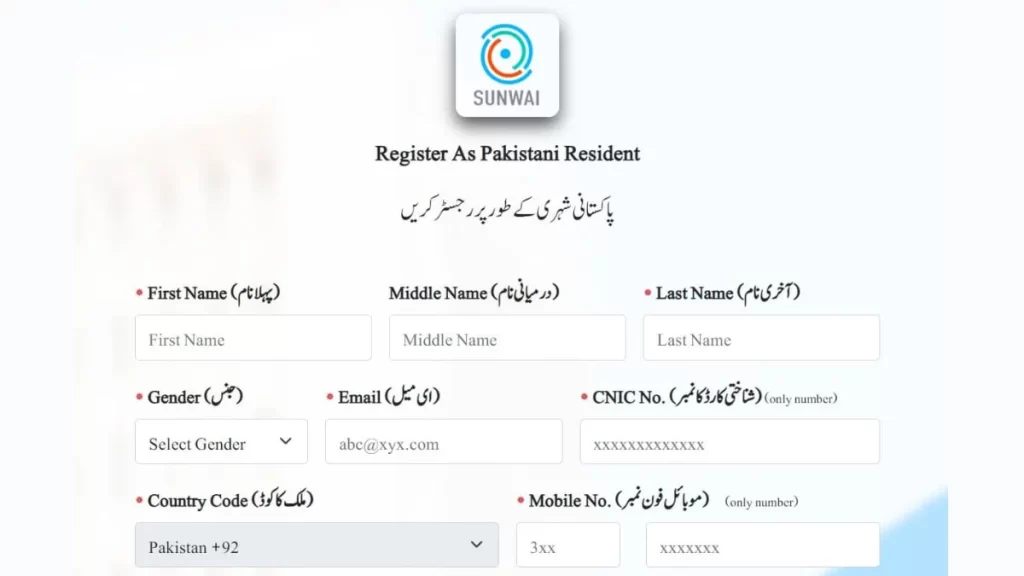
    To lodge a complaint, users must register on the portal using personal details such as mobile number, CNIC, and email address. Once registered, consumers can easily submit their grievances by following a few straightforward steps.

    Sunwai Portal

    The portal is designed to guide banking consumers through a hassle-free process by posing simple and concise questions. Complaints lodged through Sunwai can be directed to banks, MFBs, and DFIs as the primary resolution forum, with the Banking Mohtasib Pakistan (BMP) serving as the secondary forum, and in certain cases, the State Bank of Pakistan (SBP) itself.

    Sunwai also features a complaint-tracking system and offers valuable consumer awareness tips and messages. A tutorial video is available to guide customers through the complaint registration process.

    One of the noteworthy aspects of Sunwai is its commitment to expeditious issue resolution. Unlike the prevailing trends, where complaint resolutions may take up to 45 days or more, the portal aims to address customer concerns in a significantly shorter time frame.

    With increased awareness of the Sunwai portal, customer complaints are anticipated to rise. However, this is viewed as a positive trend, as it signifies the growing effectiveness and responsiveness of the banking sector in addressing consumer concerns. The portal is expected to contribute to the overall enhancement of the quality of banking services in the foreseeable future.

    Also Read: Businesses More Confident About Future Despite Insecurity: Gallup Survey

  • Xiaomi Launches Electric Car Called SU7

    Xiaomi Launches Electric Car Called SU7. On Thursday, the highly anticipated electric vehicle, the SU7, from the Chinese tech giant Xiaomi, was officially launched at an event. Lei Jun, the company’s founder and CEO, who had previously teased the vehicle, unveiled it to the public during the launch event held in Beijing, China. Expressing Xiaomi’s ambition, Lei Jun shared the goal of becoming one of the world’s top 5 automakers within the next 15 to 20 years.

    Lei Jun emphasized the company’s vision to create a dream car on par with renowned brands like Porsche and Tesla. However, he did not disclose the pricing details of the car. Through a series of posts on X, Lei Jun showcased the three colors in which the SU7 has been introduced: Aqua Blue, Mineral Gray, and Verdant Green.

    Additionally, Xiaomi revealed that the SU7 accelerates from 0 to 100 km/h in an impressive 2.78 seconds, officially earning its place in the “2s Supercar Club with a single step.” The vehicle is expected to be available for purchase in the coming months.

    Key features of the SU7 include:

    • Top Speed: 265 km/h
    • 0 to 200 km/h in 10.67 seconds
    • 800V HyperCharge
    • Up to 220 km range with a 5-minute charge
    • Up to 510 km range with a 15-minute charge
    • 800 km CLTC recharge range

    Lei Jun also announced the addition of Christopher Edward Bangle, an American automobile designer, as the design consultant for Xiaomi. The CEO shared that Bangle was impressed by the remarkable car that Xiaomi had developed in such a short period.

    Also Read:Businesses More Confident About Future Despite Insecurity: Gallup Survey

  • Businesses More Confident About Future Despite Insecurity: Gallup Survey

    Largely negative about their ongoing prospects, the country’s business owners have started gaining confidence, and their expectations for a better future have risen 42% from the previous quarter, shows a latest survey.

    “Relatively fewer business owners are pessimistic about future conditions and the direction of the country compared to Quarter 2,” according to a Gallup Pakistan Survey with business owners in the third quarter of 2023 for the Gallup Business Confidence Index report.

    It said business insecurity though persists because of the prevailing economic and political crises, businesses are more upbeat about their future.

    “Inflation, utility bills and political instability cause growing concern among the business community, but overall fewer businesses express hopelessness compared to the previous quarter,” it said.

    Asked about their expectations for future business conditions, the businesses were surprisingly optimistic and 61% expressed positive expectations while 38% expect things to worsen. The net future business confidence score has improved by 42% since the spring and is now at 22%, according to survey report.

    The businessmen’s perceptions about the direction of the country have also improved since the previous two quarters with 26% of respondents saying Pakistan is heading in the right direction.

    The Direction of the Country score has increased to -47% that is 30 percentage points more than a quarter ago.

    The overall confidence of the business community, however, was low since economic crises have been looming since 2022. The economic insecurity in the country has worsened since the beginning of this year, but the business situation score has improved regardless by 25 percentage points.

    Similar to the second quarter survey results, inflation was the problem cited by most of businesses as three out of 10 said they would want the government to solve the issue of price hike.

    “Relatively more respondents were concerned about political instability in Q3,” according to the survey.

    While the devaluation of rupee and fuel prices have taken a backseat in concern relative to the past quarter, the businessmen now are more concerned about the taxes and load-shedding in the country.

    Asked whether business conditions induced layoffs in the quarter under review four out of 10 businesses surveyed replied in affirmative saying their workforce had shrunk by 11% from last quarter.

    More than half of the businesses surveyed said to have increased their output prices this quarter. More businesses raised output prices compared to last quarter, and comparatively less businesses reduced their output prices in this quarter.

    A majority, 73%, of the businessmen did not express the hope that the caretaker government of Prime Minister Anwaar-ul-Haq Kakar will address problems of the country’s businesses.

    Twenty-five percent of them were somewhat hopeful. Asked about power outages, 38% of the businesses said ‘yes’ to load-shedding this quarter, showing a decline of 31% over last quarter.

    Bilal Ijaz Gilani, executive director at Gallup Pakistan and chief architect of the Gallup Pakistan Business Confidence Index Pakistan, said that this quarterly report of Gallup Business Confidence brought the positive news that business sentiment was improving in the country after witnessing a consistent decline.

    Both current and future business confidence was on upward trajectory and a significant improvement was seen with respect to business community’s view regarding direction of the country, he said.

    “We hope that the current momentum in other indicators including stock exchange index, improved current account deficit, positive outcome of IMF loan tranches and relative consistency in policy for example with respect to smuggling are underlying factors leading to improved sentiment is continued in the coming quarter,” said Gilani.

    This latest survey is the 11th of a quarterly Business Confidence Survey that Gallup Pakistan conducted across the country. The Business Confidence Index is an important barometer capturing the sentiments of business community in any country and used across the world by policy makers. The survey was conducted with around 530 businesses across Pakistan.

    Also Read:Oppo Launches ChatGPT Rival to Take on Samsung

  • Oppo Launches ChatGPT Rival to Take on Samsung

    Oppo Launches ChatGPT Rival and Samsung recently introduced Gauss AI for Galaxy phones. Oppo is following suit with the announcement of AndesGPT, set to debut with the flagship Find X7 series next month.

    Oppo’s AndesGPT is composed of 7 billion parameters, featuring three distinct tiers similar to Google’s recently revealed Gemini AI model. AndesGPT will include Tiny, Turbo, and Titan AI models, each progressively enhancing capabilities. AndesGPT Tiny incorporates 7 billion parameters, while Turbo and Titan boast 70 billion and 180 billion parameters, respectively.

    According to Oppo, the Tiny model is lightweight and efficient, making it suitable for running on consumer devices like smartphones. The Turbo variant promises fast responses and a well-balanced experience across various scenarios. Lastly, the Titan model is designed for deep reasoning and handling complex tasks.

    Similar to competing AI chatbots, AndesGPT can handle multiple input methods, including texts, voice, images, documents, and more. Oppo highlights that the chatbot can generate abstracts with up to 14,000 words and offers faster response times compared to rivals. Oppo claims that Andes can respond as quickly as 2.9 seconds, which is 2.5 times faster than industry standards.

    While AndesGPT will possess features such as Swapped Attention to address issues like first-word reasoning, it’s clarified that Oppo’s upcoming flagship phone, the Find X7, may not incorporate all these capabilities. It is likely to be limited to generating custom wallpapers through AI and performing tasks such as summarizing notes and generating emails.

    The availability of AndesGPT in the international versions of Oppo Find X7 phones remains uncertain. Given the shared resources between Oppo and its sister company OnePlus, it’s speculated that a similar chatbot may make its way to OnePlus phones as well.

    Readmore:Can Artificial Intelligence Replace Humans?

  • Can Artificial Intelligence Replace Humans?

    In a world where economic value and increased automation dominate,can Artificial Intelligence replace humans? However, many argue that instead of eliminating jobs, AI is reshaping how we work, unlocking human potential, and altering the landscape of innovation and productivity. In engineering, it is essential to identify roles vulnerable to AI and automation and those resilient to change. This article explores the dynamic impact of artificial intelligence on engineering and related fields.

    The Ascendancy of Robots
    Initial expectations suggested that robots would replace low-skilled labor in monotonous and hazardous tasks on factory floors. However, human labor continues to be more cost-effective than investing in robots for most facilities. The cost of training and re-training traditional robots for process changes is substantial. The breakthrough is imminent with the latest robotics systems incorporating computer vision and AI, allowing self-training and following generic commands in natural language. This advancement holds tremendous potential for robotics automation.

    AI in Copywriting
    Copywriting, valued for its persuasive impact on audiences, has become integral across various platforms. AI now empowers engineers with specialized knowledge to create compelling articles without entirely replacing copywriters. While AI may struggle to replicate high taste and text quality, its significance in specific domains is emerging.

    AI-Assisted Design
    Graphic designers embrace AI technology, but industrial design still relies on manual processes. However, industrial designers can leverage AI to generate product concepts quickly and explore a broader range of sketches. While AI-generated product renders may lack perfection, continuous refinement through iterative prompts is feasible. While generative AI assists less skilled designers, high-end professionals maintain their reliance on established processes and creativity.

    The Debate on 10x Engineers
    Silicon Valley debates whether AI can replace large software engineering teams. AI tools can create visually appealing web pages and, in advanced systems, significantly contribute to code writing. The concept of a “10x engineer” who can write ten times more lines of code than an average programmer gains even more value with AI. The collaboration of a team and an AI copilot can outperform the entire organization’s previous output.

    AI’s Role in Electronics Engineering
    While AI cannot design a new product for a startup, it can augment and expedite development processes. AI can assist in generating diagrams, selecting components, finding manufacturers, and performing calculations. Although the development process remains mainly manual, CAD software is integrating more AI tools to accelerate progress.

    Mechanical Engineering Realities
    Mechanical engineers play a crucial role in transforming designs into manufacturable enclosures, a meticulous and hands-on process. AI tools may highlight potential conflicts or suggest improvements in design aesthetics, but the majority of the work still relies on skilled human hands.

    Embracing Progress, Acknowledging Limits
    While our world is evolving, technology is not yet capable of fully replacing highly skilled engineers. Key qualities such as creativity, effective communication, and the ability to devise innovative solutions remain invaluable. AI can complement and enhance certain aspects of work, but it is unlikely to overshadow the expertise and capabilities of skilled specialists. The human touch remains irreplaceable.

    Also Read:Tesla Worker Suffers Serious Injuries from Factory Robot Attack

  • Tesla Worker Suffers Serious Injuries from Factory Robot Attack

    Tesla Worker Suffers Serious Injuries from Factory Robot Attack at Tesla’s cutting-edge factory in Austin, Texas. The incident, leading to a distressing ‘open wound’ on the engineer’s left hand, recently gained public attention through a 2021 injury report formally submitted to Travis County officials and federal regulatory bodies.

    This regrettable occurrence transpired while the engineer was engrossed in programming software tasked with overseeing robots for precisely cutting car parts from freshly cast aluminum components. It serves as a vivid reminder of the challenges often associated with the automated manufacturing processes implemented by Tesla and similar companies.

    According to eyewitness accounts from the previous month, the robot immobilized the engineer, driving its metal claws into his back and arm, leaving a gruesome trail of blood on the floor. The engineer was left nursing a painful “open wound” on his left hand.

    Quick thinking from a colleague played a pivotal role in the engineer’s rescue, as they promptly activated the emergency stop button, liberating the engineer from the robot’s grip. Subsequently, the engineer reportedly tumbled a few feet down a chute originally designed for collecting scrap aluminum.

    Fortunately, the sustained injuries were not severe enough to necessitate the employee taking time off from work.

    Tesla now faces intensified scrutiny regarding its approach to workplace safety protocols and accident reporting. Disturbing statistics have emerged from the Giga Texas plant, indicating a significantly higher rate of injuries compared to industry standards. Specifically, in cases involving severe on-the-job injuries, a notable contrast is evident: at the Tesla Giga Texas plant, one worker suffered an injury for every 26 employees, in contrast to one in 38 workers at other major U.S. auto manufacturing facilities.

    Also Read:JazzCash to become the First Digital Wallet via Mastercard

  • JazzCash to become the First Digital Wallet via Mastercard

    JazzCash, a pioneering force in the fintech sector, is proud to announce its strategic collaboration with Mastercard, positioning itself as the first mobile wallet in Pakistan to bring tap-and-pay functionality and wallet tokenisation through Mastercard. The announcement made headwinds at Mastercard’s MENA East Business Forum, where JazzCash was recognised as “Mastercard’s First Digital Front-End Partner”, making it the first to bring digital wallet tokenisation to Pakistan. This esteemed recognition solidifies JazzCash’s commitment to innovation and excellence in digital finance.

    Aamir Aftab, Chief Product Officer at JazzCash, said, “Our collaboration with Mastercard and the introduction of tap and pay functionality through JazzCash exemplify our commitment to spearheading innovation in the financial technology sector. We are thrilled to be the first in Pakistan to bring tap-and-pay technology to Pakistan, providing our users with a secure and convenient payment experience.”

    Mastercard’s Digital Front End (DFE), a cutting-edge, plug-and-play, mobile application-based platform, is the key enabler of this groundbreaking service. JazzCash will be integrating this technology, marking a significant step in bringing wallet tokenisation to Pakistan.

    Speaking at the event, J.K Khalil, Cluster General Manager, MENA East Mastercard, said, “We are delighted to partner with JazzCash as Mastercard’s first digital front-end partner in Pakistan. This collaboration marks a significant milestone in advancing digital payments in the region.”

    Wallet tokenisation is the simple process of disguising sensitive card data during transactions with an algorithmically generated number called a token. That means every card is replaced by a unique token for that specific device and that digital wallet, which is also protected by encryption and authentication.

    This gives users an added layer of security, ensuring that even if a hacker intercepts the token, they cannot use it for fraudulent transactions. The process of payment tokenisation makes digital wallets an extremely safe way to conduct transactions.

    Digital Front End will serve as a catalyst to enhance JazzCash’s services, offering customers security, convenience and improved customer experience. This advancement aligns with the evolving preferences of consumers, especially the growing demand for contactless, offline payments. The tap-and-pay service will empower JazzCash users to make transactions effortlessly, fostering a convenient and secure digital payment ecosystem.

    The tap-and-pay service is slated for launch in 2024, marking a new era in the digital payments landscape in Pakistan. JazzCash remains dedicated to pushing the boundaries of innovation, shaping the future of digital financial services, and ensuring its customers have access to the most advanced and user-friendly digital payment solutions.

    Also Read:Microsoft’s Copilot: Unlock the Power on Your Android Device

  • Microsoft’s Copilot: Unlock the Power on Your Android Device

    Discover the convenience of Microsoft’s AI chatbot Copilot, now conveniently available as a standalone app on Android. Say goodbye to the need for a separate Bing mobile app – simply download Copilot from the Google Play Store.

    While Inflection’s Pi chatbot is limited to specific countries, Copilot is accessible on the Google Play Store across various regions, providing a seamless experience for users. Although iOS users may need to exercise a bit of patience as there is no current iOS app, the Android version offers a robust alternative.

    If you’re already acquainted with ChatGPT, Microsoft’s Copilot will feel like a familiar companion, offering comparable functionalities with a unique interface. Enjoy the chatbot capabilities, the DALL-E 3 image generator, and the ability to effortlessly compose emails and documents in seconds. Plus, Copilot goes above and beyond by granting access to its GPT 4 model, a premium feature on ChatGPT.

    Formerly known as Bing Chat, Copilot underwent a recent rebranding to offer users a more independent experience. It was initially launched as part of Microsoft’s Bing search engine, integrating a ChatGPT-like interface. With its standalone approach and accessibility through the dedicated website copilot.microsoft.com, Copilot aligns with ChatGPT’s user-friendly design.

    The expansion of Copilot’s availability on mobile apps is a strategic move, especially following the rebranding from Bing Chat Enterprise to Copilot. While an iOS version is currently in the works, users can seamlessly access Copilot’s features through the Bing app on their iPhones or iPads in the meantime.

    Experience the next level of AI interaction – download Microsoft’s Copilot on your Android device and stay tuned for its anticipated release on iOS. Copilot’s capabilities are at your fingertips, offering a versatile and efficient solution for various tasks.

    Also Read:Intel to open chip plant in Israel with investment of $25bn