Category: Health

  • First Model WHO at AKU: Student-led Simulation of the Health Assembly

    The Aga Khan University (AKU) recently hosted a dynamic, student-led simulation of the Model-World Health Organization assembly (M-WHO) for the first time. The two-day summit, organised by the Office of the Associate Dean for Graduate Studies and endorsed by the WHO, was led by AKU’s Graduate Education Student Society (AGESS). It enabled students from various disciplines to engage in meaningful dialogue and debate some of the most pressing global health challenges. 

    AKU’s longstanding partnership with the WHO provided the perfect backdrop for the event, offering students unique exposure to the global health governance. The event focused on critical health issues, including Universal Health Coverage, Pandemic Resilience, Climate and Health, and Gender Health Equity. The participants worked in committees for developing resolutions and strategies to address global challenges, with a particular emphasis on how policies can be shaped to improve the health of populations worldwide.

    Students also engaged in informal lobbying, negotiation and the formation of blocks. Following these discussions, committees worked on drafting resolutions, carefully considering how to address the assigned debate questions. The final stage involved consensus building and voting on resolutions, after a robust exchange of ideas. 

    Dr Luo Dapeng, WHO’s Country Representative for Pakistan and the Chief Guest, emphasized the importance of collaboration in solving global health problems. “It’s essential to recognise that people’s health is interconnected across borders. The Model WHO event helps us see how young minds can contribute to innovative solutions.”

    “By thinking through issues, exchanging ideas, understanding the positions of other nations, crafting resolutions and drafting position papers, our students get a glimpse into the practical world that governments function in,” said Dr Adil Haider, Dean at AKU’s Medical College. “Learning the softer skills of debating, negotiating, conflict resolution, diplomacy, teamwork, and policy creation is critical for leaders and excelling in them will give our students the confidence to affect meaningful change.”

    Professor Shahid Shamim, Associate Dean for Graduate Studies said, “AKU Model-WHO is an innovative learning experience where students from diverse backgrounds can learn together in a safe and conducive learning environment.” He added that the event proved to be a valuable learning experience, and in the future, it will be expanded to include students from other institutions. Awards for best delegates and position papers were distributed among students for their performance during the event.

    Also Read: Pakistan’s First Clinical Trials Summit Concludes with Valuable Insights into Clinical Research

  • Pakistan’s First Clinical Trials Summit Concludes with Valuable Insights into Clinical Research
    The Clinical Trials Summit of Pakistan 2025 marked a significant milestone for the country’s healthcare landscape. Hosted by the Clinical Trials Unit (CTU) at Aga Khan University (AKU), in collaboration with National University of Medical Sciences (NUMS), this two-day event brought together leading professionals, researchers, and healthcare providers to discuss the latest trends, challenges, and advancements in clinical trials. 

    Dr Saeed Hamid, Director of the Clinical Trials Unit at AKU, reflected on the impact of global clinical trials, stating: “One satisfying aspect of participating in global clinical trials is the opportunity for our patients to experience cutting-edge therapies for diseases, such as  hepatitis Delta, which currently have no approved treatment available.”

    The summit featured a series of keynote speeches and panel discussions addressing a wide range of topics, including emerging trends, regulatory frameworks, innovation, community engagement, ethical considerations, rare diseases and patient-centric approaches to clinical trial design. Dr Bin Chen, CEO of HuaHui Health, commented on the summit’s success in fostering collaboration, stating that “The conference was an exceptional platform for collaboration, innovation, and knowledge-sharing.”

    Notable sessions included discussions on the current landscape of clinical trials in Pakistan, with experts from a wide range of national and international organizations providing valuable perspectives on strengthening clinical trials through best practices. Additionally, a session on regulatory frameworks and global best practices was chaired by Dr Obaidullah, Director of the Drug Regulatory Authority of Pakistan (DRAP), and Mr. Abdullah Abro, Chair of the Clinical Studies Committee at DRAP, while in-depth discussions on advancing oncology clinical trials, emphasized the need for building consortia for better access to cancer treatments.

    Dr Khalid Matin, Professor of Medicine at VCU Massey Comprehensive Cancer Center in the USA, emphasized the importance of inclusion in global cancer research, stating: “We need to work together to ensure the inclusion of patient populations globally in cancer research. Access to clinical trials is an important part of the standard of care in oncology.”

    Dr Shalaan Beg, Adjunct Associate Professor at the University of Texas, highlighted the vital role of oncology clinical trials, saying: “The Clinical Trials Summit was an essential step in aligning government regulators, the pharmaceutical industry, and local clinical trial infrastructure to bring more trials to Pakistan.”

    Aga Khan University’s Clinical Trials Unit (CTU), established in 2011, continues to be a leader in advancing clinical research in Pakistan. As the country faces a higher-than-average disease burden, the CTU is committed to developing innovative solutions tailored to local healthcare needs.

    Also Read: New State-of-the-Art Under-5 Clinic Inaugurated at Mayo Hospital Lahore with UNICEF’s Support

  • New State-of-the-Art Under-5 Clinic Inaugurated at Mayo Hospital Lahore with UNICEF’s Support

    In a significant step towards strengthening child healthcare services, a newly established Under-5 Clinic was inaugurated at Mayo Hospital Lahore with the support of UNICEF. This state-of-the-art facility aims to address the pressing need for basic health services for minors, ensuring quality medical care for children under five.

    The clinic was inaugurated by Dr. Gunter Boussery, Chief Health UNICEF Pakistan, who was joined by Prof. Dr. Imran, Registrar of King Edward Medical University (KEMU), Prof. Dr. Haroon Hamid, Head of the Pediatrics Department at KEMU, Dr. Safina Abdullovea, MNCH Manager UNICEF Pakistan, and Dr. Qurat Ul Ain Ahmed, Health Team Lead UNICEF Punjab and others here at Mayo Hospital on Tuesday, Feb 11, 2025.

    The newly established Under-5 Clinic will provide essential healthcare services, including medical consultations and medicines for young patients, ensuring access to critical care for vulnerable children.

    Speaking at the inaugural ceremony, Dr. Gunter Boussery commended Mayo Hospital’s administration for their tireless efforts in managing the overwhelming patient load despite limited resources. He reaffirmed UNICEF’s commitment to supporting child-focused initiatives that promote the health and well-being of young children across Pakistan.

    Prof. Dr. Imran, KEMU Registrar, praised UNICEF’s continuous support in not only establishing the new clinic but also enhancing other child healthcare initiatives.

    Prof. Dr. Haroon Hamid provided an overview of Mayo Hospital’s facilities and its collaboration with King Edward Medical University, highlighting the institution’s ongoing efforts to improve pediatric care.

    Following the ceremony, Dr. Gunter Boussery and other distinguished guests inaugurated the Under-5 Clinic and toured its various sections. The UNICEF team, led by Dr. Haroon Hamid, also visited the Pediatric Emergency and Nursery units, gaining firsthand insight into the hospital’s child healthcare services.

    This landmark initiative marks a major step in strengthening maternal and child health services in Punjab, ensuring that children under five receive timely and quality medical care.

    Also Read: Transforming Child Health: How Community Incentives Drive Breakthroughs in Pakistan

  • Transforming Child Health: How Community Incentives Drive Breakthroughs in Pakistan

    A groundbreaking study published in The Lancet Global Health reveals how community-driven incentives can greatly improve child health outcomes in rural Pakistan. The Community Mobilization and Community Incentivization- (CoMIC) trial, conducted by researchers from Aga Khan University’s Institute for Global Health and Development (IGHD), offers a transformative model for addressing preventable illnesses such as childhood diarrhoea and pneumonia, which remain leading causes of death among children under five.

    The CoMIC trial is based on the recognition that behaviour change interventions should ensure active community engagement and adapt context-specific strategies to facilitate change (bottom-up approach for sustainable improvement). When tied to tangible short-term collective benefits that address complex child health issues, such an approach may prove particularly useful. The study examined the impact of two interventions: community mobilization alone and mobilization combined with collective, conditional, non-cash incentives. It involved 48 clusters spread over a rural area in Sindh province.

    The findings revealed significant improvements in child health indicators in incentivized communities. Compared to the control groups, they included an 80% higher breastfeeding rate, a 50% rise in the use of oral rehydration treatments, a 30% improvement in cleanliness habit and a 30% higher immunization rate. Dr. Jai K. Das, Assistant Director at IGHD and lead author of the study explained: “The study shows that when communities are actively engaged, empowered, and take charge to set their own priorities, it leads to extraordinary results. The ability to choose non-cash rewards, such as water pumps or sanitation facilities, fostered a sense of ownership and accountability, driving sustainable behavior changes.”

    In Pakistan, the poorest populations are disproportionately affected by the substantial discrepancies in access to necessary health services.  Less than one-third of rural households have access to adequate sanitation, while the nation’s immunization rates are still at 66%. The CoMIC trial’s innovative approach—Conditional Collective Community-Based Incentives (C3I)—not only improved health behaviours but also encouraged communities to co-invest in long-term solutions. The findings showed that communities are more likely to invest when they are empowered to decide on incentives. This was evident by the fact that contributions including labour, land and supplies resulted in a cost-sharing rate of 36% above the 25% target. Along with encouraging sustainability and ownership, these community-driven incentives also had a number of positive effects such as better health outcomes, increased community well-being and improved sanitation.

    Dr. Zulfiqar A. Bhutta, Founding Director of IGHD, emphasized the broader implications of the trial: “This trial demonstrates the potential of community-driven solutions in achieving scalable health improvements. It is a model that can be adapted in other low- and middle-income countries to address inequities and save lives.”

    The CoMIC trial emphasizes how crucial it is to use community ownership and engagement to promote sustainable health improvements. Policymakers and organizations can adopt the Conditional Collective Community-Based Incentives model to address pressing public health challenges, particularly in low-resource settings.

    Scaling this approach could address vaccine resistance, improve sanitation, and enhance child health outcomes across diverse contexts. The framework offers a practical and transparent mechanism for delivering community-level benefits while fostering accountability and long-term investment in health infrastructure. Dr. Jai K. Das highlighted the broader applicability of the model, stating, “For a country like Pakistan, this approach could also be tested for other health challenges, such as malnutrition and polio vaccine hesitancy. Additionally, this strategy ensures transparency in fund utilization at the micro level, making it a viable option for broader adoption.”

    The CoMIC trial findings mark a significant step forward in global health innovation by offering a scalable and sustainable strategy to reduce child morbidity and mortality. It is recommended that the CoMIC model be explored by policymakers, donors, and global health organizations as a means of addressing health inequities through community ownership and collective action. Stakeholders may improve child health outcomes over the long run and encourage long-term community investment and accountability by giving priority to interventions that have tangible, immediate impacts.

    Also Read: Greenwich University, MAP and XPR Sign MoU for Enhanced Learning Opportunities

  • AI in Clinical Practice: Revolutionizing Healthcare at 26th NHSRS

    Experts from around the world gathered at the 26th National Health Sciences Research Symposium (NHSRS) at Aga Khan University (AKU) to discuss the rapidly evolving role of artificial intelligence (AI) in clinical practice. Over two days of keynotes, plenary talks, and pre-symposium workshops, leaders in medicine and technology explored how AI is revolutionizing healthcare delivery, education, and patient care.

    Dr. Adil Haider, Dean of AKU’s Medical College, opened the symposium by emphasizing the urgent need to adapt to the technological advancements reshaping healthcare. He noted that AI and machine learning have drastically changed how medical education is delivered, stating, “Rapid advances in AI and machine learning, along with global events like the Covid-19 pandemic, have shifted how we deliver and consume education. Moving to dynamic, student-centered learning is essential for staying relevant in this evolving landscape.”

    The integration of AI into healthcare has the potential to improve disease diagnosis, treatment selection, and clinical laboratory testing, consequently improving patient care, and quality of life. Professor Zara Cooper, Professor of Surgery at Harvard Medical School, shared her insights into AI’s potential to improve surgical care, noting that “AI can be harnessed to enhance palliative care, ensuring patients receive compassionate and precise treatment at every stage.”

    Professor Mayur Narayan, who leads the trauma department at AiACCESS, stressed the importance of addressing access disparities as AI technology advances in the surgical field. He stated, “AI has the power to revolutionize surgery, but it is crucial that we address the disparities in access and outcomes, ensuring that the benefits of innovation reach every patient.”

    Day two of the symposium featured plenary talks from experts such as Dr. Patricia Geli, co-founder and COO of C10 Labs, and Dr. Yasar Ayaz, a professor at NUST and Head of robotics and machine engineering. They explored the role of AI in streamlining healthcare operations, improving surgical techniques, and enhancing patient outcomes. One of the most anticipated sessions was “The Great Debate,” where participants discussed the ethical dilemmas of AI in healthcare and how to balance innovation with moral responsibility.

    Additional plenary talks were delivered by Mr. Shahid Azim, co-founder and CEO of Deep Tech Entrepreneur, who spoke on the intersection of technology and healthcare delivery, and Mr. Arhum Ishtiaq, cofounder of Connecthear, who discussed how AI can be used to develop hearing aids that significantly improve the quality of life for people with hearing impairments. His innovative work was recognized with the TRT World Citizen Award 2025.

    The 26th NHSRS reinforced the message that AI is not just a futuristic concept – it is the present. It’s transformative power must be understood and harnessed if we wish to progress, create impact and find meaningful solutions. The event highlighted the importance of ongoing dialogue, research, and education in ensuring that AI can be used effectively and responsibly to improve healthcare delivery and access across Pakistan and beyond.

    Also Read: DWP Technologies shines at DELL Partner Awards 2024 by winning best storage award

  • QNET’s Falah Strengthens Its Dedication to Health and Wellness as Gold Sponsor of Indus Hospital

    QNET, a global lifestyle and wellness-focused direct-selling company, alongside its esteemed Pakistani entity, Falah, proudly reaffirms its commitment to supporting crucial healthcare initiatives and community welfare in Pakistan as the Gold Sponsor of the Indus Hospital and Health Network.

    As a Gold Sponsor, QNET’s support for the Indus Hospital underscores its belief in healthcare’s transformative power to uplift lives. This collaboration aims to fortify healthcare infrastructure and accessibility, aligning with QNET’s broader vision of empowering individuals and communities.

    Tareq Abdul Hafeedh Yawar Al Yousefi, Chairman of QNET Middle East, emphasized the value of this collaboration: “Our partnership with the Indus Hospital through Falah reflects our core belief in empowering communities. Through our high-quality products and direct-selling model, we offer people the chance to improve their lives while contributing to meaningful causes.”


    QNET’s direct-selling model has provided countless entrepreneurs in Pakistan with the tools to build sustainable businesses and achieve financial independence. This commitment to growth and empowerment is reinforced through impactful initiatives, including:

    In Azad Kashmir, QNET funded a gravity flow water project, constructing a reservoir that now provides clean water to over 1,500 residents, enhancing daily living conditions.


    During Ramadan, QNET distributes thousands of Iftar meals to underserved communities in Pakistan, supporting those in need.


    Looking ahead, QNET is poised to expand its product portfolio in Pakistan and the MENA region in 2025. Key offerings include the prestigious Bernhard H. Mayer (BHM) watch and jewellery collections and the advanced HomePure Nova water filtration system—premium products that reflect QNET’s dedication to quality and innovation.


    Through premium products and entrepreneurial opportunities, QNET continues to build trust and create lasting impact in Pakistan.

    Also Read: Meezan Bank Unveils Foreign Currency (FCY) Debit Card for Freelancers & Exporters

  • AKU’s 10th Annual Surgical Conference Focuses on Innovations in Surgical Care and Patient Safety

    The Aga Khan University (AKU), Department of Surgery, proudly celebrated a milestone with its 10th Annual Surgical Conference, marking a decade of leadership and innovation in the surgical field. The two-day event, brought together a distinguished lineup of both international and national experts who engaged in discussions on transformative advancements in surgical care.


    Held under the theme, “Beyond the Scalpel: Quality Care and Patient Safety,” this year’s conference highlighted a strong focus on improving surgical outcomes and ensuring patient safety. As surgical practices continue to evolve, it is essential for healthcare professionals to stay updated on the latest advancements that can positively impact patient outcomes. The event’s sessions delved into surgical innovation, patient-centered care, and the integration of cutting-edge technologies.


    Global experts from prestigious institutions such as University of Alabama at Birmingham (UAB) and Froedtert & the Medical College of Wisconsin engaged with attendees through interactive sessions that promoted collaboration and networking, creating an invaluable forum for surgical professionals, researchers, and educators to exchange knowledge and ideas. The sessions covered a wide range of thought-provoking topics, including the intersection of climate, aviation, and surgery, the challenges of maintaining quality within private healthcare systems, and the leadership perspectives on implementing quality initiatives. Discussions also explored the roles of accredited bodies, the importance of collaboration in driving healthcare innovation, and strategies for decarbonizing healthcare centers.


    Dr Saleem Islam, Chair of the Department of Surgery, emphasized the significance of this milestone, stating, “Every year, we strive to make the Conference bigger and better. This year’s theme reflects our department’s commitment to providing cutting-edge, high-quality patient care. This conference has not only benefited our patients but has also contributed immensely to the education of our students and residents by disseminating the latest research in the field of surgery.”


    In addition to showcasing the latest surgical advancements, the conference highlighted AKU’s pioneering contributions to medical technology. A key highlight was the introduction of 3D-printed PEEK (Polyetheretherketone) implants, developed in-house by AKU’s biomedical engineers. These advanced, high-performance implants offer customized solutions that are lighter, stronger, and more compatible with the human body. They are significantly reducing infection risks and enhancing long-term outcomes for patients. AKU currently employs these implants in various procedures, including cranial reconstructions and maxillofacial surgeries, with plans to expand their use into other surgical domains. This groundbreaking initiative exemplifies AKU’s commitment to improving patient care through innovation.


    The Conference also emphasized AKU’s leadership in surgical care and its growing influence in shaping the future of healthcare, not only in Pakistan but throughout the region. The insights shared at this year’s conference will inspire future advancements in patient care, leaving a lasting impact on the medical community and the patients they serve.

    Also Read: InfraZamin Pakistan and HABIBMETRO Partner to Provide a Structured PKR 800mn Guaranteed Trade Finance Facility to Jaffer Business Systems (Private) Limited

  • AKU’s Landmark Clinical Manual Aims to Prevent Nearly 280,000 Deaths Each Year

    In a significant stride towards enhancing healthcare in Pakistan, Aga Khan University (AKU) has unveiled the AKU Manual of Clinical Practice Guidelines, designed to potentially improve healthcare outcomes for 21 million people in Pakistan. Endorsed by the US GRADE system, this pioneering resource offers evidence-based recommendations and has potential to prevent 280,000 deaths annually.

    The unveiling took place at a ceremonial launch on January 8, 2024, presided over by Prime Minister Muhammad Shahbaz Sharif at AKU’s campus in Karachi.

    The AKU Manual of Clinical Practice Guidelines sets a new standard for healthcare excellence nationwide by providing uniform, evidence-based clinical guidelines for 140 of the most common and significant diseases in Pakistan. Developed meticulously over the period of four years, the Manual integrates global best practices with local contexts, addressing a critical gap in Pakistan’s healthcare system. This Manual is poised to be a cornerstone in the standardization of clinical care across the country.

    Dr. Adil Haider, Dean of AKU’s Medical College and Editor-in-Chief of the Manual, expressed the manual’s transformative vision, stating, “This manual is more than a guide; it is a movement to transform healthcare in Pakistan. With nearly 140 guidelines addressing 80% of conditions seen in healthcare institutions in the country, this initiative is a giant leap toward ensuring every patient receives high-quality care.”

    Developed by AKU’s Centre for Clinical Best Practices (CCBP) in collaboration with governmental partners, the U.S. GRADE Network, leading healthcare institutions, and medical societies, the manual has benefited from the expertise of 25 members of the national advisory board and 19 members from AKU’s advisory board. Key stakeholders include the Federal and Provincial Ministries of Health, Pakistan Armed Forces, the College of Physicians and Surgeons of Pakistan, and the Pakistan Medical and Dental Council.

    Dr Samar Fatima, Associate Director of CCMP, emphasized the manual’s transformative potential for healthcare providers, stating, “The manual’s clear and evidence-based guidelines can ensure uniformity in treatment across the nation, empowering physicians to provide optimal and cost-effective care. It can play a pivotal role in achieving the goal of equitable healthcare access and high-quality patient care in Pakistan.”

    To ensure nationwide accessibility, it is available for free as an app and on the AKU website to all institutions, public or private. The printed version, published by a local publisher, is available for a small fee.

    As the first GRADE Center in South Asia, AKU reaffirms its leadership in evidence-based medical practices with this pivotal launch. The AKU Manual of Clinical Practice Guidelines represents a crucial step forward in improving patient outcomes and elevating the quality of healthcare throughout Pakistan.

    Reflecting on this momentous occasion, Dr Sulaiman Shahabuddin, President of AKU, stated, “At AKU, we believe that healthcare is a collective responsibility. The roundtable represented a significant step towards building a stronger, more integrated healthcare system in Pakistan. By uniting key players from both the public and private sectors, we aim to shape a unified and forward-thinking vision for the country’s healthcare delivery.”

    Also Read: Central Depository Company Collaborates with Leading Brokers for Centralized Gateway Portal

  • Swinging for Hearts: AKUH Golf Tournament Saves Lives

    Two years ago, little Kawish’s parents were living their worst nightmare. At two months old, their baby boy was diagnosed with holes in his heart—a condition that could cut his life tragically short. The doctors at the Aga Khan University Hospital (AKUH) assured them the defect was operable, but for Kawish’s family, the cost of surgery seemed an insurmountable obstacle.

    That’s when AKUH’s “Mending Kids’ Hearts” programme stepped in. With generous donor support, the programme covered the treatment cost enabling Kawish to undergo a successful surgery that healed his heart. Today, Kawish is a vibrant two-year-old, running, laughing, and living the carefree life every child deserves—all thanks to the experts at AKUH and the generous support of donors.

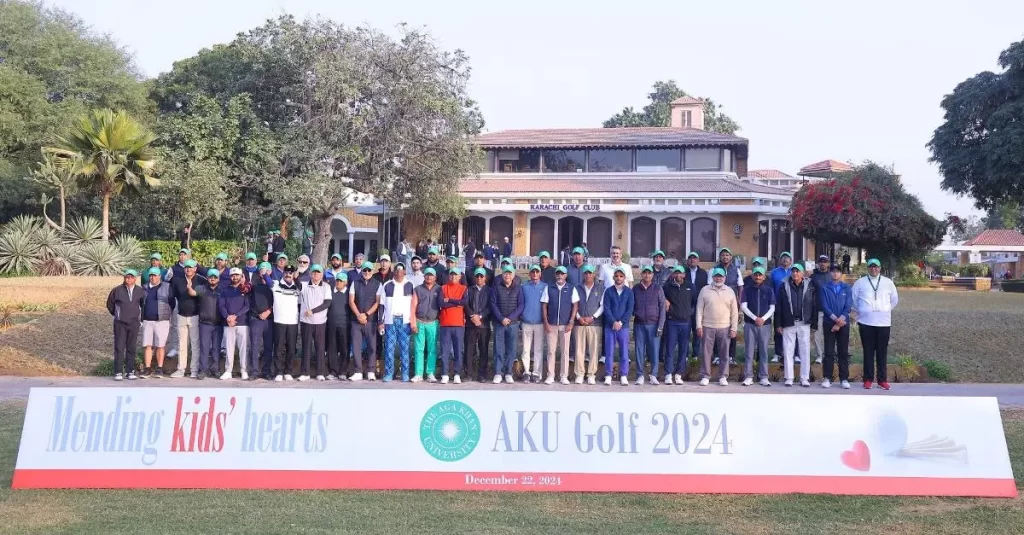
    This Sunday, December 22, over 100 corporate players gathered for AKUH’s Annual Golf Tournament, an important fundraising event for the “Mending Kids’ Hearts” programme. This initiative provides life-saving surgical care to children with Congenital Heart Disease (CHD), a condition affecting thousands of children in Pakistan. Since its inception in 2015, the programme has saved over 3,000 young lives.

    CHD is the most common congenital defect in Pakistan, affecting more than 60,000 newborns annually and contributing to high under-five mortality rates. However, with timely intervention, 90% of these cases are treatable, allowing children to lead healthy, productive lives.

    The Aga Khan University Hospital is one of the few institutions in Pakistan offering neonatal cardiac surgeries, performing advanced procedures. From arterial switches to neonatal arch surgeries, the hospital’s expertise ensures even the most complex cases are treated with precision.

    “There is no greater joy than witnessing a child take their first steps toward a healthy and happy future—a future that might not have been possible without the generosity of our donors and the unwavering dedication of our team. Each child we help is a story of hope, courage, and resilience. Events like the Annual Golf Tournament remind us of the incredible things we can achieve when we come together for a cause bigger than ourselves, said Dr Farhat Abbas, Chief Executive Officer, AKUH.”

    AKUH’s Annual Golf Tournament has become a premier event, exemplifying the strength of collaboration between the public and private sectors, and the impact it can create. Each swing this Sunday has brought us closer to mending hearts—both literally and figuratively.

    In this year’s golf tournament, Siddique Sons’ team emerged victorious, lifting the coveted winning trophy. The team showcased exceptional skill and teamwork throughout the event. ARY’s team put up a strong fight, finishing as the runner-up after a series of competitive rounds.

    Highlighting individual brilliance, Abdul Raffay was awarded the “Longest Drive” honour for a remarkable 322-yard drive. The tournament was a testament to the high level of talent and sportsmanship displayed by all the participants, with memorable moments across the course.

    “Thank you to all the wonderful donors and players who came together today. Your participation in this tournament is more than just a round of golf—it’s a lifeline for children who need our support in their battle against congenital heart disease,” said Zahra Somani, Aga Khan University’s Chief Advancement Officer.

    Also Read: Malir Malangs, Lyari Legends WIN matches at KTPL

  • A National Hero: AKU’s Dr Zulfiqar Bhutta Honoured Globally

    In a proud moment for Pakistan and the global healthcare community, Dr Zulfiqar Ahmed Bhutta, a global leader in maternal and child health, has been appointed as an Officer of the Order of Canada, one of the country’s most prestigious civilian honours. This recognition celebrates Dr Bhutta’s exceptional contributions to global health, particularly in underserved communities across South Asia, Africa, and beyond.

    Dr Bhutta’s groundbreaking research has transformed public health policies worldwide and improved countless lives. His work on community health systems, including Pakistan’s Lady Health Worker programme, is regarded as a global model for empowering frontline health workers.

    Speaking about the honour, Dr Bhutta said, “I am greatly honoured by this recognition and deeply grateful to a generation of students and colleagues who have worked with me over the years on challenges of women and children in Pakistan and other low-income countries.”

    Dr Bhutta serves as the Founding Director of the Institute for Global Health and Development at Aga Khan University (AKU) and also founded and its Centre of Excellence in Women and Child Health between 2012 and 2024, . He is also Co-Director of the SickKids Centre for Global Child Health in Toronto. With over 1,400 academic publications and recognition as a Highly Cited Researcher, Dr Bhutta’s influence extends across research, policy, and practice.

    Dr Sulaiman Shahabuddin, President of AKU, praised Dr Bhutta’s dedication, stating:
    “Dr Bhutta’s achievements inspire us to pursue innovation and make a tangible impact in global health. His work embodies AKU’s commitment to advancing evidence-based research that tackles the world’s most pressing health and development challenges.”

    In honouring Dr Zulfiqar Bhutta, we acknowledge not just an individual’s accomplishments but the promise of what dedication, expertise, and compassion can achieve. For Pakistan, he stands as a true national hero whose work inspires hope for healthier generations to come.

    Also Read: Malir Malangs, Gulshan Gabroos win matches at KTPL