Category: Finance

  • PAFLA, Innovista forge partnership to empower over 50,000 Freelancers

    The Pakistan Freelancers Association (PAFLA), the national-level representative body of freelancers, and Innovista, a National
    Initiative of SIFC for collaborative workspaces and innovative platforms, have announced a strategic partnership aimed at creating transformative opportunities, including capacity building and business collaboration more than 50,000 freelancers every year across Pakistan.

    This landmark collaboration is set to reshape the freelance ecosystem through capacity building, digital infrastructure, and policy advocacy—paving the way for freelancers to play an even more critical role in the national economy.

    Chairman PAFLA Ibrahim Amin and CEO Innovista Hisham Sarwar signed the MOA in Islamabad to launch collaborative events and impactful initiatives aimed at empowering youth across Pakistan through freelancing and digital skills.

    “Freelancers are no longer just a side segment of the workforce — they are front and center in Pakistan’s digital economy with more than $500 million contribution to bring in foreign exchange in Pakistan, said Ibrahim Amin, Chairman of PAFLA.

    This partnership with Innovista aligns perfectly with the mission to empower freelancers, advocate for policy reforms, and ensure their contributions are formally recognized in Pakistan’s economic framework, he said and added. Freelancers are helping bridge foreign exchange gaps and creating self-sufficiency across sectors, as they deserve infrastructure and recognition at par with traditional sectors.”

    Pakistan has emerged as one of the top five countries contributing to the international gig workforce with strength of around 2.37 million and increasing across the country, he further said.

    The PAFLA has registered more than 0.1 million freelancers as members community with its significant representation across the country. The association was taken organized 35 seminars and 25 training sessions, including with Google Inc.

    CEO Innovista Hasham Sarwar said that the PAFLA-Innovista partnership is focused on providing training, technology access, financial literacy, and global client connectivity to unlock the full potential of Pakistan’s freelancers, aiming to enhance employability and position Pakistan on a global stage.

    Through this partnership, Innovista will deploy its digital tools, learning modules, and community engagement resources to create an inclusive environment for Pakistani freelancers — especially women and youth in underserved regions, he said and added. By partnering with PAFLA, we are building a robust landscape where freelancers can thrive, earn sustainably, and become engines of Pakistan’s economic future. We’re focusing on skilling, scaling, and supporting freelancers so they not only earn a living but also uplift their communities.

    Key initiatives under the PAFLA-Innovista partnership, including the launch of nationwide freelancers training bootcamps, access to co-working and co-learning space at Innovista, creating awareness campaigns on freelancing rights, taxation, and global platforms, and onboarding of the freelancers at Innovista etc.

    Also Read: Freelancers Urge Immediate End to Internet Disruptions: PAFLA
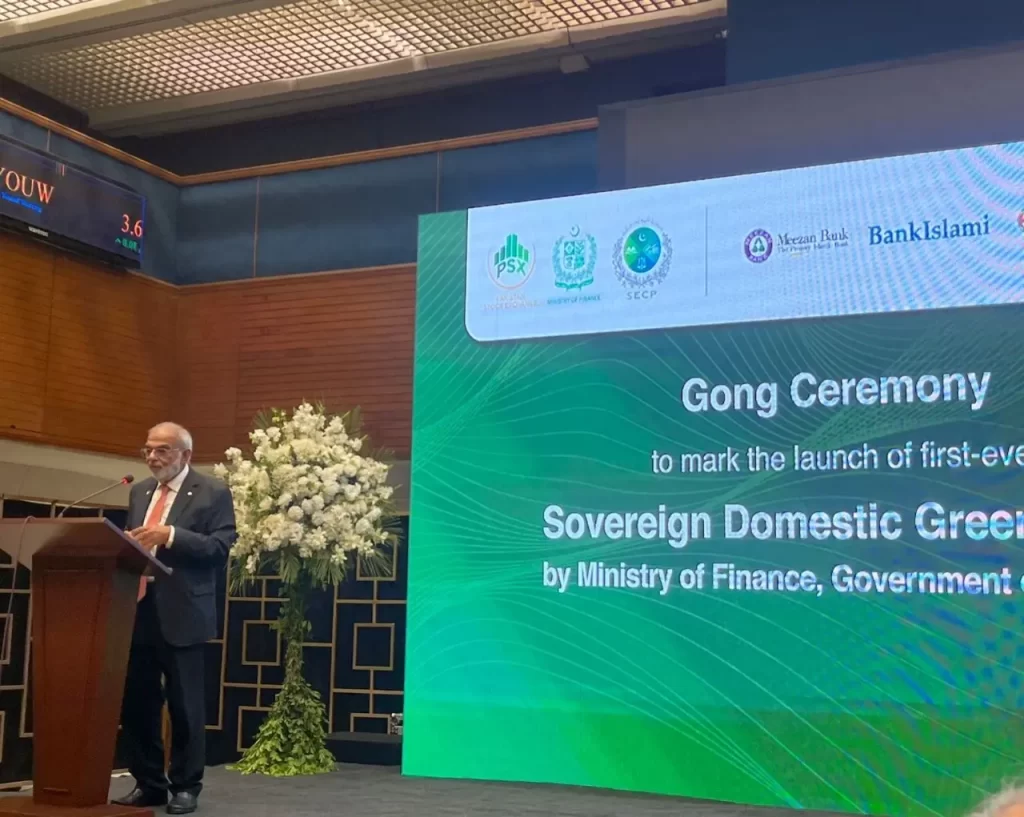
  • Pakistan Launches First Sovereign Green Sukuk; Meezan Bank Serves as Joint Financial & Shariah Advisor

    The Government of Pakistan, with strategic support from Meezan Bank and the Pakistan Stock Exchange, has launched its first sovereign Green Sukuk—marking a significant advancement in sustainable and Shariah-compliant public financing.

    Meezan Bank played a central role in this landmark issuance, serving as Joint Financial and Shariah Advisor. In addition to its advisory responsibilities, the Bank was instrumental in developing the Sustainable Investment (SI) Sukuk Framework, which was approved by the federal cabinet in April 2025. The framework aligns with international best practices and integrates both the United Nations Sustainable Development Goals (SDGs) and the Maqasid-e-Shariah.

    To support market readiness and investor participation, Meezan Bank conducted a series of information sessions and webinars, engaging Non-Resident Pakistanis, financial institutions, asset management companies, and ESG-focused investors. The Bank also collaborated with Dubai Islamic Bank Pakistan, Bank Islami, and Bank Alfalah Islamic to ensure full compliance with Shariah principles and uphold the structural integrity of the transaction.

    A ceremony was held at the Pakistan Stock Exchange (PSX) to commemorate the launch, attended by Mr. Muhammad Aurangzeb, Federal Finance Minister; Dr. Shamshad Akhtar, Chairperson, PSX; and Mr. Irfan Siddiqui, Founding President & CEO of Meezan Bank.

    Pakistan Launches First Sovereign Green Sukuk; Meezan Bank Serves as Joint Financial & Shariah Advisor

    The Rs. 30 billion issuance received an overwhelming response, with bids exceeding Rs. 161 billion—an oversubscription of 5.4 times within two hours. In view of the strong demand, the issue size was raised to Rs. 31.98 billion. The auction was conducted via the Pakistan Stock Exchange and executed by the Pakistan Domestic Sukuk Company Limited (PDSCL), a wholly owned entity of the Ministry of Finance.

    The Green Sukuk is a three-year Ijarah-based instrument, offering semi-annual rental returns. It is fully tradable on the Pakistan Stock Exchange and qualifies for Statutory Liquidity Requirement (SLR). With a minimum investment of PKR 5,000, the issuance was designed to encourage broad participation, including retail investors, institutions, and Roshan Digital Account (RDA) holders.

    Proceeds will finance selected green infrastructure projects, including the Garuk Storage Dam in Kharan, Naigaj Dam in Dadu (Sindh), and the 26MW Shagarthang Hydropower Project in Skardu. These initiatives aim to improve water resource management, expand renewable energy capacity, and strengthen climate resilience in underserved areas.

    Also Read: AAOIFI and Meezan Bank jointly hosted a public hearing session on the new AAOIFI Sukuk Standard

  • Business Confidence improves significantly, reveals OICCI’s Survey

    The Overseas Investors Chamber of Commerce and Industry (OICCI) has unveiled the results of its Business Confidence Index (BCI) Survey – Wave  27, conducted across Pakistan in March and April 2025 following its senior leadership’s meeting with Federal Minister for Finance & Revenue Government of Pakistan Senator Muhammad Aurangzeb today. The survey reflects significant improvement in overall business confidence, which improved substantially by 16 percentage points from negative 5 percent to positive 11 percent, compared to the previous wave conducted in October November 2024.

    The positive shift in sentiment across various sectors of the economy can largely be attributed to macroeconomic stability, declining inflation, and anticipated improvements in business conditions over the next six months. The Manufacturing sector led the recovery in the overall business confidence, improving from negative 3 percent to positive 15 percent, followed by the Retail/Wholesale sectors, which rose from negative 18 percent in the previous Wave 26 to positive 2 percent in the latest survey. The Services sector maintained a steady outlook and jumped from 2 percent to 10 percent positive in Wave 27.

    “The uptick in business confidence is a clear sign that our economic direction is on the right track. We are focused on creating a conducive environment for investment, supporting private sector growth, and ensuring long-term macroeconomic resilience. The improved sentiment among businesses is both encouraging and a validation of our collective efforts,” Finance Minister Muhammad Aurangzeb said.

    Commenting on the BCI Wave 27 findings, Yousaf Hussain, President OICCI, stated: “Over the past two years, overall business confidence has shown a notable improvement across the business community. This sharp recovery in the Business Confidence in the latest Wave 27 reflects the resilience of Pakistan’s business sector and its readiness to seize emerging growth opportunities. It is heartening to see positive momentum across key sectors, which reflects improved sentiment and growing trust in the country’s economic direction. To maintain this growing positivity in the business confidence” Yousaf Hussain added, “there must be greater policy consistency, transparency and active engagement with the key stakeholders including OICCI members.”

    The BCI Wave 27 survey revealed increased optimism for the next six months, with 45 percent of the respondents expressing positive expectations. Key contributors to this positive outlook include economic growth, improved government policies, investment climate, and security situation.

    Despite the positive trend, 53 percent of the survey respondents reported a negative outlook on business conditions over the past six months, which is a substantial improvement from 66 percent negative sentiments in Wave 26. The key concerns indicated in the survey related to political stability, Rupee FX parity, Energy, and trade policies.

    The BCI of foreign investors, OICCI members randomly selected for the survey, showed a remarkable increase from positive 6 percent to 17 percent. This improvement is primarily attributed to better global business climate, an improved industry environment in Pakistan over the past six months, and expectations of increased capital investment in the coming six months.

    Abdul Aleem, Chief Executive/Secretary General OICCI, further highlighted, “The latest BCI Wave 27 results were better than anticipated, with positive expectations reflected across all major sectors. Employment prospects, expansion plans, and investment expectations demonstrated notable gains, particularly in the Manufacturing and Retail sectors. Despite notable improvement on the overall BCI”, M. Abdul Aleem added, “the new investment plans overall showed an improvement of 19 percent, but remained negative, which is an area of concern and needs to be addressed to further accelerate economic growth, energize Large Scale Manufacturing, trade and export.”

    Looking ahead, the BCI Wave 27 respondents highlighted inflation, taxation, inconsistent government policies, and rupee devaluation as the key threats in order of priority. The top two concerns remain unchanged from the previous wave, indicating ongoing challenges in these areas.

    The OICCI BCI survey is conducted twice a year and reflects the views of major business stakeholders representing nearly 80 percent of Pakistan’s GDP. The survey covers responses from various sectors, including Manufacturing, Services, and Retail/Wholesale, and assesses perceptions at regional, national, and business entity levels. The survey is conducted face to face throughout the major business centers of the country including Karachi, Lahore, Rawalpindi /Islamabad, Peshawar, Faisalabad etc.

    Also Read: OICCI urges key tax reforms to increase tax-to-GDP ratio to 14pc

  • JS Investments, Gohar Developers Launch Pakistan’s First Shariah-Compliant Green Hotel REIT

    JS Investments Limited (JSIL), Pakistan’s oldest private sector Asset Management and REIT Management Company licensed by the Securities and Exchange Commission of Pakistan (SECP), has partnered with Gohar Group of Companies, a leading real estate group, to officially launch JS Hotel REIT (JSHR), Pakistan’s first Shariah-compliant hybrid hotel REIT featuring a multinational, globally renowned hotel brand in Hyderabad, Sindh.

    The fund is now open for investments from both local and international accredited investors. Interested individuals and institutions can reach out to JS Investments to explore participation

    Following SECP’s regulatory approvals, JS Hotel REIT reaches a significant milestone today with the signing of a strategic investment agreement. The Gohar Group of Companies, through its owners and partners, has joined as a founding strategic investor with an anchor commitment comprising both land and equity contributions.

    Anchored by a 139-key premium hotel operated under a franchise model with a global hospitality brand, JS Hotel REIT brings institutional-grade real estate investment to Pakistan’s emerging hospitality sector. Designed with a forward-looking approach, the project incorporates environmentally responsible construction practices, supporting the growing demand for sustainable infrastructure in Pakistan’s urban centers.

    Ms. Iffat Zehra Mankani, CEO of JS Investments Limited, stated:
    “As the manager of Pakistan’s first hotel REIT, we are pleased to offer investors a professionally managed and regulated investment vehicle backed by international hospitality standards. This partnership supports our broader vision of creating new asset classes that contribute to Pakistan’s economic and infrastructure development.”

    Hyderabad’s growing commercial activity and tourism has outpaced the city’s existing hospitality infrastructure. A premium international hotel brand, now under construction, is set to bridge this gap with world-class services for both business and leisure travelers.

    Muhammad Hanif Gohar, Chairman of Gohar Developers, added:
    “We are proud to collaborate with JS Investments on this pioneering project. By introducing a multinational brand to Hyderabad, we aim to deliver a landmark destination that supports the city’s growth and positions it as a hub for business and tourism.

    Regulatory and Investor Disclaimers
    This announcement relates to the launch of JS Hotel REIT through private placement.
    Units are not being offered to the general public at this stage.
    The Information Memorandum is available to accredited investors only, in accordance with SECP regulations.
    Prospective investors should review offering documents and consult their professional advisors before making investment decisions.

    Also Read: Mobilink Bank becomes the first in the banking industry to bag Top Employer in Pakistan for 2025

  • Mobilink Bank becomes the first in the banking industry to bag Top Employer in Pakistan for 2025

    Pakistan’s leading digital microfinance bank, Mobilink Bank, has been certified as a Top Employer in Pakistan for 2025 by the prestigious Top Employers Institute, a global authority recognizing excellence in people practices. Mobilink Bank is Pakistan’s first and only bank to receive this prestigious certification, affirming its standing as one of the country’s most inclusive and diverse institutions.

    The certification places Mobilink Bank among the most enterprising organizations that provide a thriving work culture and prioritize employee well-being and professional growth. The milestone elevates the bank as only the second OpCo within the VEON Group (after Beeline Uzbekistan) and among the top ten organizations across Pakistan to have achieved this distinction.
    Mobilink Bank’s recognition stems from its pioneering initiatives that champion inclusivity and empowerment within the workplace and beyond.  Its ‘MobilinkHer’ program is a dedicated women’s returnship initiative designed to reintegrate talented women into the workforce after career breaks, offering them tailored support and professional development opportunities, while ‘Humqadam’ focuses on creating a more accessible and accommodating environment for differently-abled persons. Meanwhile, the flagship Women Inspirational Network (WIN)’ actively promotes female leadership and financial inclusion through capacity building, mentorship, and outreach.
    “This global recognition reflects our team’s drive to build an inclusive and empowering workplace,” said Haaris Mahmood Chaudhary, President and CEO Mobilink Bank. “Diversity and a strong organizational culture fuels innovation, and we’re proud to lead by example in Pakistan’s financial sector.”
    Aleena Tanvir, Chief People Officer at Mobilink Bank, said, “At Mobilink Bank, our people are at the heart of everything we do. We are deeply committed to building a workplace rooted in inclusivity, growth, and continuous learning. Being recognized by the prestigious Top Employers Institute is a powerful affirmation of our efforts to cultivate and nurture a culture that inspires talent, drives innovation, and reinforces our position as an employer of choice.”
    The Top Employers Institute Certification Program assesses companies through a detailed Best Practices Survey that looks at their people strategy, work environment, hiring practices, diversity and inclusion efforts, and employee well-being. In 2025, the Top Employers Institute certified over 2,400 organizations across 125 countries/regions, positively impacting more than 13 million employees globally. By securing the prestigious certification, Mobilink Bank has raised the industry benchmark for people-centric leadership and inclusive growth.
  • How Pakistani Consumers Are Embracing Smarter Online Shopping

    Driven by platforms like Temu, Pakistan’s e-commerce boom is shaping a new generation of savvy digital shoppers


    Pakistan’s online shopping market surged to $7.7 billion in 2024 and is on track to grow at a compound annual growth rate (CAGR) of 17% through 2027, according to Payment and Commerce Market Intelligence (PCMI). But behind these numbers lies a deeper shift: consumers across Pakistan are not just shopping more online—they’re shopping smarter.


    As global e-commerce platforms like Temu enter the market, they’re not only expanding access to goods—they’re raising expectations. Pakistani shoppers are demanding more transparency, better service, and stronger consumer protections. This dynamic feedback loop between consumers and the market is reshaping Pakistan’s digital economy.


    Temu’s Impact in the Hands of Savvy Consumers

    Temu, a global marketplace now operating in over 90 markets including Pakistan, is playing an active role in this transformation. By connecting consumers directly with global manufacturers and sellers, Temu eliminates traditional retail markups while offering a broad product range and built-in service guarantees.


    Pakistani consumers are taking full advantage of this shift. Rimsha Nayyar, a Karachi-based digital marketer, says she was “honestly impressed” by the quality of home accessories she ordered on Temu, adding that detailed product descriptions made her feel more confident in her purchase decisions. Anusha Qazi, a Karachi-based crochet artist, praised Temu’s after-sales support: “Customer service resolved my product return issue quickly, I gave them proof and the company refund me the same amount” Sabahat, a first-time buyer from Rawalpindi, noted that their Temu order “arrived earlier than expected and matched the descriptions.”


    These stories reflect more than isolated satisfaction—they highlight how shoppers are embracing a more empowered role in the e-commerce ecosystem.

    Smarter Shopping, Higher Standards

    Pakistani consumers today are digitally fluent and increasingly selective. They compare prices across platforms, examine seller reviews, and engage actively in online communities—sharing firsthand experiences that shape broader market perceptions. With a growing emphasis on quality, transparency, and service, consumers are setting new expectations for the online shopping experience.


    Temu entered the market already equipped to meet these rising standards. The platform offers a range of consumer-friendly services, including the Temu Purchase Protection Program, free shipping on all orders, and free returns within 90 days, and a delivery guarantee with refunds for any issues. Additionally, items purchased from Temu are eligible for a price adjustment policy: if the selling price of an item drops within 30 days of purchase, Temu will refund the price difference to the customer.


    These built-in protections, combined with a 24-hour customer service center ready to assist with any concerns, demonstrate how Temu is not just responding to consumer demands, but proactively supporting smarter, more confident online shopping.


    Looking Ahead

    Pakistan’s e-commerce landscape is in the midst of a structural shift—from early adoption to empowered engagement. With platforms competing to earn consumer trust and shoppers taking a more active role in shaping standards, the industry is poised for sustainable, consumer-first growth.


    Temu’s growing presence—and the evolving expectations it helps inspire—suggest that Pakistan’s digital shoppers aren’t just participating in a global trend. They’re helping define it.

    Also Read: Visa’s Value of Acceptance study: 78% of businesses in Pakistan View Digital Payments as Key to Growth

  • Visa’s Value of Acceptance study: 78% of businesses in Pakistan View Digital Payments as Key to Growth

    Visa (NYSE: V), a world leader in digital payments, highlights a significant increase in the adoption of digital payment methods by Small and Medium Enterprises (SMEs) in Pakistan in its ‘Value of Acceptance’ study. These businesses are increasingly recognizing the transformative potential of digital payments as a strategic investment for catalyzing their business growth.


    Visa’s ‘Value of Acceptance’ study surveyed SMEs across the Pakistan to understand the impact of accepting digital payments, assess the triggers and barriers associated with it versus cash, and gauge the level of openness to digital payment options among those currently accepting only cash.


    Leila Serhan, Senior Vice President and Group Country Manager for the North Africa, Levant, and Pakistan (NALP) region, Visa, said: “Visa’s Value of Acceptance Study highlights that digital payment acceptance is undergoing a decisive shift from a ‘nice-to-have’ feature to a ‘must-have’ tool for business expansion and growth. Pakistan’s SMEs are embracing this change, with over 70% of card-accepting businesses reporting positive impact on revenue and footfall. Visa is proud to play a role in reshaping Pakistan’s economic landscape by providing world-class payment infrastructure, championing digital security, and driving acceptance through innovative products and solutions in the country.”


    Important investment for business growth

    In a business landscape where 85% respondents have faced concerns with cash payments, the Study finds that over three-quarters of respondents (78%) see digital payments as a crucial investment for growth. Merchants have confirmed that digital payment acceptance offers tremendous business impact, including customer convenience (43%), increased sales (32%), and improved efficiency (26%). The majority of the merchants see a positive impact on their business with increased revenue (75%) and footfall (87%) due to digital payments.


    Barriers to digital acceptance

    As the Pakistan government moves closer towards a plan to digitally transform the economy, and the surround governance on digital payment ecosystem, SME merchants feel that transparency in transaction fees (39%) and awareness around value versus price, security, and convenience would enable the transition to digital acceptance at an increased pace. The study highlights that 40% of merchants found the Point of Sale (POS) onboarding experience neutral or difficult. However, 37% of merchants still plan to acquire a POS. The study results show that complexities associated with onboarding merchants can be resolved with education and government support, specifically by providing financial education to both merchants and the broader ecosystem.


    Security of digital acceptance

    With the increasing shift to digital banking and payments, security becomes paramount for merchants and consumers alike, especially for those who have recently received financial access. The Value of Acceptance Study reveals that understanding the security measures of digital payments can help in driving digital adoption. Over 45% of merchants grapple with the issues of handling cash, such as robbery and embezzlement, and more than half of the respondents (58%) expect tips on security payments and the promise of secure B2B payments (58%).  Interestingly, only about 20% of the merchants have fraud concerns with card payments compared to 46% of merchants dealing with cash.

    Visa is supporting Pakistan’s vision to develop a strong digital payments infrastructure that meets consumers’ and businesses’ expectations for frictionless and secure payments.  Using debit and credit cards, interoperable payment QR codes, and digital wallets, the adoption of digital payments has massively accelerated in the country. This is reflected in the State Bank of Pakistan’s quarterly payment systems review as of March 2025:  Mobile banking apps, branchless banking wallets, and e-Money wallets collectively processed 1,450 million transactions worth PKR 24 trillion, marking a 12% increase in volume and a 28% increase in value.

    About the Study

    Visa commissioned 4SiGHT Research & Analytics to explore the impact of digital payments on small retailers and evaluate acceptance of digital payment options among a cash-driven sector. 4SiGHT interviewed 250 small retailers out of which 40% accepted cash payments only and 60% accepted cash and digital payments. The surveyed retailers were based in key cities of Pakistan, namely Lahore, Karachi and Islamabad. The face-to-face interviews took approximately 15 minutes and included a mix of nationalities and gender, representative of the UAE.

    Also Read: Will IMF allow tax reduction on cigarettes and beverages?

  • Will IMF allow tax reduction on cigarettes and beverages?

    The tobacco industry has placed two major demands before the government ahead of the upcoming budget: the introduction of a third tax tier with a reduced rate of Rs2,525 per 1,000 cigarette sticks, and a cut in the current federal excise duty (FED) from Rs5,050 to Rs3,800 per 1,000 sticks, learned from multiple sources.


    These demands come at a time when the industry faces increasing scrutiny for alleged manipulation of production data and tax evasion. Speaking at a roundtable organised by the Sustainable Development Policy Institute (SDPI) on the tobacco industry’s tax tactics in Karachi, Muhammad Asif Iqbal from the Social Policy and Development Centre (SPDC) accused major players of distorting declared production figures to influence fiscal policies.


    He revealed that although tobacco production increased by 19.2 per cent in the July-December period of the current fiscal year, compared to the same period in the previous fiscal year, the government’s revenue from FED declined by 2.4 per cent, and GST collection dropped significantly by 26.1 per cent.


    According to Iqbal, illicit (non-tax-paid) trade is primarily driven by locally manufactured cigarettes, which account for 21.3 per cent of the market. Additionally, smuggled cigarettes contribute to 11.9 per cent of total cigarette consumption. These figures indicate that while illicit trade is a concern, it is significantly lower than the exaggerated claims made by the tobacco industry.


    The SPDC’s findings challenge the narrative often used by tobacco companies that higher taxes drive consumers toward smuggled or counterfeit products. Instead, the data suggests the industry’s own practices contribute significantly to revenue losses and illicit trade.


    As the budget season nears, public health advocates and fiscal experts warn that yielding to the tobacco industry’s demands could undermine both health policy goals and tax integrity. There are growing indications that the IMF may be inclined to accept the government’s proposals, a development that raises concerns about the Fund appearing to side with the tobacco industry. If any flexibility is granted, the tobacco sector could potentially gain an additional Rs10-20 billion annually, at the cost of a significantly higher health burden for the country, potentially ten times greater than the revenue benefit.

    Also Read: Illicit Cigarette Trade Draining Billions of Rupees Annually Due to Weak Enforcement

  • LuLu Financial Holdings Partners with ABHI to Advance Financial Inclusion and Cross-Border Remittance Solutions

    LuLu Financial Holdings, a leading global financial services conglomerate, has partnered with Abhi Middle East Limited to enhance financial inclusion and improve access to timely remittance solutions. As part of the partnership, workers in the UAE will be able to access their earned wages instantly and remit funds to their families back home through LuLu Exchange — without having to wait for payday. 

    Through this initiative, workers in the UAE will benefit from Earned Wage Access (EWA) and Send Now, Pay Later (SNPL) services, giving them greater financial flexibility and control over their income. By offering instant access to earned wages and enabling timely remittances, the partnership addresses a key financial need among expatriate workers, empowering them to support their families with greater ease and security.

    Abhi, an embedded finance platform specializing in technology-driven solutions, will provide the operational framework for LuLuFin. This will enable customers to access their earned wages before their scheduled payday while also allowing employees to send money internationally instantly with the flexibility to defer payment. The service will be rolled out across all major corridors, with the launch for Pakistani customers scheduled for May.

    Thampi Sudarsanan, Chief Executive Officer – LuLu Exchange UAE, said:
    “This partnership with ABHI represents a bold step toward redefining financial connectivity for global diasporas. By leveraging cutting-edge technology, we aim to create a seamless bridge for expatriates to support their families, setting the stage for a future where financial inclusivity knows no borders.”

    Omair Ansari, Co-Founder & CEO of Abhi Middle East Limited, stated:
    “The partnership with LuLu Financial Holdings marks a significant step in enabling expatriates to access their hard-earned wages seamlessly and support their families back home without financial strain. By integrating ABHI’s technology with Lulu’s extensive market expertise, we are dedicated to promoting financial inclusion and providing underserved communities with greater flexibility and convenience in managing their finances.”

    This partnership underscores LuLuFin’s commitment to enabling economic empowerment through innovative financial solutions. By joining hands with ABHI, a pioneer in digital financial services, the initiative will ensure that individuals and small businesses gain access to timely credit, which can be instrumental in fostering entrepreneurial growth and uplifting communities.

    Also Read: ABHI and TPL Corp Celebrate the Launch of ABHI Microfinance Bank

  • EO Partners with NIC Karachi for Empowering Startup Founders

    Entrepreneurs’ Organization (EO) has signed a partnership with the National Incubation Center (NIC) – Karachi aimed at empowering its founders under its accelerator program, which has been designed specifically for founders and business owners who are generating between USD $250,000 and $1 million in annual revenue.

    This powerful initiative is now available to early-stage entrepreneurs in the country, offering a structured pathway for business owners striving to scale their ventures beyond the $1 million revenue mark. The program fills a crucial gap in Pakistan’s entrepreneurial ecosystem by providing these growth-minded individuals with a global curriculum, strategic mentorship, and unparalleled networking opportunities.

    EO Accelerator’s arrival in Pakistan is part of a broader vision to support entrepreneurship as a key driver of economic growth, job creation, and innovation. With Pakistan’s startup ecosystem gaining international attention and investment, EO’s global platform provides Pakistani entrepreneurs with the credibility and connectivity needed to thrive in global markets, Dr Noman Said from EO Accelerator said.

    Entrepreneurs’ Organization launched EO Accelerator Program in Pakistan. The Entrepreneurs’ Organization (EO), the world’s leading peer-to-peer network of successful business owners, launched its global EO Accelerator program in Pakistan.

    Yasmin Dadabhoy has been appointed as President for the Pakistan Chapter. Usama Sultan Shamsi assumed the role of EO Accelerator Chair for Karachi, Dr Noman Said as the Co-Chair for Karachi, and Rizwan Ahmed as Co-Chair MarCom.

    “This is a monumental step in building a stronger pipeline of successful companies in Pakistan,” noted Noman Ahmed Said,
    technopreneur and Co-Chair said “EO Accelerator can play a transformational role for founders who have the drive but need
    structure, mentorship, and community to scale.”

    “With the launch of EO Accelerator in Pakistan, we are opening doors for ambitious founders to build scalable, sustainable businesses,” he said and added, “This program is not just about growth in numbers — it’s about developing leadership capacity, fostering accountability, and creating a mindset shift that helps entrepreneurs truly thrive.”

    The EO Accelerator program includes quarterly learning days facilitated by experts, monthly accountability group sessions,
    one-on-one mentorship, and access to EO’s global community of more than 18,000 entrepreneurs across 76 countries. It empowers participants to make better decisions, overcome challenges, and fast-track their growth journey.

    The program doesn’t just teach theory. It motivates youth to apply whatever they have learned — week after week — and measure progress in real business terms. Participants will get the tools to refine their strategy, attract and retain the right talent, manage cash flow smartly, and build execution habits that lead to breakthrough results.”

    Also Read: Mobilink Bank and Fatima Fertilizer partner to provide access to finance to empower the agri-community