Category: Finance

  • Bank Loans to Private Sector Witness an 86% Decline

    In a significant economic development, there has been an astonishing 86% decline in bank loans extended to the private sector. This substantial reduction raises concerns and points to a shift in the dynamics of lending activities, potentially impacting businesses, entrepreneurs, and overall economic growth.

    The sharp decline in bank loans to the private sector reflects a noteworthy trend that requires a thorough examination of the factors contributing to such a substantial reduction in lending. Understanding the root causes of this decline is crucial for policymakers, financial institutions, and businesses alike, as it sheds light on the challenges faced by the private sector in accessing crucial financial resources.

    Several factors may be influencing this drastic decline in bank loans. Economic uncertainties, changes in lending policies, and shifts in the risk appetite of financial institutions are potential contributors that warrant close scrutiny. Addressing these factors and fostering an environment conducive to private sector growth becomes imperative to stimulate economic activity and support businesses in their developmental endeavors.

    The impact of the decline in bank loans extends beyond just the private sector, as it has broader implications for the overall economic landscape. The reduction in funding available for businesses may hinder their expansion plans, limit investment in new projects, and impede job creation, thereby affecting the overall economic well-being of the country.

    As stakeholders delve into the details surrounding the significant decline in bank loans to the private sector, it becomes essential to formulate strategic measures that can revitalize lending activities. Policymakers, financial institutions, and business leaders need to collaborate to create an environment that encourages responsible lending, mitigates risks, and fosters a conducive atmosphere for sustainable economic growth.

    Key Aspects of the 86% Decline in Bank Loans to the Private Sector:

    Drastic Reduction: Bank loans to the private sector witness an astonishing 86% decline, raising concerns about the lending dynamics.

    Examining Root Causes: Understanding the factors contributing to the decline is crucial for policymakers, financial institutions, and businesses.

    Potential Influencing Factors: Economic uncertainties, changes in lending policies, and shifts in risk appetite may be contributing to the decline.

    Broader Economic Implications: The decline has broader implications for economic activity, potentially hindering business expansion and job creation.

    As the economic landscape grapples with a significant reduction in bank loans to the private sector, concerted efforts are needed to address the root causes and formulate effective strategies. Reinvigorating lending activities is essential for stimulating economic growth, supporting businesses, and fostering a resilient and dynamic financial environment in the country.

    Also Read: CRISP Program: Pakistan, World Bank set to Collaborate
  • CRISP Program: Pakistan, World Bank set to Collaborate

    In a collaborative effort, Pakistan is set to engage with the World Bank to secure an additional financing of $250 million for the Competitive and Livable City of Karachi (CRISP) Program. This strategic collaboration reflects Pakistan’s ongoing commitment to addressing urban development challenges, enhancing the livability of cities, and fostering competitiveness in key metropolitan areas.

    The decision to seek additional financing for the CRISP Program underscores the significance of this initiative in the broader context of urban development in Pakistan. The CRISP Program, aimed at transforming Karachi into a competitive and livable city, has been pivotal in addressing infrastructure gaps, promoting sustainable urban practices, and improving the overall quality of life for residents.

    The engagement with the World Bank for additional financing highlights the international community’s recognition of the importance of urban development in Pakistan and the positive impact that well-executed urban projects can have on the country’s economic and social fabric. The World Bank’s involvement signifies its confidence in the potential of the CRISP Program to bring about positive transformations in Karachi and serve as a model for sustainable urban development.

    While the specifics of the additional financing are yet to be detailed, it is anticipated that the funds will be directed towards key aspects of the CRISP Program, such as infrastructure enhancement, environmental sustainability, and the promotion of economic activities in Karachi. The collaboration between Pakistan and the World Bank in securing this additional financing is expected to contribute significantly to the successful implementation of the CRISP Program and the broader goal of creating competitive and livable urban spaces in the country.

    Key Aspects of Pakistan’s Engagement with World Bank:

    Collaborative Effort: Pakistan collaborates with the World Bank to secure $250 million in additional financing for the CRISP Program.

    Urban Development Commitment: The decision reflects Pakistan’s commitment to addressing urban development challenges and fostering competitiveness in key metropolitan areas.

    Significance of CRISP Program: The CRISP Program plays a pivotal role in transforming Karachi into a competitive and livable city, addressing infrastructure gaps, and improving overall quality of life.

    International Recognition: The World Bank’s involvement signifies international recognition of the importance of urban development in Pakistan and the positive impact of well-executed urban projects.

    As Pakistan and the World Bank join forces for additional financing for the CRISP, the collaboration stands as a testament to the shared commitment to sustainable urban development. The infusion of additional funds is poised to accelerate the positive transformations in Karachi, creating a model for other cities and contributing to the overarching goal of building competitive and livable urban spaces in Pakistan.

    Also Read: Shariah Standards: SBP Urges Banks to Embrace AAOIFI’s

  • Shariah Standards: SBP Urges Banks to Embrace AAOIFI’s

    In a noteworthy directive, the State Bank of Pakistan (SBP) has called upon banks to adopt Shariah standards and practices formulated by the Accounting and Auditing Organization for Islamic Financial Institutions (AAOIFI). This strategic move underscores the SBP’s commitment to enhancing the Islamic banking sector’s adherence to globally recognized Shariah principles and fostering consistency in Islamic financial practices.

    The adoption of AAOIFI’s Shariah standards and practices aligns with the SBP’s objective to strengthen the regulatory framework governing Islamic banking in Pakistan. AAOIFI, being an internationally recognized standard-setting body, plays a pivotal role in formulating and disseminating Shariah standards that contribute to the harmonization of Islamic financial practices worldwide.

    By urging banks to embrace AAOIFI’s Shariah standards, the SBP aims to create a more unified and standardized approach to Islamic banking operations. Standardization enhances transparency, builds investor and consumer confidence, and reinforces the credibility of Islamic financial institutions. This directive also emphasizes the importance of aligning domestic practices with global standards to foster a robust and interconnected Islamic finance ecosystem.

    The adoption of AAOIFI’s Shariah standards and practices is expected to bring about greater consistency in the interpretation and application of Islamic financial principles. As banks align their operations with these standards, it will contribute to the overall development and maturity of the Islamic finance industry in Pakistan, positioning it as a global player in the realm of Shariah-compliant banking.

    Key Aspects of SBP’s Directive on Adoption of AAOIFI’s:

    Strategic Directive: The SBP urges banks to adopt Shariah standards and practices formulated by AAOIFI.

    Enhancing Regulatory Framework: The move aligns with the SBP’s objective to strengthen the regulatory framework governing Islamic banking in Pakistan.

    International Recognition: AAOIFI is an internationally recognized standard-setting body, contributing to global harmonization of Shariah principles in Islamic finance.

    Unified Approach: Embracing AAOIFI’s standards aims to create a more unified and standardized approach to Islamic banking operations.

    As the SBP takes a proactive stance in urging banks to adopt AAOIFI’s Shariah standards, the directive sets the stage for a more robust, transparent, and globally integrated Islamic banking sector in Pakistan. The alignment with international best practices positions the country’s Islamic finance industry for sustained growth, contributing to its credibility on the global stage and fostering increased confidence among stakeholders.

    Also Read: Meezan Bank & Institute of Business Administration (IBA) join hands to launch Meezan Justuju – An Islamic Finance Talent Development Program for Fresh Graduates

  • FBR Commits to IMF: Pledges to Increase Taxes on Digital Markets

    In a significant development, the FBR commits to the International Monetary Fund (IMF) that it will undertake measures to raise taxes on digital markets during the fiscal year 2024. This commitment is part of Pakistan’s broader efforts to align its fiscal policies with international standards, address economic challenges, and fulfill the conditions outlined in the IMF program.

    The pledge to increase taxes on digital markets is a strategic move by the FBR to enhance revenue generation and adapt tax policies to the evolving landscape of digital commerce. With the rapid growth of digital transactions and online marketplaces, taxing digital activities has become a focal point for governments worldwide, and Pakistan’s commitment to this initiative reflects its intent to keep pace with global fiscal trends.

    The specific details of the tax measures, including the nature and extent of the proposed increases, are yet to be disclosed. However, the commitment underscores the FBR’s recognition of the importance of digital markets in the modern economy and its commitment to ensuring a fair and equitable taxation system that encompasses the digital sphere.

    The taxation of digital markets holds implications for various stakeholders, including businesses engaged in online commerce and consumers who participate in digital transactions. As Pakistan takes steps to align its tax policies with international norms, the commitment to raising taxes on digital markets is likely to bring about changes in how digital transactions are taxed and regulated within the country.

    Key Aspects of FBR’s Commitment to Increase Taxes on Digital Markets:

    Strategic Commitment: The FBR commits to the IMF to increase taxes on digital markets during the fiscal year 2024.

    Alignment with International Standards: The commitment is part of Pakistan’s efforts to align fiscal policies with international standards and fulfill IMF program conditions.

    Adapting to Digital Commerce: The move reflects the FBR’s recognition of the growth of digital transactions and the need to adapt tax policies to the evolving landscape of digital commerce.

    Implications for Stakeholders: The taxation of digital markets will have implications for businesses engaged in online commerce and consumers participating in digital transactions.

    As the FBR makes a commitment to the IMF to raise taxes on digital markets, the initiative aligns with global trends in digital taxation and positions Pakistan to navigate the challenges and opportunities presented by the digital economy. The specifics of the tax measures are awaited, and stakeholders will be keenly observing how these changes impact digital transactions and contribute to the broader fiscal landscape of the country.

    Also Read: Raqami Islamic Digital Bank Collaborates with Euronet Pakistan for Pioneering Digital Payments

  • Pakistan Tells IMF of Intent to Increase Key Interest Rate

    In a recent communication with the International Monetary Fund (IMF), Pakistan Tells IMF its intention to raise the key interest rate should there be a simultaneous occurrence of rupee depreciation and a surge in inflation. This strategic communication emphasizes Pakistan’s proactive approach to economic management, signaling its commitment to addressing potential challenges and maintaining financial stability in the face of currency depreciation and inflationary pressures.

    The statement to the IMF underscores Pakistan’s commitment to implementing preemptive measures in response to economic indicators that could pose risks to the overall financial health of the country. The key interest rate, being a crucial tool in monetary policy, plays a significant role in managing inflationary pressures and stabilizing the currency.

    The proactive stance outlined in the communication aligns with global best practices in monetary policy, where central banks often adjust interest rates to counteract potential inflationary trends and currency depreciation. This approach reflects Pakistan’s commitment to maintaining a balanced and resilient economic framework that can withstand external shocks and internal pressures.

    The potential increase in the key interest rate, as communicated to the IMF, is contingent on specific economic conditions, such as a simultaneous fall in the rupee’s value and an increase in inflation. This strategic linkage indicates a nuanced and targeted response, ensuring that monetary policy adjustments are made in response to specific challenges rather than as a blanket measure.

    Key Aspects of Pakistan’s Communication to IMF on Key Interest Rate:

    Proactive Economic Management: Pakistan communicates to the IMF its intention to raise the key interest rate in response to potential rupee depreciation and inflation rise.

    Commitment to Financial Stability: The communication underscores Pakistan’s commitment to addressing economic challenges proactively and maintaining financial stability.

    Tool in Monetary Policy: The key interest rate is highlighted as a crucial tool in monetary policy, playing a significant role in managing inflation and currency stability.

    Global Best Practices: Pakistan’s approach aligns with global best practices in monetary policy, where interest rates are adjusted to counteract potential economic risks.

    As Pakistan communicates its intent to the IMF regarding potential economic challenges, the emphasis on preemptive measures and the strategic use of the key interest rate showcases the country’s commitment to responsible economic management. This approach reflects a proactive stance that aims to ensure the resilience of the financial system, fostering stability in the face of potential external and internal economic pressures.

    Also Read: Pakistan Assures IMF of Maintaining a Market-Determined Rate

  • Pakistan Assures IMF of Maintaining a Market-Determined Rate

    In a recent development, Pakistan assures the IMF of its dedication to maintaining a market-determined exchange rate. This commitment is a significant aspect of the ongoing collaboration between Pakistan and the IMF, aiming to stabilize the country’s economy, enhance financial transparency, and meet the conditions outlined in the IMF program.

    The assurance to maintain a market-determined exchange rate underscores Pakistan’s commitment to adopting prudent economic policies that align with global financial standards. The exchange rate, being a critical factor in economic stability, plays a pivotal role in shaping the country’s external trade competitiveness and balance of payments.

    Pakistan’s commitment to a market-determined exchange rate is in line with the IMF’s objectives and recommendations, which emphasize the importance of allowing market forces to play a role in determining the value of the national currency. This approach aims to create a more flexible and responsive exchange rate system, facilitating economic adjustments and maintaining competitiveness in the global market as Pakistan assures IMF.

    The assurance provided to the IMF holds significance in the context of ongoing economic reforms in Pakistan. It reflects the government’s dedication to implementing measures that enhance financial stability, attract foreign investment, and strengthen the country’s position in the international economic arena.

    Key Aspects of Pakistan’s Assurance to IMF on Exchange Rate:

    Reaffirmation of Commitment: Pakistan reassures the IMF of its commitment to maintaining a market-determined exchange rate.

    Ongoing Collaboration: The commitment is a crucial aspect of the ongoing collaboration between Pakistan and the IMF, focusing on stabilizing the country’s economy.

    Economic Stability: The exchange rate commitment aligns with Pakistan’s dedication to adopting prudent economic policies, promoting stability, and meeting IMF program conditions.

    Global Financial Standards: Pakistan’s commitment reflects its adherence to global financial standards, emphasizing the importance of a market-driven exchange rate for economic competitiveness.

    As Pakistan assures the IMF regarding the exchange rate, the commitment underscores the country’s determination to implement sound economic policies. Adopting a market-determined exchange rate is a strategic move that aligns with global financial norms and positions Pakistan toward economic stability, transparency, and enhanced competitiveness in the international arena.

    Also Read: Pakistan’s Textile Exports Decline by 5% in First Half of FY24

  • Pakistan’s Textile Exports Decline by 5% in First Half of FY24

    In a noteworthy economic development, Pakistan’s textile exports have observed a decline of 5% in the first half of the fiscal year 2024. This decrease, as reported by industry analysts, raises concerns and calls for a closer examination of the factors contributing to this contraction in one of Pakistan’s key economic sectors.

    The textile industry has long been a significant contributor to Pakistan’s export revenue, making any decline in this sector a matter of considerable economic importance. The first half of FY24 has witnessed a 5% reduction in textile exports, highlighting the challenges faced by the industry, including global economic conditions, fluctuations in demand, and potential disruptions in the supply chain.

    Analysts are closely monitoring the situation to identify the specific reasons behind the decline in textile exports. Economic experts suggest that external factors, such as global market dynamics and shifts in consumer preferences, could be influencing the downward trend. Additionally, internal challenges, including energy shortages, rising production costs, and regulatory issues, might be contributing to the contraction in textile exports.

    The decline in textile exports is a cause for concern as the textile sector plays a pivotal role in Pakistan’s overall economic landscape. The government, industry stakeholders, and policymakers may need to collaborate to formulate strategies aimed at addressing the challenges faced by the textile industry, ensuring its resilience, and fostering sustainable growth.

    Key Aspects of the Decline in Pakistan’s Textile Exports:

    Significant Economic Development: Pakistan’s textile exports experience a 5% decline in the first half of FY24, raising concerns about the health of the textile industry.

    Export Revenue Impact: The textile sector is a major contributor to Pakistan’s export revenue, making any decline in this sector a matter of considerable economic importance.

    Challenges Faced by the Industry: Factors such as global economic conditions, fluctuations in demand, energy shortages, rising production costs, and regulatory issues are potential contributors to the decline.

    Need for Collaborative Strategies: To address the challenges faced by the textile industry, collaborative efforts from the government, industry stakeholders, and policymakers may be essential for sustainable growth.

    As Pakistan grapples with the decline in textile exports, attention to the challenges faced by this critical sector becomes imperative. The identification of key contributing factors and the formulation of strategic measures to address them are essential to ensure the resilience and sustained growth of the textile industry, securing its pivotal role in Pakistan’s economic landscape.

    Also Read: IT Exports Soar to Record High of $303 Million in December 2023

  • Pakistan Initiates Talks with IMF for the Final Tranche

    Pakistan has embarked on discussions with the International Monetary Fund (IMF) to secure the final tranche of a $1.1 billion loan. This crucial financial negotiation is part of Pakistan’s ongoing collaboration with the IMF, aiming to address economic challenges, stabilize the financial landscape, and pave the way for sustained growth.

    The talks for the last tranche of the IMF loan hold significance in the context of Pakistan’s economic recovery and reform agenda. The funds obtained from the IMF have played a pivotal role in bolstering the country’s foreign exchange reserves, mitigating balance of payment pressures, and implementing structural reforms to enhance economic resilience.

    The successful conclusion of these talks and the disbursement of the final tranche would mark a crucial milestone in Pakistan’s engagement with the IMF. It reflects the government’s commitment to fiscal discipline, economic reforms, and addressing macroeconomic imbalances, all of which are essential components for ensuring long-term economic stability.

    Pakistan’s collaboration with the IMF has been instrumental in navigating economic challenges, particularly in the wake of the global uncertainties and the impact of the COVID-19 pandemic. The financial support provided by the IMF has not only stabilized the economy but has also positioned Pakistan to attract further foreign investments, instill investor confidence, and foster sustained economic growth.

    Key Aspects of Pakistan’s Talks with IMF for the Final Tranche:

    Crucial Financial Negotiation: Pakistan engages in discussions with the IMF for the final tranche of a $1.1 billion loan, addressing economic challenges and stabilizing the financial landscape.

    Economic Recovery and Reform Agenda: The talks are a vital component of Pakistan’s economic recovery and reform agenda, aiming to bolster foreign exchange reserves and implement structural reforms.

    Milestone in IMF Engagement: The successful conclusion would mark a crucial milestone in Pakistan’s collaboration with the IMF, reflecting the government’s commitment to fiscal discipline and economic stability.

    Impact on Economic Resilience: The IMF’s financial support has played a key role in stabilizing the economy, navigating global uncertainties, and attracting foreign investments for sustained growth.

    As Pakistan embarks on discussions for the final tranche of the IMF loan, the outcome holds implications not only for the immediate economic landscape but also for the country’s long-term economic resilience and stability. This collaboration underscores the importance of international financial partnerships in navigating complex economic challenges and fostering sustainable growth.

    Also Read: Finance Ministry Set to Disburse Rs 30 Billion to PSO This Week

  • Egyptian Business Community Poised to Invest in Pakistan

    In a promising development, the Egyptian Business Community is showing strong indications of investing in Pakistan’s auto and agriculture sectors. This potential collaboration signifies a positive stride in fostering economic ties between the two nations and holds the prospect of bringing valuable expertise and capital into key sectors of Pakistan’s economy.

    The interest expressed by the Egyptian Business Community in Pakistan’s auto and agriculture sectors is a testament to the investment-friendly climate the country has been cultivating. The Pakistani government’s initiatives to attract foreign investments, coupled with the untapped potential in these sectors, present an attractive proposition for international investors seeking growth opportunities.

    This potential investment holds significant implications for both countries. For Pakistan, it represents an opportunity to benefit from foreign capital, technology transfer, and expertise in crucial sectors that play pivotal roles in the country’s economic landscape. The auto sector, in particular, stands to gain from potential advancements and collaborations, contributing to the growth and modernization of the industry.

    On the Egyptian side, this investment venture presents an avenue for diversifying their investment portfolio and tapping into the dynamic and rapidly evolving markets of Pakistan. The agriculture sector, known for its vast potential, offers ample opportunities for collaboration, technology exchange, and mutual economic growth.

    Key Aspects of the Egyptian Business Community’s Potential Investment:

    Positive Economic Ties: The interest shown by the Egyptian Business Community reflects a positive trajectory in economic relations between Egypt and Pakistan.

    Investment-Friendly Climate: Pakistan’s initiatives to attract foreign investments contribute to creating an environment conducive to international collaborations.

    Sectoral Opportunities: The focus on the auto and agriculture sectors presents valuable opportunities for both countries, encompassing technology transfer, expertise exchange, and mutual economic growth.

    As the Egyptian Business Community explores investment prospects in Pakistan’s auto and agriculture sectors, the potential collaboration holds the promise of fostering economic growth, technology transfer, and expertise exchange. This initiative exemplifies the shared commitment of both nations to harnessing international partnerships for the benefit of their economies.

    Also Read: IT Exports Soar to Record High of $303 Million in December 2023

  • Khushhali Microfinance Bank Limited Celebrates Highest Recovery Mark and Deposit Base for Fiscal Year 2023

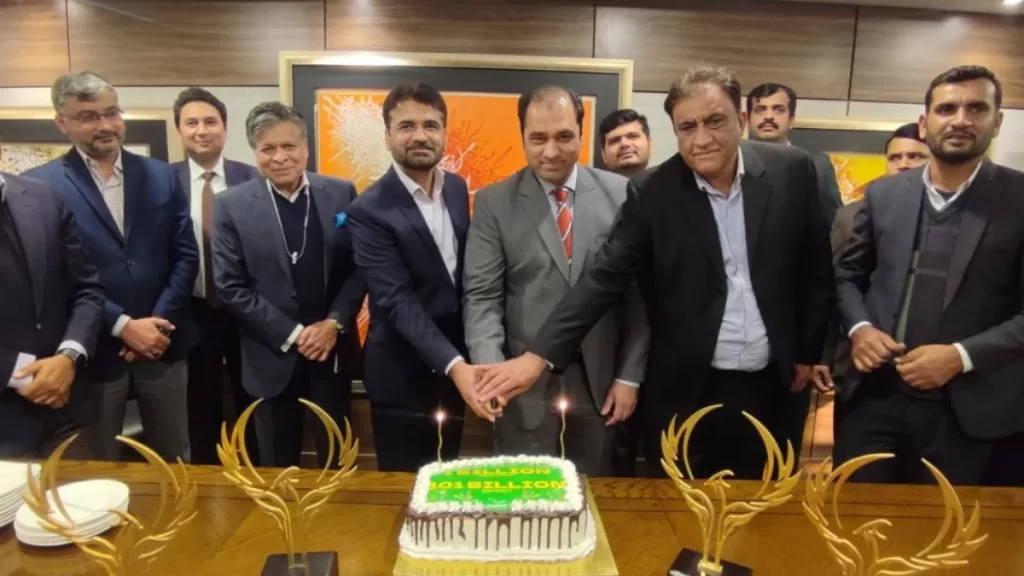
    Khushhali Microfinance Bank Limited (KMBL), the first-specialized microfinance bank in Pakistan, commemorated its achievement for the fiscal year 2023 (FY 2023). The newly established recovery unit of the microfinance bank has set new benchmarks, achieving a milestone of over PKR 01 Billion in recoveries from the charge-off portfolio through its newly established recovery unit and call center. The microfinance bank also surpassed its deposit target, achieving PKR 101 Billion in deposits. These results highlight KMBL’s remarkable resilience during challenging times. The achievement is largely attributed to the trust and confidence of retail (individual) depositors, constituting 90% of the total deposit and emphasizing KMBL’s strong relationship with its customers.

    To celebrate this accomplishment, the KMBL Team organized an in-house ceremony led by President & CEO Aameer Karachiwalla, accompanied by the management committee of KMBL. The event was a moment of pride and reflection, highlighting the collective efforts that contributed to the bank’s success.

    President and CEO Aameer Karachiwalla shared his thoughts on the achievement: “This remarkable achievement is a testament to the dedication of the entire Khushhali Team and the unwavering trust our customers place in us. We are proud to be a catalyst for positive change in the lives of the communities we serve. “

    Khushhali Microfinance Bank

    Chief Business Officer, Muhammad Aftab Alam, echoed the sentiment, saying, “Our focus on customer-centric solutions and sustainable practices has been integral to our success. We are committed to fostering financial inclusion and driving economic growth in our communities. He emphasized that the KMBL team has to remain focused on responsible lending and quality growth.”

    Looking ahead, Khushhali Microfinance Bank Limited remains dedicated to its mission of striving for excellence and adopting sustainable practices for the institution’s continued growth and its service to the community and customers.

    Also Read: Meezan Bank & Institute of Business Administration (IBA) join hands to launch Meezan Justuju – An Islamic Finance Talent Development Program for Fresh Graduates