Tag: Indus Motor Company

  • Indus Motor Company Brings the Gift of Clear Vision to 2,000 Underprivileged Students and Families

    Indus Motor Company (IMC), staying true to its promise of Concern Beyond Cars, has taken another step towards building healthier, stronger communities. In collaboration with Saylani Welfare Trust, IMC organized an eye screening camp for 2,000 underprivileged students and their families from schools located around the Port Qasim Industrial Area.

    The camp was held at The Citizens Foundation (TCF) School – Abdullah Goth and Development in Literacy (DIL) School – Jam Kanda, screening 1,200 students from TCF and 800 from DIL, Malir Campus. For many children, this was their first opportunity to undergo an eye checkup.

    Students who were diagnosed with vision problems were given corrective spectacles, prescribed eye drops, and professional consultations—completely free of cost. For these children, something as simple as a pair of glasses means being able to read the blackboard, keep up with lessons, and learn with confidence.

    Sharing his thoughts, Ali Asghar Jamali, CEO, Indus Motor Company, said: “At IMC, we believe good health and education are two sides of the same coin. If a child cannot see properly, how can we expect them to learn and dream big? Through this partnership with Saylani Welfare Trust, we want to remove such barriers and give our children the chance to reach their true potential. This is our way of giving back to the communities we are part of and building a brighter, healthier Pakistan.”

    This initiative is part of IMC’s Concern Beyond Cars philosophy, which looks beyond automobiles to support healthcare, education, and sustainable community development. By helping young students see clearly, IMC is not only improving eyesight but also opening new horizons for learning and growth.

    Also Read: “Heart Over Habit”: AKUH Calls for Changes in Habits Amid Rising Cardiac Cases in Young Adults
  • Indus Motor Company Hosts Senate Standing Committee on Industries and Production

    Indus Motor Company (IMC) welcomed the Senate Standing Committee on Industries and Production for a detailed visit to its state-of-the-art manufacturing facility. The committee, chaired by Senator Aon Abbas, received a comprehensive briefing on IMC’s operations, localization initiatives, and strategic contributions to Pakistan’s economy.

    The delegation included Senator Saleem Mandviwala, Senator Syed Masroor Ahsan, Senator Danesh Kumar, Senator Khalida Ateeb, and Senator Husna Bano, accompanied by Mr. Asad Islam Malhani, Additional Secretary, Ministry of Industries and Production.

    The visit highlighted IMC’s significant efforts under the “Make in Pakistan” initiative, particularly its progress in localization, employment generation, and investments. Toyota’s longstanding partnership in Pakistan has not only fostered technological advancement but also helped reduce reliance on imports, contributing positively to the national balance of payments.

    During the visit to IMC’s vehicle manufacturing plant, the delegation was deeply impressed by the scale, technological advancement, and operational efficiency of the facility. They toured Pakistan’s largest Sheet Metal Press Shop and observed firsthand the rigorous quality control systems and precision-driven manufacturing processes. CEO IMC, Mr. Ali Asghar Jamali, apprised the delegation that the Pakistan plant is recognized under Toyota’s global “Zero Defect Facilities”—underscoring the company’s steadfast commitment to delivering world-class quality and manufacturing excellence.

    While commending IMC’s efforts, Chairman Senator Aon Abbas emphasized the vital role of the local automotive sector in driving industrial growth and job creation. He reiterated the government’s commitment to strengthening domestic manufacturing capabilities and supporting high-value investments in the auto sector.

    Ali Asghar Jamali, CEO of Indus Motor Company, remarked: “We are honored to host the Standing Committee and showcase IMC’s role in promoting self-reliance through local manufacturing. Our commitment to the ‘Make in Pakistan’ vision continues to drive employment, reduce foreign exchange outflow, and support a cleaner, more efficient mobility future. However, to realize the full potential of this sector, it is imperative that the government ensures a stable, long-term automotive policy framework that encourages investment and industrial growth.”

    He also expressed concern over the rising import of used cars, stating: “Despite leading global brands having invested billions in local manufacturing, over 64% of the industry’s installed production capacity remains idle. The unchecked influx of used car imports not only disrupts the formal industry but also hampers the growth of Large-Scale Manufacturing (LSM), undermining national economic goals and thousands of local jobs.”

    The visit concluded with a renewed call for collaborative policymaking to unlock the auto industry’s potential, ensure technology transfer, and create a sustainable ecosystem that strengthens Pakistan’s industrial base.

    Also Read: Planning Minister Ahsan Iqbal Leads National Dialogue on Pakistan’s Creative Future URAAN PAKISTAN CONFERENCE 2025

  • Toyota Pakistan Leads Mangrove Plantation Drive in Collaboration with WWF-Pakistan

    In alignment with the Toyota Environmental Challenge 2050 and its commitment to the Sustainable Development Goals (SDGs), Indus Motor Company (IMC), in collaboration with WWF-Pakistan, conducted a mangrove plantation drive along the coastal belt of Karachi at the WWF Wetlands Centre.

    The initiative reflects IMC’s ongoing dedication to environmental preservation, echoing its long-term focus on climate action, ecosystem restoration, and community engagement. The activity featured an interactive learning session by WWF experts, emphasizing the critical role mangroves play in coastal protection, carbon sequestration, and biodiversity conservation. IMC employees volunteered in planting saplings, contributing to the restoration of Pakistan’s threatened mangrove forests.

    “This collaboration exemplifies Toyota’s global vision of creating a sustainable society in harmony with nature,” said Ali Asghar Jamali, CEO, Indus Motor Company. “Through our environmental efforts and collective action under the GDN umbrella, we remain committed to driving positive change for future generations.”

    The plantation drive forms part of IMC’s broader green efforts, including its Million Tree Plantation Program, through which over 920,000 trees have been planted across the country to promote reforestation and climate resilience. By year-end, an additional 6,000 mangrove saplings will be planted as part of this initiative.

    Also Read: Aga Khan University’s Digital Immunization Solution Recognized With International Digital Health Award 

  • Indus Motor Company Reports Strong Growth in 1HFY25 Amid Economic Recovery

    Indus Motor Company Limited (“the Company”) has announced its financial results for the half-year FY 24-25 ended December 31, 2024, showcasing strong growth amidst signs of economic recovery in Pakistan.


    The Company’s net sales turnover for the six-month period ended December 31, 2024, surged to Rs. 84.88 billion, up from Rs. 50.91 billion in the corresponding period last year. This significant increase was primarily driven by higher sales volumes of CKD and CBU vehicles, alongside improvements in cost efficiencies and localization efforts.


    During the period under review, Indus Motor Company posted a substantial increase in Profit After Tax (PAT), rising to Rs. 9.96 billion, as compared to Rs. 4.96 billion in the same period last year. The impressive profitability growth is attributed to increased volumes, lower input material costs, favorable exchange rate movements, and optimized cost management initiatives. Additional earnings from investments also played a key role in strengthening the Company’s financial position.


    Ali Asghar Jamali, Chief Executive Officer of IMC, commented, “This half of FY 2024-25 has been marked by a stable economic outlook, improved trade balance, and lower inflation, which have positively impacted the auto industry. While these developments are encouraging, challenges remain due to high taxation and duties that continue to affect vehicle affordability. We urge the government to introduce policy measures such as reducing import duties, rationalize the depreciation rates on used car imports, and ease the restrictions on auto financing to facilitate market expansion and further boost local manufacturing.”


    The Company’s Earnings Per Share (EPS) for the half-year stood at Rs. 126.69, as compared to Rs. 63.07 in the same period last year. In light of the positive performance, the Board of Directors has declared a second interim cash dividend of Rs. 37 per share, compared to Rs. 13.20 per share in the corresponding period last year.


    Additionally, the Board of Directors has appointed Mr. Giri Venkatesh as a Director, following the resignation of Mr. Akihiro Murakami, effective February 27, 2025. The Company expresses gratitude to Mr. Murakami for his contributions and extends a warm welcome to Mr. Venkatesh.


    Looking ahead, the Company remains committed to delivering high-quality products and services, enhancing customer satisfaction, and supporting the development of Pakistan’s automotive industry.

    Also Read: BYD Officially Commence Vehicle Deliveries in Pakistan

  • Indus Motor Company Hosts National Assembly’s Standing Committee on Industries and Production

    The National Assembly’s Standing Committee on Industries and Production, led by the Chairman Syed Hafeezuddin, visited Indus Motor Company (IMC) on Thursday, November 21st, 2024, for a comprehensive briefing on its operations. The delegation toured IMC’s state-of-the-art plant, witnessing its advanced manufacturing processes, localization efforts, and recent milestones. 

    The delegation included the following Members of the National Assembly; Mr. Shahid Usman, Ms. Kiran Imran, Dr. Mahesh Kumar Malani, Mr. Abdul Hakeem Baloch, Ms. Naz Baloch, Mr. Muhammad Iqbal Khan, Mr. Muhammad Saad Ullah. Mr. Muhammad Arshad Sahi and Dr. Mehreen Razzaq Bhutto attended the meeting virtually. The delegation was also accompanied by Mr. Asad Islam Malhani, Additional Secretary, Ministry of Industries and Production, along with Engr. Khuda Bukhsh, Chief Executive Officer, Engineering Development Board. 

    IMC has reaffirmed its commitment to localization in Pakistan’s automotive sector and highlighted further investment of PKR 4.1 billion in 2024. The development is planned to be completed in year 2026. This move bolsters the national economy, curtails import dependence, and generates employment opportunities and will further enhance IMC’s localization initiatives under “Make in Pakistan”. 

    The company has also expanded its global footprint by exporting Toyota Fortuner and Hilux vehicles to Oceania and raw materials to Egypt, becoming part of Toyota’s Global Supply Chain. Furthermore, IMC has sent Pakistani skilled human resource to Japan, enhancing the country’s reputation as a hub for skilled human resource. 

    Highlighting its commitment to innovation and sustainability, IMC has developed Pakistan’s first locally manufactured Hybrid Electric Vehicle, the Corolla Cross, with over 50% localized components. This underscores IMC’s dedication to the “Make in Pakistan” initiative and environmental sustainability. 

    Chairman, Syed Hafeezuddin praised IMC’s achievements, emphasizing the importance of supporting the local auto industry for economic growth and job creation. He reiterated the government’s commitment to fostering a self-sufficient Automotive Manufacturing Sector. 

    Ali Asghar Jamali, CEO of IMC, on the occasion said “We are pleased to host the Standing Committee on Industries and Production at IMC. Our ongoing investment in “Make in Pakistan” initiative is focused on job creation, reducing the burden on foreign payments, and contributing to the establishment of a sustainable automotive sector in Pakistan. 

    With the industry operating at one fourth of its installed production capacity, the government should curb the illegal import of used cars, which undermine the local industry and employment opportunities within the country. We continue to focus on working with the government, to ensure auto-sector policies support and strengthen the local industry for long-term growth.” 

    The visit underscored IMC’s pivotal role in advancing Pakistan’s industrial growth through localization, innovation, and global integration.

    Also Read: Stepping forward for children’s health, AKUH celebrates World Children’s Day with a series of vibrant festivities

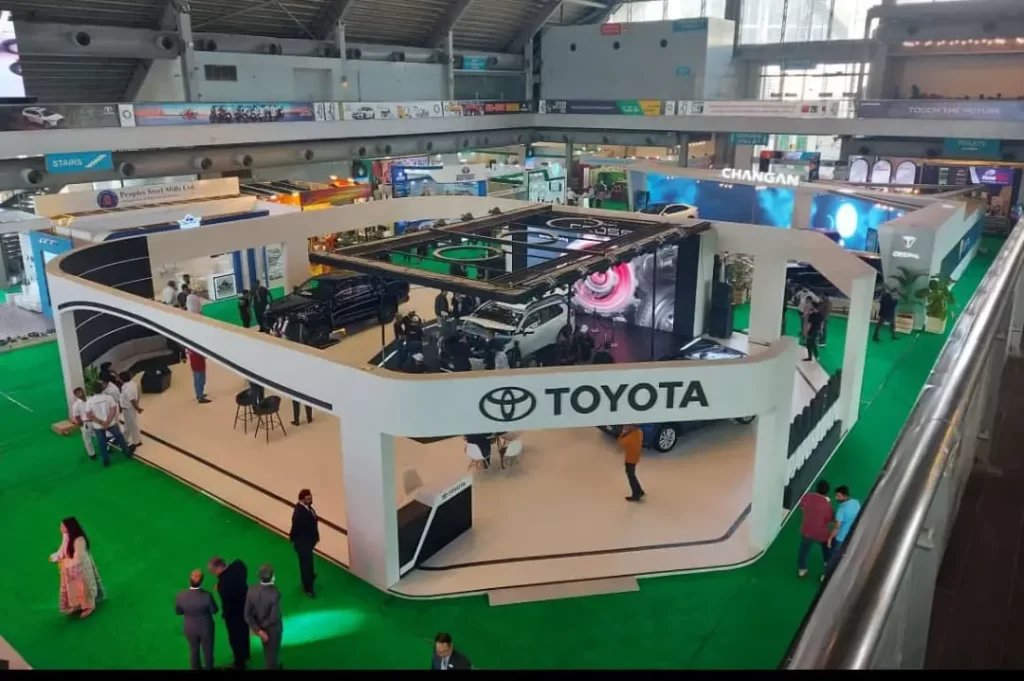
  • IMC Exhibits their Toyota Corolla Cross at Pakistan Auto Show (PAPS) 2024

    Indus Motor Company (IMC) proudly participates as the Diamond Sponsor of the 2024 Pakistan Auto Show (PAPS), being held from 25th to 27th October in Lahore.

    A key highlight during this year’s Pakistan Auto Show (PAPS) 2024 at IMC stand, is their exploded view of their Corolla Cross, the first-ever, ‘Make in Pakistan’, Hybrid Electric Vehicle (HEV) that boasts the highest-ever local content. The event was attended by IMC’s Senior Director Manufacturing, Mr. Makoto Kubota and Director Manufacturing, Mr. Wali Muhammad Khan. 

    With their continued focus of “Make in Pakistan,” IMC showcases its rigorous commitment to local manufacturing, sustainability, and innovation. Over the last more than 30 years, IMC has invested toward its localization efforts, enhancing the production of high-quality vehicles, while creating jobs and promoting local industry growth.

    In light of this significant investment, IMC requests the government to provide the local auto industry with sustainable policies that will foster long-term growth. By implementing policies favoring increased localization and manufacturing, Pakistan can further strengthen its automotive industry. 

    IMC also emphasizes the need for continued long-term policies for Hybrid Electric Vehicles (HEVs) and Battery powered Hybrid Electric Vehicles (BHEVs), as per AIDEP 21-26. Clear, supportive frameworks for these advanced technologies will ensure that the country remains on the cutting edge of automotive innovation. 

    IMC has expanded its footprint beyond Pakistan, recently initiating export of vehicles to Oceanian countries, raw material exports to Egypt, and even providing human resources expertise to Japan. These achievements further underscore IMC’s global quality standards within Pakistan, while continuing to maintain highest localization levels for their vehicles, including their Corolla Cross. 

    The local auto industry considers the influx of used car imports as being unfavorable. Industry urges the government to devise policies that prevent the excessive, illegal import of used cars, which can undermine local production, hurt job creation, and negatively impact the national economy. A focus on promoting locally manufactured vehicles will boost the auto industry and stimulate Pakistan’s economic growth. 

    The Pakistan Auto Parts Show (PAPS) is the premier automotive event in Pakistan, bringing together original equipment manufacturers (OEMs), policy makers, government stakeholders, and the public. PAPS 2024 will provide a platform for participants to display their latest vehicles and parts, engage with policy makers, and introduce cutting-edge technologies and products.

    Also Read: Plastic Packaging, Corrugated & Food Asia to be held on Oct 29-31

  • Toyota IMC to Inject Rs 3 Billion into Local Auto Parts Production

    In a strategic move, Toyota Indus Motor Company (IMC) is set to make a substantial investment of Rs 3 billion in the local production of auto parts. This development underscores the company’s commitment to fostering domestic manufacturing capabilities and aligning with the broader objectives of promoting self-sufficiency in the automotive sector.

    Toyota-IMC’s decision to invest significantly in local auto parts production signals a proactive approach toward reducing dependency on imports and contributing to the growth of the indigenous automotive industry. The injection of funds into this initiative is expected to have far-reaching impacts on the supply chain, employment generation, and overall economic development.

    Key Aspects of Toyota-IMC’s Investment in Local Auto Parts:

    Strategic Investment: The Rs 3 billion investment reflects the strategic importance Toyota-IMC places on strengthening the local auto parts ecosystem, paving the way for enhanced collaboration with local manufacturers.

    Reducing Import Dependency: By increasing local production, Toyota-IMC aims to curtail reliance on imported auto parts, contributing to the national objective of reducing the trade deficit and promoting economic self-sufficiency.

    Supply Chain Enhancement: The investment is poised to enhance the resilience and efficiency of the automotive supply chain, fostering a more integrated and self-reliant manufacturing process.

    Technology Transfer: The initiative is expected to facilitate technology transfer and knowledge-sharing, fostering skill development and innovation within the local auto parts industry.

    Economic Impact: Beyond the immediate benefits to Toyota-IMC, the investment is likely to have positive ripple effects on the broader economy, creating job opportunities and stimulating economic activity.

    As Toyota-IMC embarks on this substantial investment in local auto parts production, it exemplifies a collaborative effort between the private sector and the government to fortify domestic industries. This initiative aligns with the national agenda of promoting economic sustainability, and industrial growth and fostering a conducive environment for businesses to thrive.

    Also Read: Ansar Burney Launches Autobiography “Awaaz”