Tag: AKU

  • AKU Hosts Pakistan’s First Conference on Regenerative Medicine and Stem Cell Science

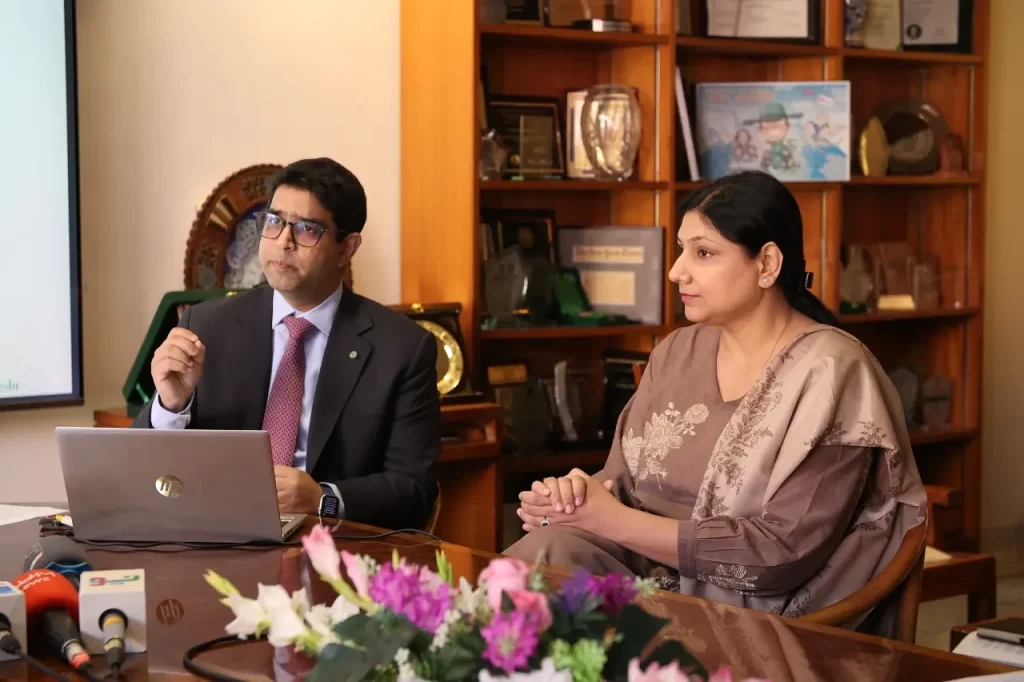
    In a national first, the Aga Khan University (AKU) hosted the Regenerative Medicine and Stem Cell Conference 2026 (RSC-2026) in Karachi. The conference brought together scientists, clinicians, policymakers, regulators, and industry representatives to exchange perspectives on recent advances in stem cell research, regenerative medicine, and tissue engineering, with a focus on Pakistan and comparable health care settings.

    Regenerative medicine and stem cell science are rapidly reshaping how diseases are understood and treated worldwide, offering new possibilities for repair, recovery, and long-term care. For countries like Pakistan, where the burden of non-communicable diseases continues to rise, and health care systems face persistent constraints, these advances carry particular relevance.

    “Regenerative medicine represents a shift from managing disease to restoring function,” said Syed Ather Enam, Conference Chair and Director of the Centre for Regenerative Medicine and Stem Cell Research at AKU. “This conference was conceived to place Pakistan within the global scientific conversation, while remaining grounded in our local realities. Our aim is to build knowledge, capacity, and collaboration that can translate into meaningful benefit for patients.”

    RSC-2026 featured scientific sessions, panel discussions, and focused deliberations examining both opportunities and challenges in the field. Key areas included RNA-based gene transfer, stem cell–derived exosomes, regenerating damaged heart tissue, glaucoma care, liver fibrosis, and Alzheimer’s disease modeling to better understand the disease. Discussions emphasized strong scientific standards, ethical responsibility, and regulatory oversight, particularly in resource-limited environments.

    “Building sustainable programs in regenerative medicine requires more than isolated discoveries,” said Azhar Hussain. “It requires strong systems, interdisciplinary collaboration, and alignment between science, regulation, and clinical need.” Echoing this sentiment, Sheerien Rajput noted that “capacity building is central to long-term impact.”

    The conference was preceded by hands-on capacity-building workshops, introducing participants to foundational concepts and laboratory approaches in stem cell research and regenerative medicine, with the aim of strengthening local expertise and developing a skilled scientific workforce.

    RSC-2026 also provided a platform for early-career researchers and students to present their work, fostering mentorship and collaboration within emerging areas of biomedical research in Pakistan.
    Also Read: Nipah Virus: AKUH Experts Confirm No Immediate Threat to Pakistan, Advise Continued Clinical Vigilance

  • AI in Clinical Practice: Revolutionizing Healthcare at 26th NHSRS

    Experts from around the world gathered at the 26th National Health Sciences Research Symposium (NHSRS) at Aga Khan University (AKU) to discuss the rapidly evolving role of artificial intelligence (AI) in clinical practice. Over two days of keynotes, plenary talks, and pre-symposium workshops, leaders in medicine and technology explored how AI is revolutionizing healthcare delivery, education, and patient care.

    Dr. Adil Haider, Dean of AKU’s Medical College, opened the symposium by emphasizing the urgent need to adapt to the technological advancements reshaping healthcare. He noted that AI and machine learning have drastically changed how medical education is delivered, stating, “Rapid advances in AI and machine learning, along with global events like the Covid-19 pandemic, have shifted how we deliver and consume education. Moving to dynamic, student-centered learning is essential for staying relevant in this evolving landscape.”

    The integration of AI into healthcare has the potential to improve disease diagnosis, treatment selection, and clinical laboratory testing, consequently improving patient care, and quality of life. Professor Zara Cooper, Professor of Surgery at Harvard Medical School, shared her insights into AI’s potential to improve surgical care, noting that “AI can be harnessed to enhance palliative care, ensuring patients receive compassionate and precise treatment at every stage.”

    Professor Mayur Narayan, who leads the trauma department at AiACCESS, stressed the importance of addressing access disparities as AI technology advances in the surgical field. He stated, “AI has the power to revolutionize surgery, but it is crucial that we address the disparities in access and outcomes, ensuring that the benefits of innovation reach every patient.”

    Day two of the symposium featured plenary talks from experts such as Dr. Patricia Geli, co-founder and COO of C10 Labs, and Dr. Yasar Ayaz, a professor at NUST and Head of robotics and machine engineering. They explored the role of AI in streamlining healthcare operations, improving surgical techniques, and enhancing patient outcomes. One of the most anticipated sessions was “The Great Debate,” where participants discussed the ethical dilemmas of AI in healthcare and how to balance innovation with moral responsibility.

    Additional plenary talks were delivered by Mr. Shahid Azim, co-founder and CEO of Deep Tech Entrepreneur, who spoke on the intersection of technology and healthcare delivery, and Mr. Arhum Ishtiaq, cofounder of Connecthear, who discussed how AI can be used to develop hearing aids that significantly improve the quality of life for people with hearing impairments. His innovative work was recognized with the TRT World Citizen Award 2025.

    The 26th NHSRS reinforced the message that AI is not just a futuristic concept – it is the present. It’s transformative power must be understood and harnessed if we wish to progress, create impact and find meaningful solutions. The event highlighted the importance of ongoing dialogue, research, and education in ensuring that AI can be used effectively and responsibly to improve healthcare delivery and access across Pakistan and beyond.

    Also Read: DWP Technologies shines at DELL Partner Awards 2024 by winning best storage award

  • AKU’s 10th Annual Surgical Conference Focuses on Innovations in Surgical Care and Patient Safety

    The Aga Khan University (AKU), Department of Surgery, proudly celebrated a milestone with its 10th Annual Surgical Conference, marking a decade of leadership and innovation in the surgical field. The two-day event, brought together a distinguished lineup of both international and national experts who engaged in discussions on transformative advancements in surgical care.


    Held under the theme, “Beyond the Scalpel: Quality Care and Patient Safety,” this year’s conference highlighted a strong focus on improving surgical outcomes and ensuring patient safety. As surgical practices continue to evolve, it is essential for healthcare professionals to stay updated on the latest advancements that can positively impact patient outcomes. The event’s sessions delved into surgical innovation, patient-centered care, and the integration of cutting-edge technologies.


    Global experts from prestigious institutions such as University of Alabama at Birmingham (UAB) and Froedtert & the Medical College of Wisconsin engaged with attendees through interactive sessions that promoted collaboration and networking, creating an invaluable forum for surgical professionals, researchers, and educators to exchange knowledge and ideas. The sessions covered a wide range of thought-provoking topics, including the intersection of climate, aviation, and surgery, the challenges of maintaining quality within private healthcare systems, and the leadership perspectives on implementing quality initiatives. Discussions also explored the roles of accredited bodies, the importance of collaboration in driving healthcare innovation, and strategies for decarbonizing healthcare centers.


    Dr Saleem Islam, Chair of the Department of Surgery, emphasized the significance of this milestone, stating, “Every year, we strive to make the Conference bigger and better. This year’s theme reflects our department’s commitment to providing cutting-edge, high-quality patient care. This conference has not only benefited our patients but has also contributed immensely to the education of our students and residents by disseminating the latest research in the field of surgery.”


    In addition to showcasing the latest surgical advancements, the conference highlighted AKU’s pioneering contributions to medical technology. A key highlight was the introduction of 3D-printed PEEK (Polyetheretherketone) implants, developed in-house by AKU’s biomedical engineers. These advanced, high-performance implants offer customized solutions that are lighter, stronger, and more compatible with the human body. They are significantly reducing infection risks and enhancing long-term outcomes for patients. AKU currently employs these implants in various procedures, including cranial reconstructions and maxillofacial surgeries, with plans to expand their use into other surgical domains. This groundbreaking initiative exemplifies AKU’s commitment to improving patient care through innovation.


    The Conference also emphasized AKU’s leadership in surgical care and its growing influence in shaping the future of healthcare, not only in Pakistan but throughout the region. The insights shared at this year’s conference will inspire future advancements in patient care, leaving a lasting impact on the medical community and the patients they serve.

    Also Read: InfraZamin Pakistan and HABIBMETRO Partner to Provide a Structured PKR 800mn Guaranteed Trade Finance Facility to Jaffer Business Systems (Private) Limited

  • AKU’s Landmark Clinical Manual Aims to Prevent Nearly 280,000 Deaths Each Year

    In a significant stride towards enhancing healthcare in Pakistan, Aga Khan University (AKU) has unveiled the AKU Manual of Clinical Practice Guidelines, designed to potentially improve healthcare outcomes for 21 million people in Pakistan. Endorsed by the US GRADE system, this pioneering resource offers evidence-based recommendations and has potential to prevent 280,000 deaths annually.

    The unveiling took place at a ceremonial launch on January 8, 2024, presided over by Prime Minister Muhammad Shahbaz Sharif at AKU’s campus in Karachi.

    The AKU Manual of Clinical Practice Guidelines sets a new standard for healthcare excellence nationwide by providing uniform, evidence-based clinical guidelines for 140 of the most common and significant diseases in Pakistan. Developed meticulously over the period of four years, the Manual integrates global best practices with local contexts, addressing a critical gap in Pakistan’s healthcare system. This Manual is poised to be a cornerstone in the standardization of clinical care across the country.

    Dr. Adil Haider, Dean of AKU’s Medical College and Editor-in-Chief of the Manual, expressed the manual’s transformative vision, stating, “This manual is more than a guide; it is a movement to transform healthcare in Pakistan. With nearly 140 guidelines addressing 80% of conditions seen in healthcare institutions in the country, this initiative is a giant leap toward ensuring every patient receives high-quality care.”

    Developed by AKU’s Centre for Clinical Best Practices (CCBP) in collaboration with governmental partners, the U.S. GRADE Network, leading healthcare institutions, and medical societies, the manual has benefited from the expertise of 25 members of the national advisory board and 19 members from AKU’s advisory board. Key stakeholders include the Federal and Provincial Ministries of Health, Pakistan Armed Forces, the College of Physicians and Surgeons of Pakistan, and the Pakistan Medical and Dental Council.

    Dr Samar Fatima, Associate Director of CCMP, emphasized the manual’s transformative potential for healthcare providers, stating, “The manual’s clear and evidence-based guidelines can ensure uniformity in treatment across the nation, empowering physicians to provide optimal and cost-effective care. It can play a pivotal role in achieving the goal of equitable healthcare access and high-quality patient care in Pakistan.”

    To ensure nationwide accessibility, it is available for free as an app and on the AKU website to all institutions, public or private. The printed version, published by a local publisher, is available for a small fee.

    As the first GRADE Center in South Asia, AKU reaffirms its leadership in evidence-based medical practices with this pivotal launch. The AKU Manual of Clinical Practice Guidelines represents a crucial step forward in improving patient outcomes and elevating the quality of healthcare throughout Pakistan.

    Reflecting on this momentous occasion, Dr Sulaiman Shahabuddin, President of AKU, stated, “At AKU, we believe that healthcare is a collective responsibility. The roundtable represented a significant step towards building a stronger, more integrated healthcare system in Pakistan. By uniting key players from both the public and private sectors, we aim to shape a unified and forward-thinking vision for the country’s healthcare delivery.”

    Also Read: Central Depository Company Collaborates with Leading Brokers for Centralized Gateway Portal

  • AKU President receives prestigious honour for his work in education

    In an announcement on Pakistan’s Independence Day, President Asif Ali Zardari awarded the Sitara-i-Imtiaz to Dr Sulaiman Shahabuddin, Aga Khan University’s (AKU) President and Vice-Chancellor for his contributions to the advancement of education and quality of life in Pakistan.

    The Sitara-i-Imtiaz is the third-highest civilian honour in Pakistan and is conferred by the President of Pakistan to recognize individuals for their exceptional contributions in various fields, including the arts, literature, sports, science, and social services. The award aims to honor those who have made significant achievements that contribute to the progress and development of the country. Dr Shahabuddin will be conferred the award at an investiture ceremony in Islamabad on March 23, 2025.

    Since his appointment by His Highness the Aga Khan as President of AKU, the University has achieved remarkable growth, making significant contributions to education, research, and healthcare in Pakistan. This impact has positively affected millions of lives, positioning AKU as a beacon of excellence. During President Shahabuddin’s tenure, AKU has witnessed an increase in the number of students and fellows, and impact in research, education, and policymaking. Under Dr. Shahabuddin’s leadership, AKU has achieved the top position in Pakistan for research, evidenced by the prolific publication of highly cited studies on an international scale. The University is globally acknowledged for its academic prowess.

    During crises such as the catastrophic 2022 floods, Dr. Shahabuddin’s supervision played a pivotal role. AKU, under his guidance, provided essential health, education and humanitarian assistance in flood camps to scores of affected individuals.

    In only the first two years of his tenure as President, Dr Shahabuddin has forged a number of key international and local partnerships, including with Michigan University and the University of Washington in USA, McMaster University in Canada, Maynooth University in Ireland, University of Dar es Salaam, the Institute of Business Administration in Pakistan, and many others. These partnerships sustain AKU’s innovation and quality in research and education.

    In addition, AKU is also celebrating Aniqa Bano, an alumna of AKU’s Institute for Educational Development (AKU-IED) for being awarded the Pride of Pakistan by the country’s President. After joining AKU-IED and facing the challenges of raising a daughter with a hearing impairment, Aniqa, along with her husband Afzal Rasool, co-founded the Narjis Khatoon Hearing Impairment School. She also serves as an instructor at the Government College of Education for Women in Skardu, exemplifying her dedication to education and support for differently abled children.

    Since 2014, eleven faculty members at AKU have received national awards. They include AKU’s first President Dr Shamsh Kassim-Lakha; Dr Zulfiqar Bhutta, Founder of AKU’s Institute for Global Health and Development and the Centre of Excellence in Women and Child Health among many others.

    Also Read: Explore These 4 Enchanting Year-Round Destinations in Saudi

  • AKU alumna returns to Pakistan after 30 years as Dean

    Dr Salimah Walani has been named the next Dean of the Aga Khan University School of Nursing and Midwifery, Pakistan, effective August 1, 2024, as announced by AKU Provost and Vice President, Academic, Dr Tania Bubela. The appointment follows a thorough and competitive recruitment process, which was facilitated by an international search firm and overseen by a dedicated search committee.

    Dr Walani graduated from AKU-SONAM, Pakistan, in 1987, and subsequently served as a faculty member at the university for six years. She then pursued a Master of Science in Nursing from Simmons University, Boston, a Master of Public Health from Harvard University, and a PhD in Nursing Research and Theory Development from New York University.

    Dr Walani comes to AKU with extensive global health and academic experience.  Her impressive career includes faculty positions in graduate programmes at Felician University in New Jersey, the University of Connecticut, Arizona State University, and Pace University in New York.

    She has also held senior leadership, advisory, and consultative roles with notable organizations such as the New York City Department of Health, the World Health Organization, UNICEF, New York University, March of Dimes, among others.

    Before joining AKU, Dr Walani served as Global Policy and Advocacy Advisor at MiracleFeet – a US-based not-for-profit organisation with programmes in 35 countries.  Before that, she was Vice President of Global Programs and March of Dimes Foundation for almost a decade.

    In 2014, she created a partnership to launch the World Birth Defects Day – a global movement for advancing prevention and care of congenital anomalies. She is also a member of the World Health Organization’s Technical Advisory Group for Birth Defects and is an honorary member of the International Clearinghouse for Birth Defects Surveillance and Research.

    Dr Walani is preceded by Dr Tazeen Saeed Ali, also an alumna, who served as Interim Dean of the School from 2023 to July 2024.

    Also Read: ALULA RECOGNISED TWICE IN TIME’S 2024 ‘WORLD’S GREATEST PLACES’ AWARDS

  • AKU and CSJ Collaborate to Address Education Policy Challenges

    The Aga Khan University Institute for Educational Development (AKU-IED), in collaboration with the Centre for Social Justice (CSJ), Pakistan hosted a dynamic policy dialogue on ‘Overcoming Educational Policy Challenges through Better Governance’.

    The event served as a platform for engaging experts and stakeholders, fostering innovative strategies for governance enhancement, gaining valuable insights into improving educational outcomes, and contributing to the development of a comprehensive policy roadmap for sustainable progress.

    The distinguished panel featured prominent figures including Dr Riaz Ahmed Shaikh, Dean of the Faculty of Social Sciences and Education at Shaheed Zulfikar Ali Bhutto Institute of Science and Technology (SZABIST); Ms Sadiqa Salahuddin, Founder and Executive Director of the Indus Resource Centre; Professor Farid Panjwani, Dean of AKU’s  Institute for Educational Development; Mr Jamil Ahmed Khan, Former Ambassador and Advisor to the President at AKU; Ms Maleeha Manzoor, Member of the Sindh Provincial Assembly; Ms Nausheen Adnan, Member of the Punjab Assembly and CM Advisory Committee on Education; and Mr Sukhdev Hemnani, Board Member of the Sindh Human Rights Commission. The sessions were moderated by Mr Peter Jacob, Executive Director, and Ms Tayyaba Rafiq, Project Coordinator, both representing the Centre for Social Justice.

    Reflecting on the importance of effective policy implementation, Professor Panjwani emphasized, “The true success of policy lies not just in its creation, but in its effective execution. Bridging the gap between policy and action requires strong collaboration across stakeholders. It’s through open dialogue and a focus on shared goals that we can unlock the full potential of our education system. By fostering continuous communication and accountability, we can ensure that sound policies translate to real benefits for our students and the nation.”

    The event also featured an insightful analysis of education manifestos by AKU-IED students. They established 16 parameters, including education for out-of-school children, character education, inclusive education, gender disparities, mental health of students and teachers, technology challenges and more. Based on these parameters, they developed a rubric to evaluate the manifestos and assess the performance of their respective policies.

    In his closing remarks, Mr Jacob of CSJ welcomed the government’s education reform announcement saying, “We are hopeful that the current dialogue will continue and will help to improve educational standards and lead to increasing the quality of education system overall.

    Also Read: Formite and The Hunar Foundation Unite to Empower Youth and Enhance Educational Opportunities

  • AKU Launches 3.3 MW Solar Photovoltaic Installation

    As part of AKDN’s commitment to net zero by 2030, the Aga Khan University (AKU) is installing the largest solar photovoltaic (PV) project. To commence the project, a signing ceremony was held with Exide Pakistan Limited, who will be executing the project at AKU’s Stadium Road Campus in Karachi, Pakistan.

    Renewable energy is one of the most effective ways to reduce greenhouse gas emissions and transition to clean energy systems. Solar irradiation is very high in Pakistan which makes solar PV ideal for energy generation in the country. In 2022, AKU installed 550 kilowatt solar PV on three of its campus roofs, resulting in a highly positive environmental impact. In the project launching today, 3.3 megawatts of solar PV will be installed across the remaining roofs as well as three large parking areas of the campus, providing the much-needed shade to the cars parked below. The installation of the new panels will happen in phases, with completion aimed by April 2025.

    AKU President, Dr Sulaiman Shahabuddin expressed ‘This is a major step forward in implementing our decarbonization plan which we set for ourselves in 2022. This project demonstrates AKDN’s and AKU’s ongoing and strong commitment to the environment, sustainability, and responding to climate change through renewable energy.’

    AKU’s goal of net zero emissions by 2030 involves reducing absolute emissions in line with science using renewable energy and other strategies. Renewable energy must go hand in hand with increased energy efficiency, such as improved buildings, efficient equipment, and behavior changes. AKU is rapidly progressing in all these areas of emissions reduction and has been closely monitoring its emissions footprint while aligning with the University’s Decarbonisation Plan.

    “The partnership between AKU and Exide Pakistan Limited to provide clean and free electricity is commendable. Not only does it benefit AKU, but it also sets a shining example for other hospitals and universities to follow in promoting renewable energy and combating climate change ” said Mr Altaf Hashwani, Director of Exide Pakistan Limited. “Through dedication and collaboration, initiatives like this can have a profound impact on sustainability efforts across various industries. Here’s to the successful implementation of the project and to the ongoing enhancements that will make AKU a role model in carbon-free healthcare.”

    The solar project will reduce the burden on the K-Electric power grid and improve local air quality. Solar PV not only provides carbon-free electricity but also significantly lowers the cost of electricity, provides independence from fossil fuels, and reduces noise and air pollution.

    The project is expected to save 1900 tonnes of CO2e every year, or the equivalent emissions produced by burning 800,000 liters of petrol in a car. This endeavor underscores AKU’s commitment to environmental stewardship and positions it as a leader in climate action, not only within Pakistan but also on a global scale.

    Also Read: Engro Fertilizers engages dealers for urea price enforcement

  • AKU hosts math games’ showcase by female educators to out-of-school girls

    The Aga Khan University Institute for Educational Development (AKU-IED) successfully concluded its weeklong celebration of the International Day of Mathematics (IDM) 2024 with a Grand Showcase inspired by this year’s theme: “Playing with Math,” on March 8, 2024. The IDM is a global celebration aimed at promoting the joy of learning mathematics. AKU-IED organized a series of events throughout the week, including workshops and activities for educators and students alike.

    In her opening remarks, Dr Munira Amirali, Assistant Professor and IDM Event Chair at AKU-IED, emphasized that “Play-based learning facilitates children’s cognitive development, promotes logical reasoning, and helps them link different mathematical concepts, reframing mathematics as an interesting subject in their minds.”

    The Grand Showcase featured creative math games designed for over 150 out-of-school children, mostly girls, who participated in educational activities to spark their interest in mathematics. Ms. Shireen Hussain, CEO and Co-Founder of Sindh Singhaar Initiative, graced the occasion as the Chief Guest, underscoring the importance of learning mathematics in our daily lives.

    The showcase was the culmination of a weeklong series of activities, including a workshop for 35 teachers, predominantly female, who were trained to create engaging math games. Special sessions by The Dawood Foundation’s Magnifiscience Centre and a talk on numeracy skills of out-of-school children and Non-Formal Basic Education (NFBE) curriculum by Dr. Abid Gill, Deputy Chief Advisor of the Advancing Quality Alternative Learning (AQAL) Project, Japan International Cooperation Agency, were also part of the program.

    As the event also marked International Women’s Day, it showcased engaging math games created by female educators from across Karachi, supervised by an all-woman workshop planning team from AKU-IED.

    “The dedication of AKU-IED and its partners in promoting the joy of learning mathematics is commendable. By working together to create engaging educational experiences, we are nurturing a generation of students who will excel in mathematics,” said AKU President Dr Sulaiman Shahabuddin. The event was organized in partnership with Right to Play, Directorate of Non-formal Education, Sindh Singhaar Initiative, The Dawood Foundation’s Magnifiscience Centre, Durbeen, and others.

    In his concluding remarks, Dr Farid Panjwani, Professor and Dean of AKU-IED, reflected that “This celebration underscores our commitment to innovative and effective teaching practices. By engaging educators and students in playful math activities, we aim to cultivate a love for mathematics and inspire lifelong learning.”

    Also Read: Thari women triumph in transforming the region