Blog

  • Key Steps Taken in Balochistan for Anti-Rape Act Implementation and Crisis Cell Establishment

    The Legal Aid Society (LAS), in collaboration with the Ministry of Law and Justice, the Government of Balochistan, and the United Nations Population Fund (UNFPA), hosted a pivotal consultation to strengthen the implementation of the Anti-Rape (Investigation and Trial) Act, 2021, and establish Anti-Rape Crisis Cells (ARCCs) in Balochistan. This event underscored the importance of multi-sectoral collaboration, uniting government officials, legal experts, and key stakeholders to address challenges and develop survivor-centric strategies.

    Discussions focused on barriers to implementing the Act and the operational requirements for ARCCs, which aim to provide medical, psychological, and legal support to survivors of sexual violence.

    The event commenced with remarks by Sadia Atta, Program Coordinator for UNFPA, “All of you present here, it is through your contributions and input that a proper action plan will be developed, which will help UNFPA and the Department of Health Balochistan move forward,” she said, highlighting the importance of collective effort.

    Raja Naeem Akbar, Federal Secretary of Law and Justice, emphasised, “Coordination between the federal and provincial governments is essential, and we are committed to doing whatever is necessary to strengthen it.”

    Further support came from Mujeeb Ur Rehman Panezai, Secretary of the Health Department, who reaffirmed, “The Health Department is committed to bridging the gaps in support systems for survivors and ensuring they receive the care and assistance they need.”

    Hamza Shafqaat, Commissioner of Quetta Division, advocated for robust legal foundations, “While it is often believed that the implementation of laws is lacking, we must also recognise the need to strengthen the very foundation of these laws. I strongly support the establishment of ARCCs in Balochistan and remain committed to ensuring their effective creation and operation.”

    Javad Raza Sultan, Section Officer from the Ministry of Law and Justice, led the session on requirements under the law and reflected, “A more victim-centric, suspect-focused and context-led approach will ensure desired result under the Anti-Rape Act, 2021.”

    Dr. Summiya Syed-Tariq, Police Surgeon Karachi and member of the Special Committee on Anti-Rape, emphasised, “Creating a sustainable and contextual multi-sectoral model is essential, and this begins with leveraging the resources we already have. To make meaningful progress, we must prioritise data integrity and develop evidence-based solutions that address the entire process from start to finish.”

    Maliha Zia, Associate Director at LAS, highlighted the importance of a survivor-first approach in addressing sexual violence, “A survivor-first approach ensures that every step of the process, from reporting to recovery, is built around the dignity, safety, and well-being of survivors.”

    The consultation concluded with a strong commitment from participants to turn discussions into tangible actions that benefit survivors in Balochistan.

    This event marks a significant step in institutionalising justice and support mechanisms for survivors of sexual violence, contributing to national efforts to create an equitable and survivor-centric justice system while empowering marginalised communities.

    Also Read: 10Pearls launches Pakistan’s first AI-powered virtual internship

  • 10Pearls launches Pakistan’s first AI-powered virtual internship

    10Pearls has launched 10Pearls, Shine, Pakistan’s first fully remote, AI-powered internship program for 8 weeks with a multi-tiered curriculum encompassing both technical and soft skills.

    10Pearls’ unique internship offers students the chance to learn in-demand technical and leadership skills from anywhere within the country, preparing them with a strong foundation for a future career in technology. Students are assigned dedicated technical mentors who guide them through hands-on projects based on their chosen domain.

    The virtual edition received an overwhelming response, with over 10,000 students registering. Through a rigorous selection process, 100 top-tier students were chosen across two dynamic cohorts, empowering them to grow and excel in the tech industry. Drawing participants from top universities, including LUMS, IBA, and FAST, brings together Pakistan’s brightest minds. It is a fantastic opportunity for students to learn and grow their professional network, form communities and build lasting connections that will help them throughout their careers. 10Pearls Shine

    . “The 10Pearls Shine program provides vital exposure to students pursuing their degree in technology fields. It allows them to work side-by-side with industry leaders, exposing them to a global tech enterprise and enhancing their confidence with newfound skills beyond traditional classroom knowledge.”  Haseeb Iftikhar, Associate Director Talent Acquisition, 10Pearls.

    Cross-communication is emphasized strongly, with students actively participating in Discord communities and catching up via regular virtual sync-ups.

    ” My experience with 10Pearls Shine has been truly amazing! The mentorship I received and the collaborative environment made this internship truly stand out. I have learned so much, formed valuable connections, and gained a deeper understanding of how the tech industry operates.” – Izma Khan, Software Development Intern.

    The 10Pearls Shine program goes beyond the mastery of just technical skills. Students attend weekly sessions teaching them critical soft skills including time management, teamwork, critical-thinking, and more, preparing them not just to be software experts but also effective leaders.

    Successful candidates are awarded completion certificates and emerge from 10Pearls with increased knowledge and confidence, an extensive professional network and a CV built for success.

    As Pakistan’s tech ecosystem expands, programs like Shine are essential to bridging the gap between education and employment. The internship’s innovative AI-powered remote model ensures that all students applying can benefit from this exceptional learning experience.

    With a workforce of over 1,300 across Pakistan, North America, Latin America, and Europe, 10Pearls fosters an innovative work approach informed by global practices. It prepares interns for the industry’s best. The company is also deeply committed to social responsibility.

    The program is underway with applications opening multiple times throughout the year. This delivers more students with the opportunity to immerse themselves in a comprehensive learning experience.

    Also Read: Indus Motor Company Hosts National Assembly’s Standing Committee on Industries and Production

  • Indus Motor Company Hosts National Assembly’s Standing Committee on Industries and Production

    The National Assembly’s Standing Committee on Industries and Production, led by the Chairman Syed Hafeezuddin, visited Indus Motor Company (IMC) on Thursday, November 21st, 2024, for a comprehensive briefing on its operations. The delegation toured IMC’s state-of-the-art plant, witnessing its advanced manufacturing processes, localization efforts, and recent milestones. 

    The delegation included the following Members of the National Assembly; Mr. Shahid Usman, Ms. Kiran Imran, Dr. Mahesh Kumar Malani, Mr. Abdul Hakeem Baloch, Ms. Naz Baloch, Mr. Muhammad Iqbal Khan, Mr. Muhammad Saad Ullah. Mr. Muhammad Arshad Sahi and Dr. Mehreen Razzaq Bhutto attended the meeting virtually. The delegation was also accompanied by Mr. Asad Islam Malhani, Additional Secretary, Ministry of Industries and Production, along with Engr. Khuda Bukhsh, Chief Executive Officer, Engineering Development Board. 

    IMC has reaffirmed its commitment to localization in Pakistan’s automotive sector and highlighted further investment of PKR 4.1 billion in 2024. The development is planned to be completed in year 2026. This move bolsters the national economy, curtails import dependence, and generates employment opportunities and will further enhance IMC’s localization initiatives under “Make in Pakistan”. 

    The company has also expanded its global footprint by exporting Toyota Fortuner and Hilux vehicles to Oceania and raw materials to Egypt, becoming part of Toyota’s Global Supply Chain. Furthermore, IMC has sent Pakistani skilled human resource to Japan, enhancing the country’s reputation as a hub for skilled human resource. 

    Highlighting its commitment to innovation and sustainability, IMC has developed Pakistan’s first locally manufactured Hybrid Electric Vehicle, the Corolla Cross, with over 50% localized components. This underscores IMC’s dedication to the “Make in Pakistan” initiative and environmental sustainability. 

    Chairman, Syed Hafeezuddin praised IMC’s achievements, emphasizing the importance of supporting the local auto industry for economic growth and job creation. He reiterated the government’s commitment to fostering a self-sufficient Automotive Manufacturing Sector. 

    Ali Asghar Jamali, CEO of IMC, on the occasion said “We are pleased to host the Standing Committee on Industries and Production at IMC. Our ongoing investment in “Make in Pakistan” initiative is focused on job creation, reducing the burden on foreign payments, and contributing to the establishment of a sustainable automotive sector in Pakistan. 

    With the industry operating at one fourth of its installed production capacity, the government should curb the illegal import of used cars, which undermine the local industry and employment opportunities within the country. We continue to focus on working with the government, to ensure auto-sector policies support and strengthen the local industry for long-term growth.” 

    The visit underscored IMC’s pivotal role in advancing Pakistan’s industrial growth through localization, innovation, and global integration.

    Also Read: Stepping forward for children’s health, AKUH celebrates World Children’s Day with a series of vibrant festivities

  • Stepping forward for children’s health, AKUH celebrates World Children’s Day with a series of vibrant festivities

    The Aga Khan University Hospital (AKUH) marked World Children’s Day with a week-long celebration filled with engaging and impactful events, reaffirming its commitment to the health, safety, and future of children.

    The festivities kicked off with a joyous cake-cutting ceremony in the Paediatric Ward’s play area, led by Dr Fyezah Jehan, Chair of Paediatrics and Child Health, and Dr Ali Faisal Saleem, Vice Chair of Paediatrics and Child Health. The event brought smiles to young patients and their families, emphasizing AKUH’s dedication to both medical and emotional support. The day continued with lively face painting sessions and an enchanting magic show that left the children mesmerized.

    On November 19, students from schools across Karachi—Habib Public School, Dawood Public School, and Sultan Mahomed Shah Aga Khan School—participated in a speech competition debating topics such as vaccination and brain drain. The event concluded with a Basic Life Support workshop, equipping the students with essential lifesaving skills.

    The week’s highlight was a walk through AKU’s lush green campus, which brought together students from several schools, AKUH leadership, faculty, and healthcare professionals. This symbolised unity and AKUH’s unwavering commitment to its young patients.

    Reflecting on the significance of the day, Dr Asim Belgaumi, Chief Medical Officer at AKUH, said, “World Children’s Day is a reminder of the limitless potential of every child. At AKUH, we go beyond medical care to ensure children receive the emotional and psychological support they need to truly heal.”

    Students also showcased innovative projects at a Science Exhibition, reflecting their creativity and problem-solving skills. A fire-safety demonstration captivated the audience, teaching children vital emergency preparedness skills.

    This year’s celebrations, from speech competitions to the science exhibition, provided a platform to listen to children’s voices and empower them to shape their future. As Dr Fyezah Jehan, Chair of Paediatrics, remarked, “At AKUH, every day is Children’s Day, and through events like these, we not only listen to their voices but also reaffirm our commitment to nurturing their growth and well-being for a brighter future.”

    The week’s festivities, with the enthusiastic participation of children, staff, and families, highlighted AKUH’s dedication to advocating for children’s health, safety, and empowerment.

    Also Read: Fatima Fertilizer, in partnership with UNDP, is the first company in Pakistan to adopt the SDGs Impact Framework

  • Fatima Fertilizer, in partnership with UNDP, is the first company in Pakistan to adopt the SDGs Impact Framework

    Fatima Fertilizer has the distinct honor of becoming the first private sector entity in Pakistan to partner with the United Nations Development Programme (UNDP) by adopting the SDG Impact Framework. In this regard, Fatima Fertilizer in collaboration with UNDP, recently hosted the launch event of a special report titled “SDGs Impact through Businesses: Sustainability Framework for Fatima Fertilizer” which outlines how the company has embedded the impact framework assessment into its business operations, mapping eight critical areas that align with achieving related UN SDGs.


    The event brought together Government officials, development sector representatives, private sector partners, and sustainability experts to celebrate Fatima Fertilizer’s remarkable achievements towards promotion of sustainable agriculture, environmental stewardship, and social responsibility.


    Rabel Sadozai, Director of Marketing and Sales at Fatima Group, further emphasized the significance of the report launch, stating, “This sustainability framework will strengthen our resolve and inspire us to further accelerate our efforts in sustainable development. Both UNDP and Fatima Fertilizer teams worked relentlessly developing a one of its kind framework in order to set an example that will encourage other private sector organizations to embrace sustainable practices.”

    Dr. Samuel Rizk, Resident Representative, UNDP Pakistan, commended Fatima Fertilizer for its efforts to integrate the SDGs into its business strategies and operations. He noted that this pioneering step aligns Fatima Fertilizer’s sustainability initiatives with SDG targets relevant to its core business operations. “By voluntarily designing its own SDG reporting framework with UNDP’s support, Fatima Fertilizer has demonstrated that businesses can achieve both financial benefits and contribute positively to societal well-being through sustainable practices,” he remarked.

    Asad Murad, Chief Operating Officer of Fatima Fertilizer, underscored the company’s unwavering commitment to both national and global development, stating, “At Fatima Fertilizer, we firmly believe that sustainable development represents the future of responsible business. This collaboration with UNDP for designing our Sustainability Framework represents our strong commitment to making meaningful contributions. We aim to positively impact Pakistan’s food security, the empowerment of women, environmental sustainability, and the advancement of innovative sustainable agricultural practices.”

    Rana Tanveer Hussain, Minister for National Food Security and Research, attended the event as the Chief Guest. In his address, he stated, “This report is a testament to how businesses like Fatima Fertilizer can drive transformative change by aligning their operations with the UN’s Sustainable Development Goals. By adopting innovative and sustainable practices, we can enhance agricultural productivity, address food security challenges, and pave the way for a greener, more equitable future for Pakistan. This initiative reaffirms our collective commitment to building a sustainable and prosperous tomorrow through collaboration and responsible action.”
  • Auto sector raises alarm over NEV policy

    Local auto manufacturers have raised concerns over the proposed new energy vehicle (NEV) policy, fearing it could pave the way for unrestricted imports of completely built units (CBUs) of vehicles at significantly lower duty and sales tax rates.

    They have further warned that this could lead to a loss of market share for local original equipment manufacturers (OEMs), negatively impact parts manufacturers and stifle growth of the auto industry.

    Members of the Pakistan Automotive Manufacturers Association (PAMA) have expressed concerns regarding the recently discussed NEV policy and the corresponding policy document. The government plans a subsidy of Rs50,000 for electric two-wheelers and Rs200,000 for three-wheelers.

    The State Bank’s policy rate has already been reduced from 22% to 15%. The scheme will be launched with Kibor plus 3%. Instalment plan will extend to two years and consumers will pay Rs9,000 per month. PAMA Director General Abdul Waheed Khan, in a letter to the Engineering Development Board (EDB), said that their members are apprehensive of the policy that it may lead to the unrestrained import of CBU of vehicles at significantly lower rates of duty and sales tax.

    He said that this could deprive existing OEMs of a substantial market share, adversely affecting parts manufacturers and stunting the growth of the local auto industry. Additionally, permitting the free import of CBUs at substantially reduced duty (25%) and sales tax (10%) rates would undermine current investments and discourage further investment in the auto sector.

    This would also frustrate the objectives of successive auto policies the government has been trying to achieve since 2008. The current policy, AIDEP 2021-26, provides a balanced tariff across different types of vehicles, including ICE, HEV/PHEV and EVs.

    Therefore, it would be more appropriate to amend the current policy to accommodate the promotion of NEVs, ensuring consistency and fostering investor confidence.

    However, if the current policy is still under consideration, “we request the government to take notice of the adverse impacts”.

    PAMA said that every year, the import of used cars takes away almost 30% of market share. It would not be acceptable for CBU imports, as outlined in the proposed policy, to further erode the market share. This could devastate the local auto industry.

    He said that if the policy is to be approved, PAMA had recommended a concurrent change to the used car import policy. Market share should be either taken by used cars or by CBU imports, but not both simultaneously.

    It also proposed the complete elimination of used car imports. However, the facility could be retained for overseas Pakistanis to purchase locally produced vehicles. He said that the NEV policy should be restricted to the import of electric and fuel cell vehicles only.

    Additionally, the current provisions under SRO 693 for A-max parts should not be subject to 1% duty, even for EVs. PHEVs and HEVs should remain under the AIDEP 2021-26 policy, as both vehicle types function similarly, except for the external charging socket.

    Unlike the current policy, the NEV policy lacks any provision requiring importers or investors to make subsequent investments for localisation. Without this, the policy may lead to short-term profiteering rather than fostering genuine manufacturing capabilities.

    PAMA had further proposed adding renewable energy vehicles, such as biogas fuel vehicles, to the definition of NEVs.

    It said that CBU imports should only be allowed for companies that meet the minimum local manufacturing requirements as outlined in SRO 656. Otherwise, this could lead to a situation where vehicles are imported with no aftersales or technical support, creating a “junkyard” effect.

    The current policy for HEVs and PHEVs should remain in place until 2030. If any additional incentives are provided for PHEVs, the same should be extended to HEVs.

    It said that the duties and incentives for NEVs should be aligned with those for other vehicles, at least from the third year. Only new models launched after the announcement of the NEV policy should be eligible for incentives.

    Also Read: IDEAS 2024 – a Symbiotic Partnership between Defense R&D and Civilian S&T Economy

    Express Tribune

  • IDEAS 2024 – a Symbiotic Partnership between Defense R&D and Civilian S&T Economy

    By Athar Osama

    Governments have traditionally played a foundational role in the development of research and innovation eco-systems around the world. The role of Government as a risk-taker and a direct enabler of innovation has been written up by a number of influential commentators and in recent times, by scholars such as Mariana Mazzucato and Michael Porter, among others.

    Prof. Mazzucato of UCL and a influential scholar of European Innovation has talked about the Entrepreneurial State and Mission Economy as metaphors for government’s role in innovation as “investors of the first resort” bringing ground breaking innovations such as the computers, semiconductors, the Internet, GPS, jet engines, genetic machines, and reusable civilian spacecrafts to life. She charges government to think bigger and mobilize resources in a way that is as bold and inspirational as the moon landing in the 1960s.

    In the United States, as well, the defense establishment has played an important role in engaging private sector and academic R&D in solving strategic problems. Defense spending on R&D accounts for more than 50% of all government funded R&D and dwarfs the amount spent on other prominent innovation policy tools. Yale Professor Paul Bracken described the US Department of Defense (DOD) as the “mother of all venture capital firms” in that it provided large sums of relatively no strings attached money to source innovation from outside of the defense establishment.

    The exchange of resources and knowledge between the defense and civilian sectors is a bi-directional, not unidirectional, exchange leading to benefits for all parties:

    • The defense R&D establishment benefits from tapping vast intellectual talent and capability in the civilian sector that may otherwise be unavailable to address tough defense and strategic challenges;
    • The civilian S&T benefits from working with and on defense problems leading to critical capacity building – both technical and financial – of the corporate entities; and
    • The national economy benefits from the potential civilian applications of the high-end capability residing within defense sector through development of dual-use technology or spinning off of entire new technologies and industries.

    This constitutes a “win-win” scenario for all as it makes available resources and expertise not otherwise available to the other party. 

    The 12th  International Defence Exhibition and Seminar (IDEAS), organised by the Defence Export Promotion Organization (DEPO) under the patronage of the MoDP, from 19th to 22nd November presents an opportunity for showcasing the possibilities and opportunities in defense R&D that could be addressed through and in collaboration with civilian S&T and vice versa. For Pakistan, such a partnership between defense R&D and civilian S&T acquires even more importance for three reasons:

    First, Pakistan’s current precarious economic situation is partly due to a gradual erosion of the competitiveness of its (low value-added) exports that can only be addressed through technology upgradation of its industry. Why is it that a country that is able to produce batteries for use in F16s does not have a single civilian supplier of high-performance batteries? The only place in Pakistan where such high-technology – with multifarious dual-use and commercial applications – exists is the defense R&D establishment and this must be made available for commercial exploitation.

    Second, Pakistan’s defense R&D establishment is also in a dire need for fresh ideas and access to scientific and technological capability which may reside outside of it. Pakistan increasingly finds itself on the short end of an arms race with its traditional foe where the technological distance between the two countries has widened considerably in recent years and this needs fresh thinking and out-of-the-box ideas. These fresh ideas are likely to come from outside the traditional establishment. Pakistan does not fully exploit the true potential of its population when it fails to leverage the latter.

    Finally, increasing cooperation and dependence on outside (civilian) suppliers will also enable greater efficiency, innovation, and export competitiveness for Pakistan’s defense exports as well. The intermixing of ideas leads to capacity building and innovation within the private sector (and academia) and results in dual-use and purely commercial products and ventures to be spun-out. If nothing else was important, purposefully building capacity of our civilian contractors so they can do better in the global markets is a desirable objective in its own right.

    A number of  countries have in recent years opened up their defense sector to greater civilian collaborations and competition, including China (critical stage ‘guanjian jieduan 关键阶段’ of defense industrialization through the “four mechanisms” ‘sige jizhi 四个机制’ of “competition, evaluation, supervision and encouragement”), India (“Make in India”), and Turkiye, among others. There is clearly a conscious attempt to benefit from this symbiosis with encouraging results.

    Similar reforms in Pakistan will require a fundamental re-thinking of a civil-military R&D paradigm. Appreciably, IDEAS-2024 Seminar being held on 21st November, 2024 themed  “Pakistan’s defence production potential – challenges, opportunities and way forward”, is likely to lead to an interesting discourse.  There is truly a need for a ‘National Framework’ for Defense – University – Industry Collaboration in R&D that will guide thinking, policy, and efforts of relevant entities – both civil and military – towards the desirable objectives in an organic, gradual, and phased manner. Even though implementation  may vary, initially, the mere presence of such a framework on the “books” will open possibilities and encourage innovative mindsets. This will empower change agents within Tri-Services and strategic organisations and enable them to push the boundaries of what is possible.

    This framework may be based on several principles or critical elements:

    First, the framework must identify and build new organizational forms and non-traditional models of collaboration – flexible, nimble, and entrepreneurial – between military and civilian stakeholders.

    Second, the framework must also establish wider and more robust trust mechanisms for to credibly engage in defense related R&D. This could be done through a mix of measures – limited surveillance and oversight, compartmentalization of work, effective access management, etc.

    Third, the framework must clearly identify avenues where R&D and production shall happen within each of these respective sectors. For instance, while final assembly may happen at defense production units, systems and sub-system level be outsourced to private players.

    Fourth, the defense buyer must take on the entire cost of R&D rather than shifting the entire risk and significant cost onto the private provider. This will enable investment in R&D within the private sector and will help trigger innovations in other things they do and also make indigenous development a true national priority.

    Fifth, there is a need to find and develop financial space for meaningful partnerships between defense, strategic, and private sector enterprises. This may include ring fenced funding and/or offset funds to invested in local R&D capacity.

    Sixth, mechanisms need to be developed to spin-off technological capability currently residing within the defense R&D establishment to private players, perhaps, against a royalty and enabling them to tap into commercial markets and enhance the high technology content of Pakistan’s exports.

    Seventh, we must in this country, if we want to create globally competitive industry, move away from the culture of permissions and permits and allow ingenuity and the profit motive of the entrepreneurs to drive innovation and exports forward.

    Finally, special initiatives and national programmes – such as National EV, Next Generation Fighter, Blue Economy, or Export Competitiveness – aimed at addressing challenging national problems can provide a perfect burning platform for spin-offs and spin-ons from the defense and strategic sectors.

    A pilot project comprising a group of 8-10 technologies / products could be used a test case for spin-off of defense/strategic R&D and capability for civilian sector. A similar initiative to spin-on technologies and capabilities from within the private sector for use in the defense sector may also be attempted.

    In the depths of today’s economic crisis, Pakistan has a unique opportunity to focus on building its S&T infrastructure for which the basic ingredients are already in place. It does not require a tremendous feat of imagination – only clear-headed planning and patient execution – to create a national effort to build upon existing capabilities and expand the technological opportunity set for Pakistan.

    A proactive symbiotic partnership between defense R&D establishment and elements of civilian S&T infrastructure – universities, thinktanks, private players, startups, etc. – will go a long way in expanding this technological opportunity set and thus advancing Pakistan national and economic security in the long run.

    MoDP/DEPO can take the lead in transforming this opportunity into real results on the ground.

    Dr. Athar Osama is a former Member (S&T and ICT) of the Planning Commission and holds a PhD in Public Policy and specializes in Science, Technology, and Innovation Policy. Email: athar.osama@gmail.com

    Also Read: Rohde & Schwarz Pakistan concludes Day 01 of IDEAS 2024 on a Positive Note
  • Rohde & Schwarz Pakistan concludes Day 01 of IDEAS 2024 on a Positive Note
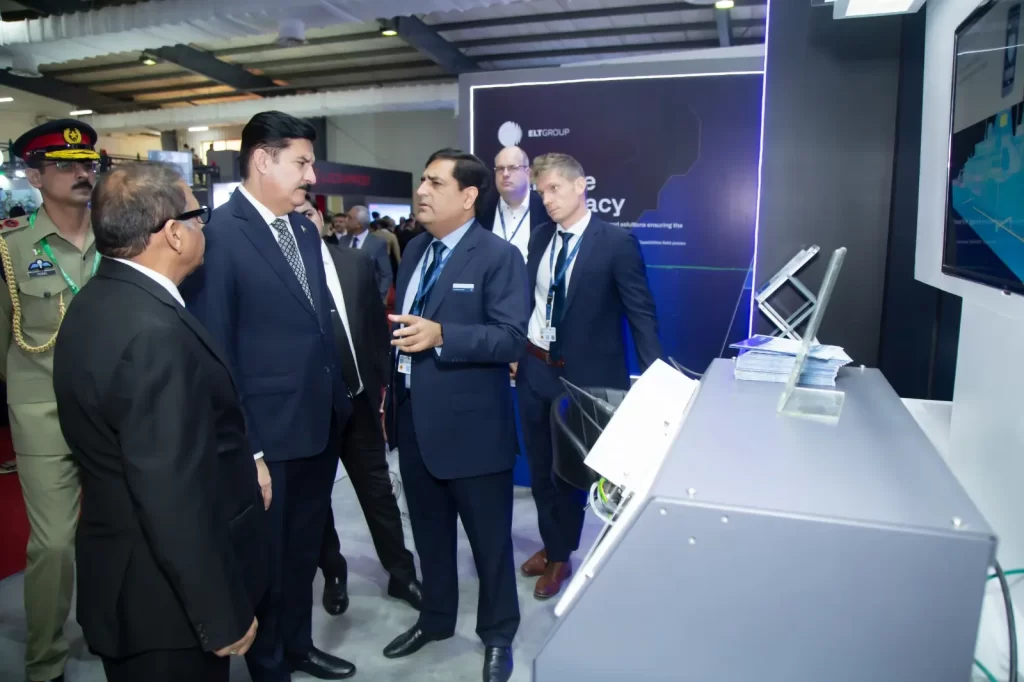
    12th edition of IDEAS 2024 is underway at Kashmir Hall, Karachi Expo Centre, Karachi. Inauguration ceremony was a grand affair attended delegates, exhibitors, senior members of armed forces and selected members from press. Chief Guest of the inauguration ceremony was Federal Minister for Defence Production, Mr. Khawaja Muhammad Asif and accompanying him on stage were Federal Minister for Commerce, Mr. Jam Kamal Khan, Governor of Sindh, Mr. Kamran Khan Tessori and Major General Muhammad Shamraiz Tanoli, Director General Sindh Rangers,

    Rohde & Schwarz Pakistan (Pvt.) Limited has been a regular participant at International Defence Exhibition and Seminar (IDEAS), which is a mega regional event; biennially organized by Defence Export Promotion Organization (DEPO) in Pakistan. Rohde & Schwarz Pakistan started operations in Pakistan on 28th April 2005 with a formal inauguration of its facilities. Following our philosophy of pushing limits, Rohde & Schwarz established its local presence as a private limited company in Pakistan backed by competent human resource. Our engineers & technicians are regularly trained in Germany, Singapore and UAE at our state of the art facilities and under supervision of world renowned experts.

    Mr. Haris Ali, Managing Director of Rohde & Schwarz Pakistan briefed esteemed delegates, dignitaries and visitors about latest cutting edge technology that Rohde & Schwarz has for its valued customers and he also shared that; Rohde & Schwarz is one of the foreign manufacturers which have directly invested in Pakistan in its history, in the high tech areas of Radio Communication, Test & Measurement, Security of information, Analog & Digital Broadcasting, Radio Monitoring & Radiolocation.

    At the 12th Edition of International Defense Exhibition and Seminar IDEAS 2024, from 19th November 2024 till 22nd November 2024, Rohde & Schwarz Pakistan presented some major solutions from its broad product portfolio for true spectrum dominance.

    The leading German electronics group Rohde & Schwarz showcased a variety of new and proven technology solutions from its different business fields presented its software defined radios in conjunction with innovative high data rate (HDR) waveforms. The open architecture following the software communications architecture (SCA) standard allows porting of third-party waveforms. The new R&S®SDAR, also known as SOVERON AR, is the only software defined airborne radio on the market that also meets civil safety avionic standards, providing full independence for unrestricted joint civil-military operations. The tactical radio is especially designed for use in vehicles and allows minimum antenna spacing. The R&S®SDHR, aka SOVERON HR, brings the advantages and technical innovation of true software implementation into the handheld format. The R&S®HDR waveform family supports mobile networking, which is required for network centric operations and automatic adaptation to network changes, thanks to the use of mobile ad hoc network protocols.

    Also Read: Rohde & Schwarz to stage its captivating portfolio at IDEAS 2024 in Karachi

  • IT Companies at risk of losses and closure due to VPN blockage and internet slowdown

    Sajjad Mustafa Syed, Chairman of the Pakistan Software Houses Association (P@SHA) – the apex representative body of the Information Technology industry – has warned that the internet slowdown and blocking of virtual private network (VPN) services will certainly translate into an existential threat as it will result in unrecoverable financial loss, service disruptions, and reputational loss in the export of IT and IT-enabled Services (ITeS). It is pertinent to note that IT industry exports clocked at $3.2 billion in FY24, he added.

    Sajjad further elaborated that even by conservative estimates the IT industry will suffer losses in tens of millions of dollars in the short term; and the reputational and intangible loses will be huge and devastating for the industry in the longer run, especially with the global competitive landscape evolving in this space. It will be a huge blow to one of the fastest-growing industries of Pakistan and will also have domino effect on other sectors of the economy as IT has become an integral part of all industries, he added.

    Sajjad made it clear that domestic and international IT companies will be forced to close or significantly restrict their operations in Pakistan – and it will be detrimental to the most flourishing industry of Pakistan vis-à-vis exports, skills development and employment generation. It will be an irreparable setback to the enabling and fruitful initiatives P@SHA is driving with the support of Ministry of IT & Telecom (MoITT), Special Investment Facilitation Council (SIFC); and Prime Minister’s Office (PMO). In addition to this, it will be extremely demoralizing and discouraging for our IT companies, their workforce, start-up entrepreneurs, freelancers, and everyone involved in the sector – who are working very hard to bring Pakistan at the forefront of global technology destinations.

    He clarified that the IT industry whole-heartedly stands with the state and the government against its fight with all forms of terrorism – be it physical, psychological, financial or cyber terrorism due to the misuse of internet. However, we believe, the economic well-being and the exports of the country is indispensable to help overcome the unending crises of balance of payments (BoP); current account deficit (CAD) and socio-economic issues – which stem from unemployment, poverty and lack of skills development, he added.

    P@SHA Chairman apprised that Pakistan’s IT and ITeS exports; which are heavily dependent on the use of internet and VPN; have been growing at an average of 30 percent per year, and are on the way to achieve $15 + billion USD in the next 5 years – provided the government ensures continuity in the export, fiscal, financial, SME, infrastructure and IT policies.

    He explained that if the VPNs are blocked most of IT companies, Call Centers, BPO Organizations of Pakistan will lose all the major Fortune 500 clients, as well as others – as data protection and cyber security are of paramount importance to our clients, and connecting to client systems through VPN is a global norm and standard, and is a basic requirement and expectation of clients around the world. Additionally, no international company of any size tolerates any intrusion into their security protocols by any private or public institution.

    Sajjad stressed that the estimated financial losses do not include the inevitable loss of livelihoods of Remote Workers and Freelancers – who may lose their entire business or will be significantly hampered in their sustenance and growth.

    He maintained that IT companies and Pakistan’s vibrant, young freelancers will need to establish offices and infrastructure overseas; which will result in unbearable and burgeoning operational costs to them. Cautious estimates in the increase of operational costs to the IT industry for any such VPN blockages could be between $100 – $150 million each year, he added.

    In conclusion, he emphasized the urgent need to approach the situation with strategic foresight rather than resorting to an unplanned blanket ban on all VPNs, as this would irreparably damage the IT industry and exports, with recovery taking years. He strongly urged the government to engage with P@SHA, industry leaders, and relevant stakeholders to develop a balanced and secure framework that safeguards national security without compromising the operational needs of the IT and other economic sectors of Pakistan. P@SHA offers its full support and expertise in organizing an immediate roundtable discussion to devise actionable and effective measures that uphold both the security interests of Pakistan and the growth of its IT exports.

    Also Read: PTCL Group Partners with Atlas Honda Ltd. to Champion Road Safety through Bike Safe Riding Training Initiative

  • PTCL Group Partners with Atlas Honda Ltd. to Champion Road Safety through Bike Safe Riding Training Initiative

    PTCL Group, Pakistan’s leading telecommunication services provider, has taken a step forward towards road safety with the signing of a Memorandum of Understanding (MoU) with Atlas Honda Ltd. This collaboration underscores PTCL’s commitment to promoting safe commuting practices for motorcyclists and aligns with the Group’s ongoing Health, Safety, and Environment (HSE) initiatives.

    The signing ceremony, held at the Atlas Honda Limited office in Lahore, with Taimoor Khan, Group VP HSE & Sustainability PTCL & Ufone 4G and Zafar Iqbal, GM After Sales, Atlas Honda signing the MoU. The partnership introduces specialized “Training of Trainers” (TOT) sessions, led by certified trainers from Atlas Honda, aimed at instilling essential safety skills amongst PTCL’s field staff, who rely on motorcycles for their daily commute.

    The training sessions will cover a comprehensive range of topics, from essential bike handling techniques to advanced road safety protocols. Moreover, the collaboration aims to cultivate a proactive safety mindset amongst PTCL employees, enhancing their awareness and reducing on-road risks.

    Furthermore, the MOU with Atlas Honda also exemplifies PTCL Group’s commitment to its ever-growing employee well-being program by fostering sustainable activities that benefit employees and contribute to community welfare at large. PTCL employees participating in the TOT program will carry forward the message of safe riding, amplifying the initiative’s positive impact. The event concluded with both parties expressing enthusiasm for the potential of this partnership to make roads safer for everyone.