Category: Finance

  • OICCI hosts 3rd Pakistan Climate Conference to address urgent climate challenges

    The third Pakistan Climate Conference, organized by the Overseas Investors Chamber of Commerce and Industry (OICCI), began today at the Mövenpick Hotel, Karachi. The two-day event brings together policymakers, business leaders, environmental experts, and thought leaders to tackle the escalating climate crisis facing Pakistan and propose actionable solutions for mitigation and adaptation.


    Federal Minister for Finance & Revenue, Muhammad Aurangzeb, addressed the attendees virtually, highlighting the critical importance of climate finance for Pakistan. He remarked: “I commend OICCI for organizing this vital conference to confront the urgent climate challenges Pakistan faces. Ranked among the top 10 most climate-vulnerable countries globally, and with damages from the devastating 2022 floods exceeding $30 billion, the urgency for sustainable solutions and financing has never been greater. Pakistan requires an estimated $348 billion by 2030 to achieve its climate adaptation and mitigation targets.”


    He highlighted the crucial role of innovative financing mechanisms, stating: “Mobilizing sufficient climate finance demands enhanced access to international funding sources like the Green Climate Fund and the Adaptation Fund. The success of Pakistan’s first green Eurobond in 2021, which raised $500 million, illustrates our capacity to attract sustainable investments. Expanding such initiatives, alongside tools like green bonds, sustainability-linked loans, and carbon credits, will empower the private sector to play a leading role in climate action.”


    The Minister reaffirmed the Ministry of Finance’s commitment to promote an enabling environment through fiscal reforms, regulatory support, and capacity building to attract both international and domestic investments in green projects.


    Dr. Shamshad Akhtar, Chairperson of the Pakistan Stock Exchange and former Finance Minister, delivered the keynote address and opening remarks. Her speech emphasized the economic risks posed by climate change and the need for integrating resilience into national economic strategies.


    Pakistan must urgently focus on nurturing its green finance markets to ensure sustainable development and resilience against climate challenges, Dr Akhtar said.


    “This requires developing a strong midterm strategic financing plan that aligns with our climate goals and economic priorities. Climate vulnerabilities are not just environmental risks but also the biggest economic threats we face, especially considering Pakistan’s economic struggles,” she added.


    Yousaf Hussain, President of OICCI, reiterated the chamber’s commitment to sustainable development. He emphasized the importance of public-private partnerships and collaborative efforts to achieve Pakistan’s climate goals.


    “Pakistan’s position as one of the most climate-vulnerable countries calls for urgent and collective action,” he stated. “This conference serves as a platform to catalyze transformative change, enabling us to address sustainability challenges and build a resilient future.”


    The conference agenda features panel discussions and presentations on critical topics, including climate finance, economic impacts of climate change, advancing circularity, decarbonization, and public-private partnerships for climate resilience. Thought leaders and experts from Pakistan and abroad will share insights to build a cohesive framework for climate action.


    Day 2 will focus on actionable strategies, including policy recommendations and business innovations to drive sustainable development. The event will conclude with a unified call to action for stakeholders to implement effective climate solutions.


    Organized with the support of leading organizations, the 3rd Pakistan Climate Conference highlights the collective commitment toward sustainability and a secure future for Pakistan.

    Also Read: Fashion icon, Hasnain Lehri joins Sonraj as creative head and brand ambassador
  • PTCL Introduces Industry-First WhatsApp-Based Bill Payment Solution in Pakistan

    Pakistan Telecommunication Company Limited (PTCL), the country’s largest ICT services provider, has partnered with PayFast, a State Bank of Pakistan-licensed Payment Service Provider (PSP), to launch for the first time an innovative bill payment solution via WhatsApp. This cutting-edge service enables PTCL customers to view and pay their bills directly through WhatsApp, representing a major step forward in digital customer service for Pakistan’s telecom industry.

    The official signing ceremony for the launch was held at PTCL Headquarters in Islamabad, with senior leaders from PTCL, eOcean and PayFast in attendance. This collaboration allows customers to choose from a variety of payment methods, including major banks and popular mobile wallets. The seamless integration of this service is powered by eOcean, a leading cloud communication service provider.

    To complete a payment, customers have to enter their CNIC and account number, verify the transaction via OTP on their registered mobile numbers, and receive an instant receipt within the chat. In addition to bill payments, the PTCL WhatsApp bot offers features designed to improve the customer experience. PTCL’s WhatsApp bot not only facilitates bill payments but also offers a range of customer-centric features designed to enhance convenience. These include real-time troubleshooting for service issues, bill inquiries, tax certificate retrieval, and the ability to subscribe to additional services like Flash Fiber bolt-ons.

    Syed Atif Raza, Group Chief Commercial Officer, PTCL & Ufone 4G, stated, “The WhatsApp-based bill payment solution aligns with our digital transformation strategy, aimed at enhancing customer convenience and delivering top-notch services. PTCL is proud to pioneer this solution in Pakistan through a partnership with PayFast, setting a new benchmark in the industry for customer experience. We are committed to streamlining interactions for our valued customers and making digital transactions as simple as possible.”

    PayFast’s CBO – Mahwish Saad Khan stats, “Our partnership with PTCL is a pivotal milestone in redefining digital payment experiences in Pakistan. By integrating PayFast’s reliable and user-friendly payment solutions with PTCL’s WhatsApp bot, we are making transactions easier and more secure than ever. Together, we are fostering a culture of digital innovation to empower customers nationwide with accessible payment options.”

    Adding to the conversation, Altaf Siddiqui, Director of Products, eOcean, commented, “WhatsApp chatbots offer transformative potential for telecommunication providers by enabling instant top-ups and personalized customer support at scale. With WhatsApp’s unmatched reach and adaptability, it seamlessly aligns with user preferences, making it an ideal platform for PTCL to enhance customer interactions and ensuring swift service delivery.”

    The launch of WhatsApp bill payments marks another significant step in PTCL, eOcean and PayFast’s joint commitment to transforming customer interactions and advancing digital innovation in telecom sector, playing a pivotal role in building a digitally empowered Pakistan.

    Also Read: QNET’s Falah Strengthens Its Dedication to Health and Wellness as Gold Sponsor of Indus Hospital

  • Meezan Bank Unveils Foreign Currency (FCY) Debit Card for Freelancers & Exporters

    Meezan Bank, Pakistan’s leading Islamic bank, has announced the launch of its Foreign Currency (FCY) Debit Card for Pakistani exporters and freelancers who hold an Exporters’ Special Foreign Currency Account (ESFCA) with the Bank.

    Powered by Mastercard, the FCY Debit Card is accepted worldwide and simplifies international payments, making it easier to manage business transactions abroad as well as make payments at retail outlets worldwide. Exporters and freelancers can now access their ESFCA account to make all types of payments, without the need for prior approval from the State Bank of Pakistan (SBP).

    The new FCY Debit Card also allows customers to withdraw cash from Mastercard ATMs worldwide, track their spending in real time, and easily make cross-border payments. Additionally, the card is equipped with 3D Secure technology, adding an extra layer of protection for e-commerce transactions. For added convenience, the card is also NFC-enabled, allowing contactless payments at retail outlets worldwide.

    “We are excited to introduce this new offering as part of our ongoing commitment to empowering Pakistan’s exporters and freelancers with enhanced financial tools, especially in today’s increasingly interconnected global economy,” said Syed Iftikhar ul Haq, Group Head – Consumer Finance at Meezan Bank. “Whether you’re traveling, shopping online, or conducting business internationally, the FCY Debit Card streamlines the payment process and provides a secure, efficient way to manage transactions across borders, ensuring peace of mind wherever you go.”

    This partnership with Meezan Bank demonstrates our dedication to delivering innovative payment solutions that cater to the evolving needs of exporters and freelancers in Pakistan,” said Arslan Khan, Country Manager for Mastercard in Pakistan. “We congratulate Meezan Bank on this initiative to support businesses as they expand their reach in the global marketplace”

    Also Read: Visa and Meezan Bank Partner to Increase Financial Inclusion in Pakistan, Unveil the Country’s First Student Debit Card

  • OICCI hosts Federal Planning Minister Ahsan Iqbal for economic policy dialogue

    The Federal Minister for Planning, Development, and Special Initiatives, Mr. Ahsan Iqbal, visited the Overseas Investors Chamber of Commerce and Industry (OICCI) for an interactive session with foreign investors and business leaders. The session focused on the government’s initiatives aimed at economic stabilization and enabling a conducive business environment in Pakistan.

    During the session, Mr. Ahsan Iqbal provided an in-depth overview of the government’s economic agenda, highlighting Uraan Pakistan – The 5Es National Economic Transformation Plan. He reaffirmed the government’s commitment to reforms aimed at addressing investor challenges and fostering sustainable growth.

    “The government is committed to ensuring economic stability and fostering a predictable policy environment for investors,” said Mr. Ahsan Iqbal. “Through initiatives like Uraan Pakistan, we aim to unlock the country’s potential and transform it into a hub for innovation and investment.”

    Mr. Ahsan Iqbal also highly appreciated the contribution of leading foreign investors, particularly OICCI members, who have played a pivotal role in Pakistan’s economic development. Over the past decade, they have re-invested $23 billion while also leading the transfer of best practices to the country.

    Mr. Yousaf Hussain, President OICCI, commended the government’s efforts to stabilize the economy and foster a business-friendly environment for foreign investors. “The focus on structural reforms and economic revival is a positive step forward. We remain optimistic and look forward to continued collaboration to further strengthen Pakistan’s position as an investment destination,” he stated.

    Abdul Aleem, Secretary-General OICCI, acknowledged the progress made and stressed the importance of policy continuity to maintain investor confidence. “While the initiatives being undertaken by the government are commendable, it is crucial to ensure policy consistency. We urge the government to actively engage with key stakeholders like OICCI members so as to maximize the impact of these initiatives,” he remarked.

    Foreign investors also shared their perspectives on navigating challenges in Pakistan and provided recommendations to enhance the ease of doing business. The dialogue reinforced the need for constructive engagement between the government and the private sector to build a sustainable economic future.

    Also Read: PTCL Group and PPAF Celebrate Empowerment and Success Through Ba-Ikhtiar Project

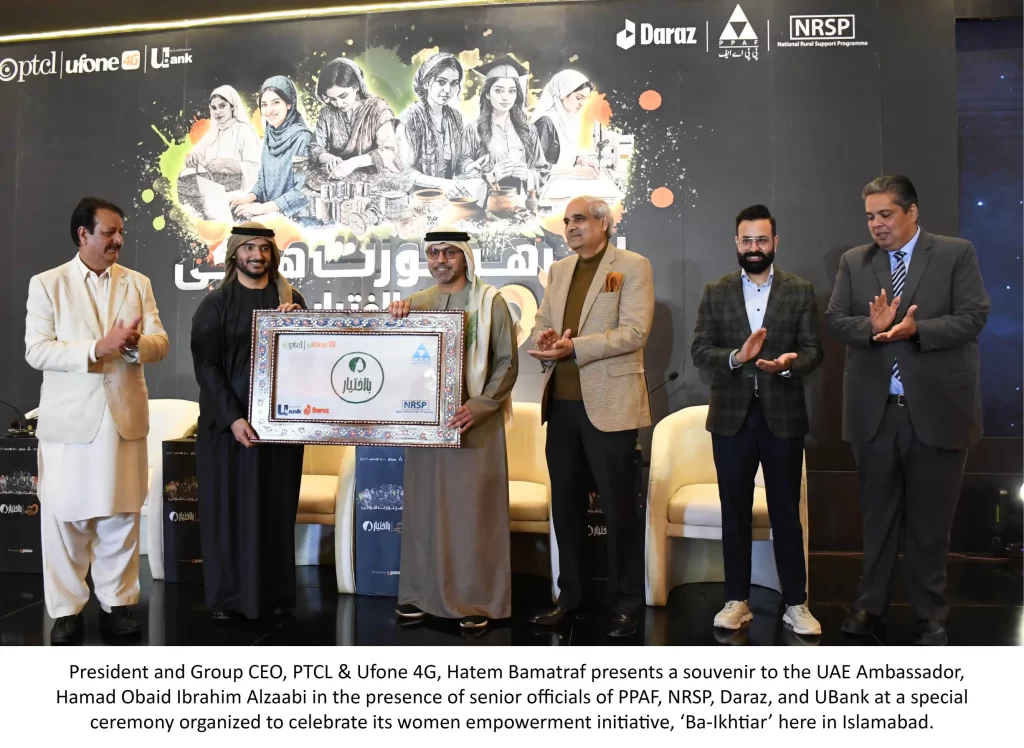
  • PTCL Group and PPAF Celebrate Empowerment and Success Through Ba-Ikhtiar Project

    Expansion to 20 Districts Marks a Major Milestone in Empowering Women Entrepreneurs Across Pakistan

    PTCL Group, in collaboration with the Pakistan Poverty Alleviation Fund (PPAF), hosted an inspiring event to celebrate the remarkable achievements of women entrepreneurs empowered through the Ba-Ikhtiar Project under Group’s Social Impact platform ‘Dil Se’. The initiative is fostering financial independence and paving the way for sustainable growth of women entrepreneurs through building successful e-commerce stores. PTCL Group is committed to empowering these women by supporting them in registering their startup and providing mentorship until they can run their business independently.

    Additionally, the program’s expansion to 20 districts under the Ba-Ikhtiar initiative aims to transform communities across Pakistan. This expansion will broaden the project’s scope to encompass diverse skill sets, including pottery, arts and crafts, food preservation, online tutoring, organic cosmetics, and more.

    The event celebrated the resilience and determination of women entrepreneurs, who have successfully turned challenges into opportunities. His Excellency, Hamad Obaid Ibrahim Salem Alzaabi – Ambassador of the United Arab Emirates to Pakistan graced the event as chief guest. Corporate partners, development sector organizations, and academia were present at the event, along with prominent figures from the entertainment, fashion, sports, and industry sectors. Esteemed personalities such as Kubra Khan, Hareem Farooq, Sana Mir, Ali Xeeshan, and Naseem Hameed added a touch of glamour and prestige. Their support further highlighted the event’s significance, which was already brimming with inspiring stories of transformation, growth, and success.
    The event also featured a thought-provoking panel discussion, bringing together renowned personalities from diverse fields, including Sania Saeed, Jehan Ara, Azima Dhanji and Zarene Asif, who shared key insights on global best practices in women empowerment, the role of technology in solving societal challenges, and the strategies needed for women to successfully navigate the entrepreneurial landscape.
    The highlight of the day was Pakistan’s first-ever AI-powered fashion show, where the women entrepreneurs showcased clothing designs created in collaboration with artificial intelligence.

    This innovative segment underscored the Ba-Ikhtiar Project’s commitment to leveraging cutting-edge technology to drive social change, reflecting how creativity and technology can unite to inspire new possibilities.

    Speaking at the grand event, Hatem Bamatraf, President and Group CEO, PTCL & Ufone 4G, emphasized on the program’s broader significance, stating: “The Ba-Ikhtiar Project is more than just a program; it is a movement that empowers women to unlock their potential by providing them with the necessary resources and skills to succeed. Today, we celebrate not just their achievements but also the ripple effect of hope, resilience, and progress that they bring to their families, communities, and society at large.”
    The CEO of PPAF, Nadir Gul Barech, further highlighted the critical role of partnerships: “When organizations unite under a shared vision, the impact can be truly transformative. Ba-Ikhtiar exemplifies how the private sector’s innovation and the development sector’s community insights can converge to create meaningful and sustainable change. This is the power of collaboration in action.”
    The event also spotlighted inspirational success stories, including two participants, who represented Pakistan at Gitex Global 2024 in Dubai, one of the world’s largest tech events. Ms. Mariam Hussain shared how the Ba-Ikhtiar Project enabled her to showcase the entrepreneurial ventures on a global platform, demonstrating the transformative impact of empowerment and opportunity.
    The Ba-Ikhtiar Project continues to stand as a beacon of empowerment. Through this initiative, participants have gained critical skills, including digital literacy, financial management, business development, and e-commerce. These tools have enabled them to build thriving businesses and fundamentally transform their lives.
    The event reaffirmed the commitment of PTCL Group and PPAF, along with partners, National Rural Support Program (NRSP), U Microfinance Bank (U Bank) and Daraz to expanding the reach of the Ba-Ikhtiar Project, introducing additional skill-building initiatives, and creating broader opportunities for women across Pakistan. Both organizations envision a future where every woman has the tools, confidence, and support to thrive, fostering resilience and enabling communities to flourish.
  • Visa and Meezan Bank Partner to Increase Financial Inclusion in Pakistan, Unveil the Country’s First Student Debit Card

    • The solution supports Pakistan’s vision for a more inclusive digital economy by driving financial inclusion and digital payments adoption among youth

    • The Meezan Visa Student Debit Card will offer exclusive discounts and rewards that are tailored to the specific needs of tertiary students

    Visa (NYSE: V), a world leader in digital payments, today announced a partnership with Meezan Bank, the country’s leading Islamic bank, to unveil a unique proposition designed to empower the digitization journey of Pakistan’s student population. Eligible university students aged 18 to 24 years will be able to gain access to secure, convenient, and rewarding financial services through Pakistan’s first Visa card issued solely for students – the Meezan Visa Student Debit Card.

    Unveiled by Andrew Torre, Visa’s Regional President for Central Europe, Middle East and Africa (CEMEA), and Irfan Siddiqui, Founding President and CEO of Meezan Bank, the Meezan Visa Student Debit Card is designed to serve as a springboard into the world of digital finance for Pakistan’s student population. The card will be offered free of cost to Meezan Asaan Student Accountholders—an account that provides a comprehensive platform for managing finances while addressing the unique needs of students, ensuring both accessibility and affordability.

    According to the State Bank of Pakistan, the financial inclusion rate in Pakistan stands at just 21% and with over 2.4 million students enrolled in higher education institutions across the country , the potential for impact is significant. This initiative which is timed for launch in the first quarter of 2025 aims to promote financial inclusion amongst Pakistan’s young, savvy, and digitally engaged population.

    Umar Khan, Country Manager for Pakistan & Afghanistan at Visa, commented: “We’re proud to join forces with Meezan Bank on this financial inclusion initiative that targets youth. We believe empowering youth with financial tools is crucial for their future success and Pakistan’s overall economic growth. This is also aligned with Pakistan Vision 2025 to streamline the energies of Pakistan’s extensive youth population. When equipped with secure and accessible financial solutions, students can develop responsible financial habits, participate more fully in the economy, and contribute to a more financially inclusive nation. This initiative goes beyond providing a debit card; it represents Visa’s long-term commitment to building a strong financial inclusion proposition for Pakistan and leveraging the appetite of Pakistan’s youth.”

    Irfan Siddiqui, President, and CEO of Meezan Bank said: “This partnership enables us to reach a crucial segment of society, providing students with a secure and convenient way to manage their finances while building financial literacy from an early age. The launch of the Meezan Visa Student Debit Card is a significant step towards greater financial inclusion in Pakistan, empowering students with the tools they need for a secure and successful future.”

    Under the country’s Ministry of Planning, Development & Reforms, Pakistan Vision 2025 aims to streamline the energies of the country’s large youth population and realize their immense economic potential. By providing access to financial tools and knowledge, Visa and Meezan Bank support this ambition by empowering students to take control of their finances, make informed decisions, and build a more secure future for themselves and their communities.

    Also Read: INX maritime service launched in Pakistan

  • INX maritime service launched in Pakistan

    The weekly maritime service will commence its operations globally on February 5th with its first departure from the port city, Karachi.


    Speaking as the chief guest Vice Admiral Faisal Abbasi HI (M), SI (M), Commander Karachi, Pakistan Navy at the launching ceremony in a local hotel on Wednesday, he said Pakistan is constantly seeking international partnerships to expand and strengthen its maritime activities.


    The new service INX from Pakistan to Europe will ensure service will help timely and efficient delivery of Pakistani goods to the destined European ports and beyond.


    The sea lines of communication (SLOCs) allow nations to stretch beyond their land borders, facilitating access to and exchange of raw materials and trade goods etc. Today, as much as 75% of international trade takes place over water and same is expected to continue growing in foreseeable future. With the most strategic location, the Country is at the crossroads of three geographical locations: the gateway to Central Asia, South West Asia and the Persian Gulf, the Vice Admiral Faisal Abbasi HI (M), SI (M) remarked.


    The country has abundance of marine, fisheries, mineral and energy resources that can generate additional revenues. From the perspective of the potential of the Blue Economy, China-Pakistan Economic Corridor (CPEC) is estimated to expand the maritime capabilities of Pakistan manifolds, he added.


    The maiden voyage will be starting from Karachi with the port rotation includes Karachi– Hazira– Mundra – Nhava Sheva – Colombo – London Gateway – Rotterdam – Hamburg – Antwerp – Karachi.The India North Europe Express (INX) will directly link Western India to Northern Europe. It is designed as a weekly maritime service, turning around in 11 weeks (R/V 77 days) with 6,000TEU container ships.


    Sohail Shams, CEO, United Marine Agencies the INX service promises a robust, direct maritime connection from Western India to Northern Europe, turning around in just 11 weeks with a fleet of 6,000 TEU container ships. This development not only diversifies maritime service portfolio in the region but also amplifies opportunities for regional trade and global transshipment through this strategic hub, he added.


    This service signifies more than just a route, it represents progress, innovation, and the shared commitment of our global partners to simplify and enhance international trade, he said and added. This strategic network underscores the significance of Karachi as a vital trade hub and gateway to global markets.


    India North Europe Express (INX) service by HMM in collaboration with Ocean Network Express (ONE) and United Marine Agencies. The initiative of maritime service wil streamline logistics, enhance connectivity, and drive economic growth in the region.


    Also Read: Empowering Educators for Climate Action: From Grassroots to Governance

  • InfraZamin Pakistan and HABIBMETRO Partner to Provide a Structured PKR 800mn Guaranteed Trade Finance Facility to Jaffer Business Systems (Private) Limited

    InfraZamin Pakistan (IZP), has successfully issued its first short-term guarantee of PKR 600m against a PKR 800m Trade Finance Facility by HABIBMETRO for Jaffer Business Systems. The groundbreaking facility will support Jaffer Business Systems (JBS), an established technology and business solutions provider, to expand its business in digital and IT infrastructure solutions.

    This guarantee structure will provide a crucial boost to JBS’s business operations and address the limited availability of trade finance lines for import of vital IT infrastructure. The facility will enable JBS to deliver quick IT equipment, infrastructure and solutions to its client base, particularly banks and large multinationals, and contribute significantly to Pakistan’s economic and digital growth.

    As InfraZamin’s first PKR denominated, short term guarantee for trade finance, this transaction reflects the organization’s commitment to enable private sector credit. By mitigating credit risks associated with import LC’s, the guarantee carries substantial economic and developmental benefits, with JBS planning to expand its client base and partner with multiple local firms to expand its domestic outreach. These collaborations are expected to create 80-90 jobs over the next two years, with 20% of these positions reserved for women, while enhancing support for internet banking and digital wallets to promote financial inclusion and drive economic activity.

    “This transaction represents InfraZamin’s dedication to address critical market needs of private sector credit expansion,” said Maheen Rahman, CEO of InfraZamin Pakistan. “We are proud to partner with Jaffer Business Systems and HABIBMETRO to support trade finance, IT infrastructure and digital economy growth.”

    Speaking on behalf of Jaffer Business Systems, Veqar Ul Islam, CEO, stated, “Truly delighted with the signing today. JBS is growing at an aggressive pace both locally and internationally. It has a bold vision for 2030 and the partnership with Infrazamin and HABIBMETRO will act as one of the key drivers to strongly push towards the vision of 2030.”

    Mr. Khurram Shahzad Khan, President & CEO, HABIBMETRO stated “We are pleased to partner with InfraZamin Pakistan to provide a guaranteed trade finance facility to Jaffer Business Systems. This collaboration reflects our commitment to supporting the growth of businesses in Pakistan, particularly in the digital and IT infrastructure sectors. By enabling companies like JBS, we aim to contribute to the advancement of Pakistan’s digital economy.”

    The transaction aligns with Pakistan’s commitment to the UN Sustainable Development Goals, particularly promoting gender equality, fostering job creation, and enhancing digital infrastructure to support sustainable growth.

  • Haaris Mahmood Chaudhary Appointed CEO of Mobilink Bank

    The Board of Mobilink Bank has announced the appointment of Haaris Mahmood Chaudhary as the new CEO of Mobilink Bank, marking a significant milestone in the Bank’s mission to drive financial inclusion, digital banking, and innovation.


    “Haaris has consistently demonstrated exceptional leadership, strategic foresight, and a deep commitment to Mobilink Bank’s values,” said Aamir Ibrahim, Chairman of Mobilink Bank and CEO of Jazz. “I am confident that under his guidance, Mobilink Bank will continue to empower millions of Pakistanis with cutting-edge digital financial solutions, expand digital banking services, and solidify its position as a leader in the financial services sector.”


    Haaris joined Mobilink Bank as Chief Operating Officer in 2023 and served as Interim CEO, where he played a pivotal role in driving strategic initiatives, including securing VEON’s $15 million investment as Foreign Direct Investment (FDI) for Pakistan to accelerate financial inclusion. During his tenure, the Bank achieved notable milestones, such as being named the Best Microfinance Bank at the Pakistan Banking Awards 2024 and topping the State Bank of Pakistan’s Banking on Equality Scorecard for two consecutive years.


    With over two decades of leadership experience, Haaris has worked with organizations such as the Universal Service Fund (USF) Pakistan, Citibank New York, Barclays Capital Dubai, Clariden Leu Asset Management (part of Credit Suisse) Dubai, and ABN AMRO Pakistan. His diverse expertise strengthens Mobilink Bank’s leadership as it continues its journey to expand digital banking, support a cashless and digital economy, and grow digital services through platforms like JazzCash.


    “As a future-ready digital bank, Mobilink Bank remains steadfast in its mission to provide innovative, customer-centric solutions,” Haaris Mahmood Chaudhary commented. “I am excited to lead this exceptional team and further strengthen our position as a market leader. Together, we will continue to drive inclusive economic growth, support a cashless economy, and redefine digital financial services for millions across Pakistan.”

    Also Read: INGOs in Pakistan Face Shutdown Over Financial Irregularities

  • INGOs in Pakistan Face Shutdown Over Financial Irregularities

    Pakistan’s Ministry of Interior has recently ordered the shutdown of operations for two major international non-governmental organizations (INGOs) sponsored by Bloomberg—Tobacco-Free Kids (CTFK) and Vital Strategies. Allegations of financial misconduct and illegal activities have brought these organizations into the spotlight, raising significant concerns about their influence on public health policies and adherence to national laws.


    CTFK, which has long promoted itself as an advocate for public health, particularly in tobacco control, is now facing allegations that contradict its stated mission. Reports suggest that Malik Imran, the organization’s former country manager, was removed from his position following accusations of fund embezzlement. These funds were allegedly funneled to a company called Capital Calling, owned by Imran’s brother. Despite being aware of these violations, CTFK and its sponsor, Bloomberg, reportedly failed to take corrective action until the government intervened.


    A key issue in this case is the INGOs’ non-compliance with Pakistani regulatory requirements. Both CTFK and Vital Strategies were unregistered with critical government entities, such as the Ministry of Interior and the Economic Affairs Division, yet continued to collaborate with local NGOs and government agencies. This lack of proper authorization has raised red flags regarding their influence on policymaking. Consequently, the Ministry of Interior instructed the organizations to immediately halt their activities, while the State Bank of Pakistan froze their accounts to prevent further financial irregularities.


    The implications of these alleged violations extend far beyond regulatory breaches. Experts warn that financial mismanagement and a lack of oversight by such organizations could have jeopardized Pakistan’s position with the Financial Action Task Force (FATF). A return to the FATF grey list would have serious repercussions, including decreased foreign investment and heightened economic challenges.


    Adding to the controversy are claims of misallocated funds. Instead of addressing critical issues such as the illicit cigarette trade, resources were reportedly redirected to superficial media campaigns and other non-productive initiatives. This misuse of funds undermines genuine efforts to tackle tobacco-related issues and erodes trust in the integrity of international organizations.


    More alarming are accusations that these INGOs indirectly supported illegal tobacco networks. By prioritizing media activities over combating the widespread illicit tobacco trade, they may have inadvertently facilitated its growth. Such actions are inconsistent with their stated goal of tobacco control, raising doubts about the financial and political motivations behind their strategies.


    The Ministry of Interior’s actions underscore the urgent need for stricter regulation of foreign organizations operating within Pakistan. While INGOs have the potential to contribute significantly to public health challenges, their activities must align with the country’s laws and priorities. Moving forward, Pakistan faces the task of establishing robust mechanisms to monitor INGO operations. Combating the illicit tobacco trade, which poses a significant drain on national resources, should be a primary focus. By ensuring transparency and accountability, Pakistan can protect its economic and public health interests while restoring confidence in its governance.


    This situation serves as a crucial reminder that while international partnerships can be valuable, they must not come at the expense of ethical governance or national sovereignty.